Is It Safe To Go To Grutas De Tolantongo?
A clear-eyed safety answer for Grutas de Tolantongo: the canyon descent, slippery rock, crowds, river rules and why a guided day tour removes most of the risk.
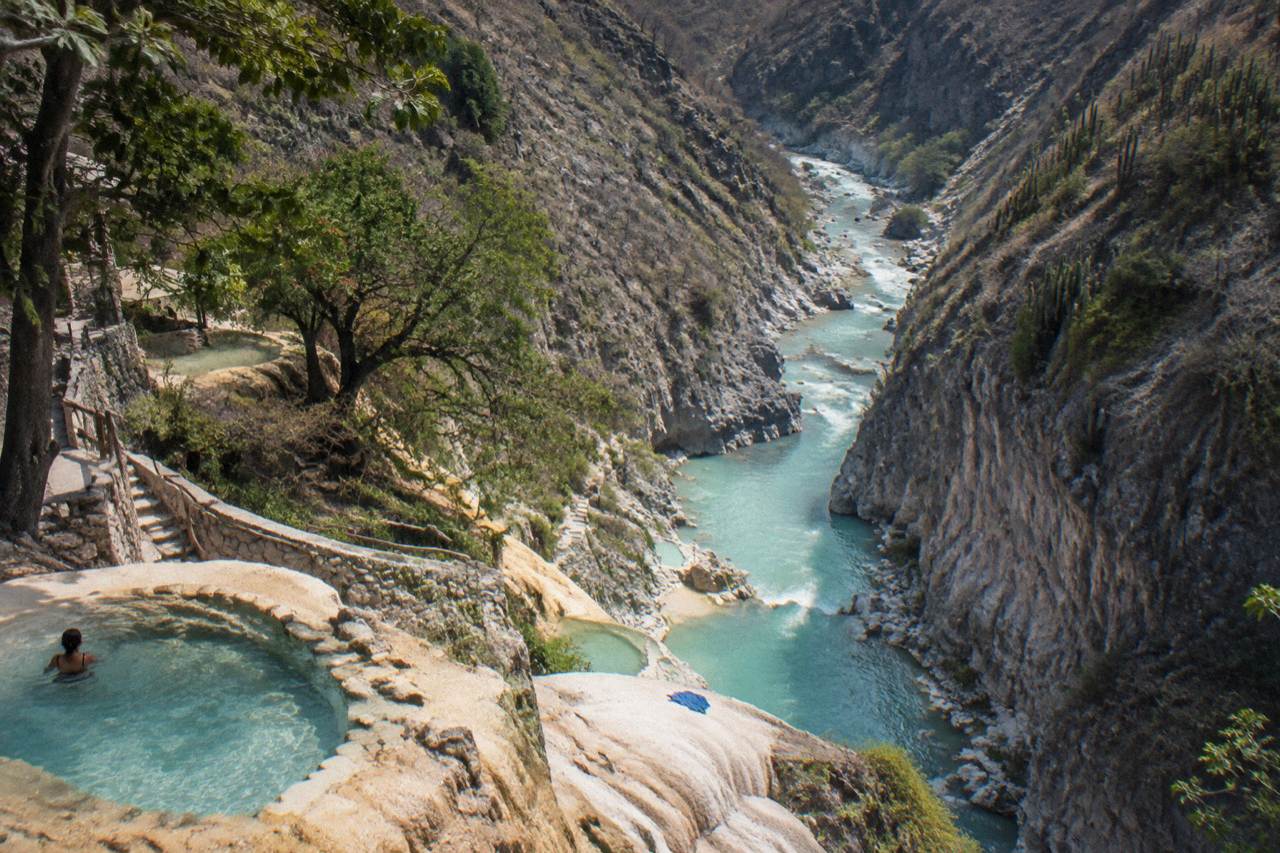
Yes, in normal conditions Grutas de Tolantongo is safe for families, couples and solo travellers, and the park is run by a community cooperative that has operated it for decades. The honest answer has three parts: the drive in is the single biggest risk, a 20 km mountain descent with tight curves that rewards a calm driver or a professional one; inside the park the main hazards are slippery rock and a thermal river that can close after heavy rain; and crowds, not crime, are what make holiday weekends feel intense. None of these are reasons to stay home. They are reasons to know the rules before you go. Since the drive in is the biggest variable, our guide to whether the Mexico City to Grutas de Tolantongo route is safe covers the mountain descent, night driving, tolls and cash-only stretches in detail.
The park publishes its own safety and rules information, and it is refreshingly specific. The water in the cave, tunnel, river and pools holds a steady 36 to 38 C year-round, which sounds purely comforting until you remember that warm water, wet stone and steep canyon paths add up to one very predictable hazard: people slipping. The park's response is a clear dress code and behaviour rules, stated as conditions of entry, and covered in the official information at the park's information page.
This article walks through each risk in turn: the road, the rock, the river, the crowds and the activities, then closes with the practical case for handing the driving to someone who does it weekly. If you want the short version of that last point, the small-group caves tour from Mexico City exists almost entirely because of the road, and it is the most reviewed guided option at 4.7 across 724 reviews, from $132 per person.
Is The Drive From Mexico City To Tolantongo Safe?
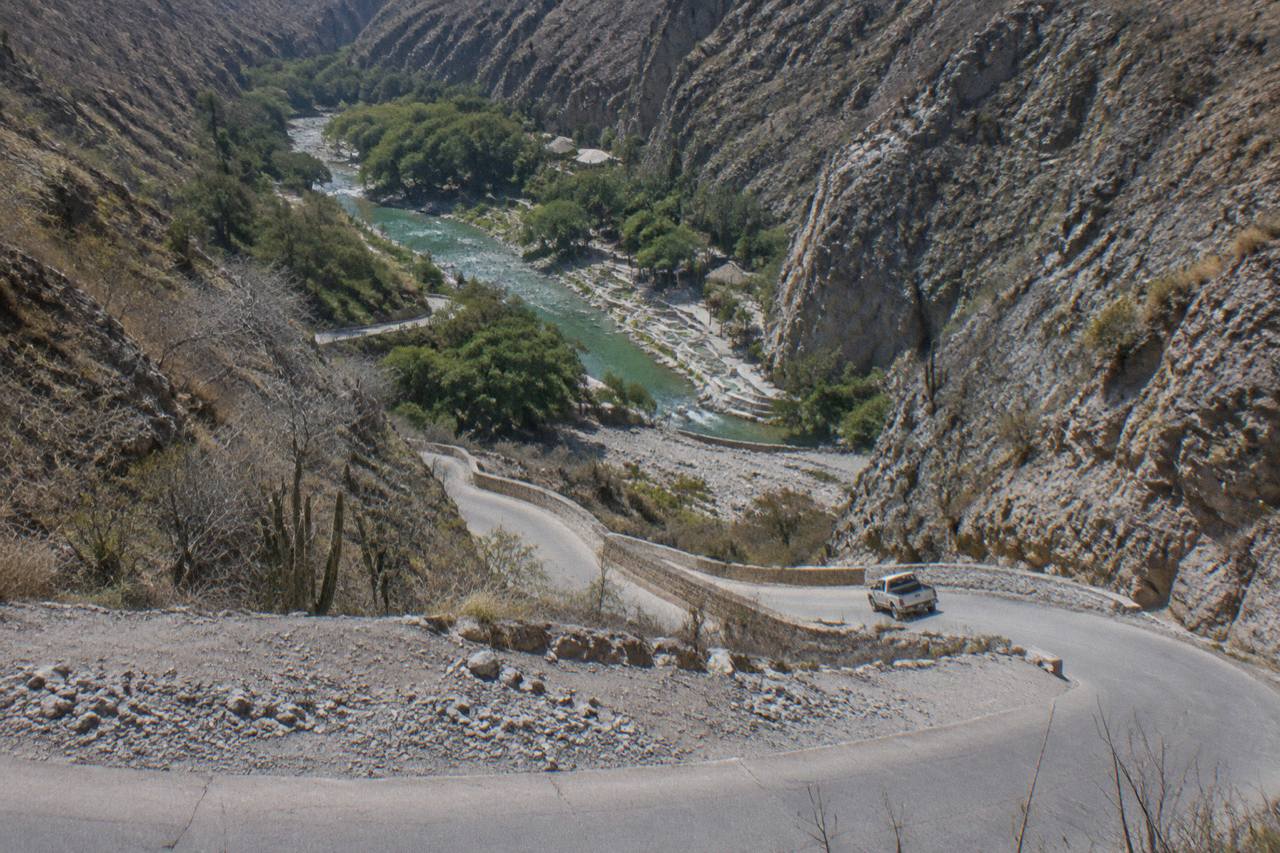
Yes, the drive is safe for most drivers in daylight, on the official route via the Mexico-Pachuca highway, Actopan and Ixmiquilpan, about 201 km and roughly 3 hours 50 minutes from the capital according to the park's own directions page. The first three quarters of the trip are ordinary Mexican highway. The part that deserves respect is the last stretch: a roughly 20 km descent into the Tolantongo canyon that is fully paved but narrow, winding and steep, with one lane per direction in most sections and little or no shoulder. It is a road for low gears and patience, not for arriving at night or in fog.
The park's own directions page is blunt about technique: vehicles with automatic transmission should descend in first and second gear only, letting engine braking do the work rather than the brakes. That instruction, and the official route itself, come from the park's official getting-there page, which also lists the reference distances: Ixmiquilpan at 42.9 km, Pachuca at 117 km, Querétaro at 193 km. Drivers should fill the tank in Ixmiquilpan, the last full-service town, and note that phone signal drops on the final approach, so offline maps downloaded beforehand are the reliable option.
Two practical notes keep the drive low-drama. Daytime travel is the norm and the sensible choice; the curves are easier to read and local traffic, mostly combis and trucks serving the canyon communities, is easier to anticipate. And if any of this sounds like more mountain driving than you want on a holiday, that is precisely the gap a shared day trip fills. The day trip from Mexico City guide compares the options in detail, and the comparison below shows how the main guided choices stack up against self-driving.
| Option | Duration | Price | Rating | Who it suits |
|---|---|---|---|---|
| Tolantongo Caves Small-Group Tour (Mexico City) | 14 hours | from $132 per person | 4.7, 724 reviews | First-timers who want the road handled |
| Tolantongo Caves, Hot Springs & Waterfalls Small Group Tour | 14 hours | from $92 per person | 4.6, 352 reviews | Budget-conscious small-group travellers |
| 100% private tour from Mexico City | 13 hours | from $167 per person | 4.8, 189 reviews | Families and groups wanting flexibility |
| Self-drive | 3 h 50 min each way | tolls plus 230 MXN entry | not applicable | Confident drivers, early starters |
Is It Safe Once You Are Inside The Park?
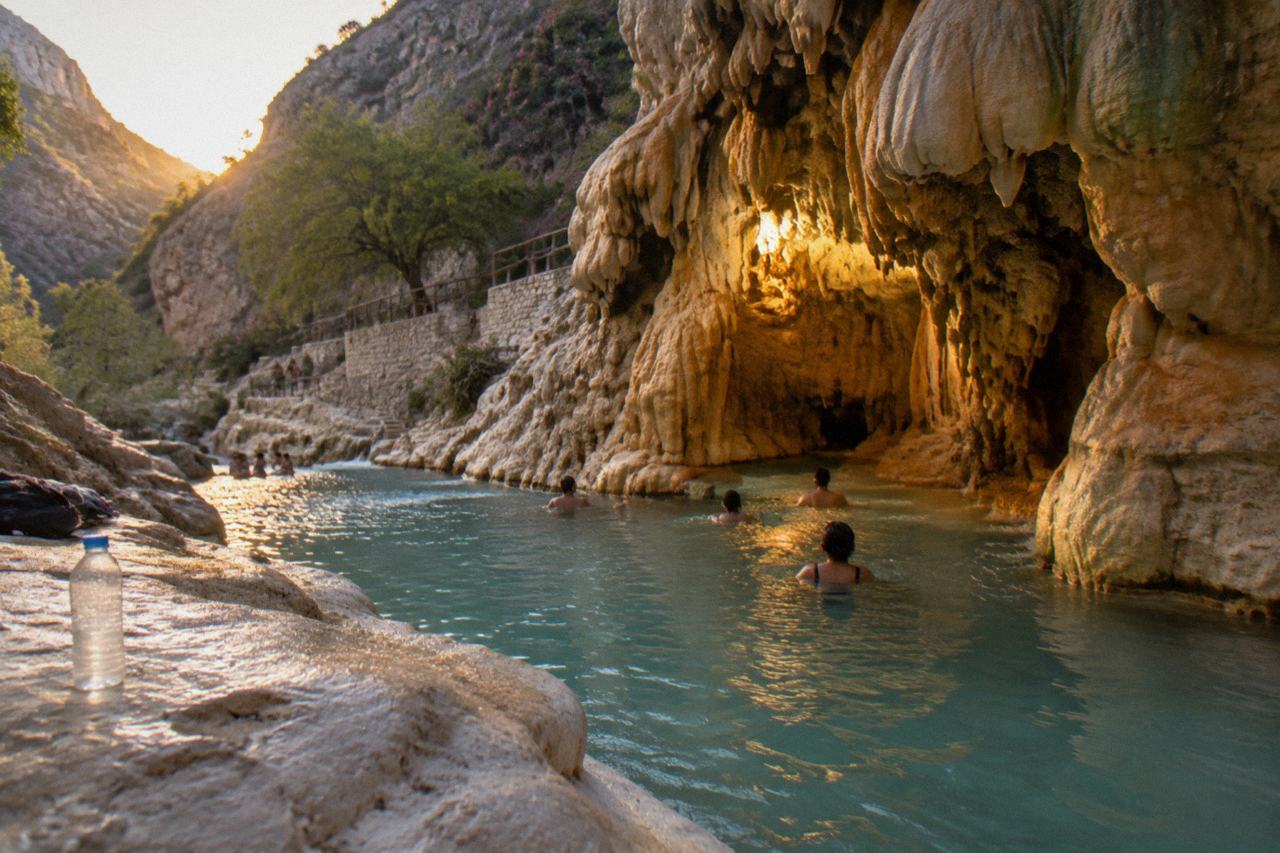
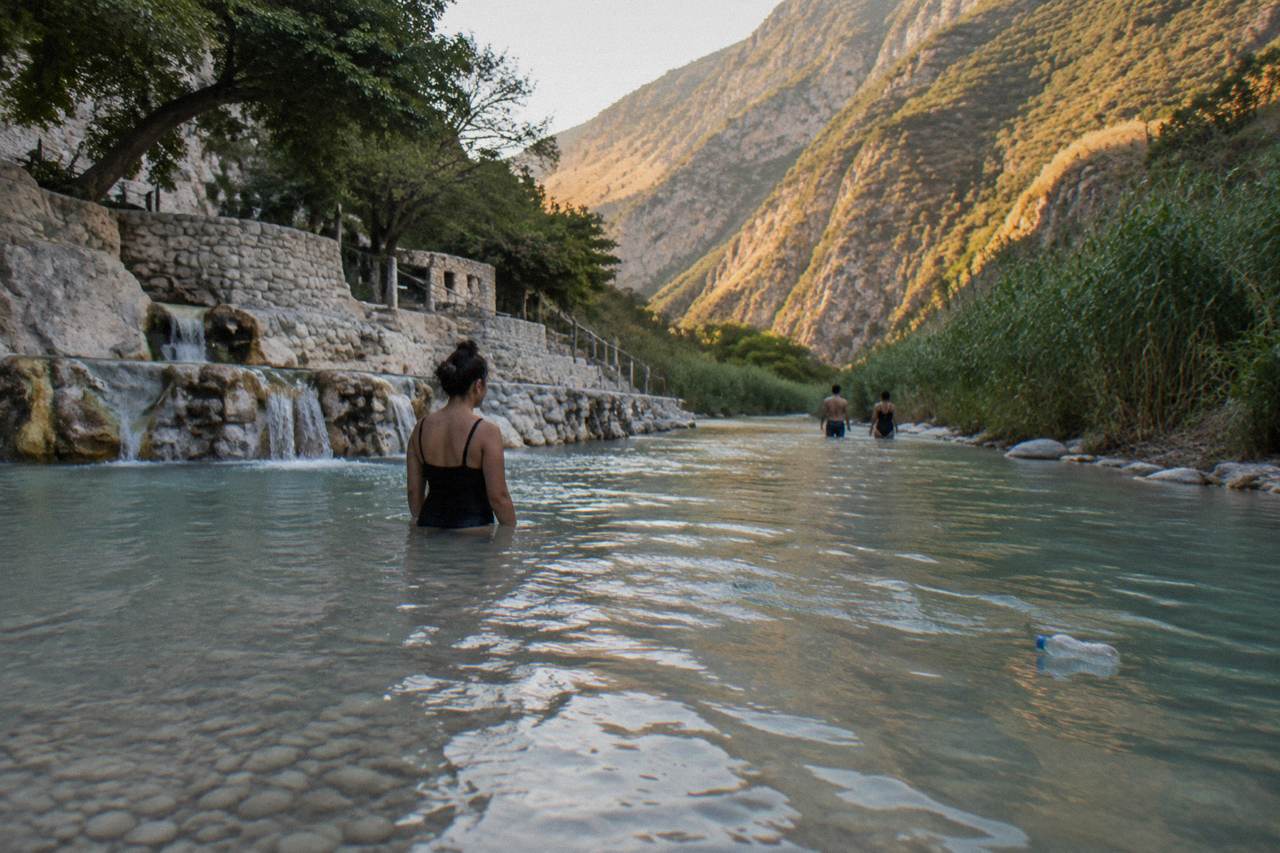
Yes, the park itself is safe, well staffed and run under clear published rules, and the main in-park hazard is mundane rather than dramatic: slippery surfaces around thermal water, on wet steps, river paths and the rock ledges beside the cliffside pools. The cave, the steam tunnel, the river and dozens of natural pools all sit on wet canyon rock, and the park treats this seriously through its rules rather than through hand-holding. Swimsuits are required in the water areas, soap and shampoo are banned in the cave, tunnel, river and pools, and food and drink may only be consumed in the camping zone. These are published conditions of entry, not suggestions, and they exist because mineral-rich warm water makes stone treacherous and because keeping soap out protects the water everyone comes for.
The river deserves its own sentence. It is thermal, shallow and generally calm, but the park explicitly tells visitors to stay away from it during rainy-season rains and to follow the instructions of security staff. Between roughly June and September, heavy rain in the canyon can wash silt into the water and force temporary closures of the river and the lower pools while levels settle. If you arrive to find a section roped off, that is the system working, not a flaw. Our guide to swimming at Tolantongo covers what is swimmable and when.
Everything else inside the park is standard thermal-site common sense. No pets are allowed. No alcohol, firewood or gas tanks come through the gate. Lockers are available at 150 MXN with a 50 MXN refundable deposit, and the park advises leaving valuables out of the water entirely, since the mineral water can strip jewellery. There is no ATM inside the canyon and every payment, entry, food, lodging and rentals, is cash only, which matters for safety planning too: arrive with pesos sorted, because the nearest cash machine is about an hour away in Ixmiquilpan.
Do Crowds Make Tolantongo Unsafe?
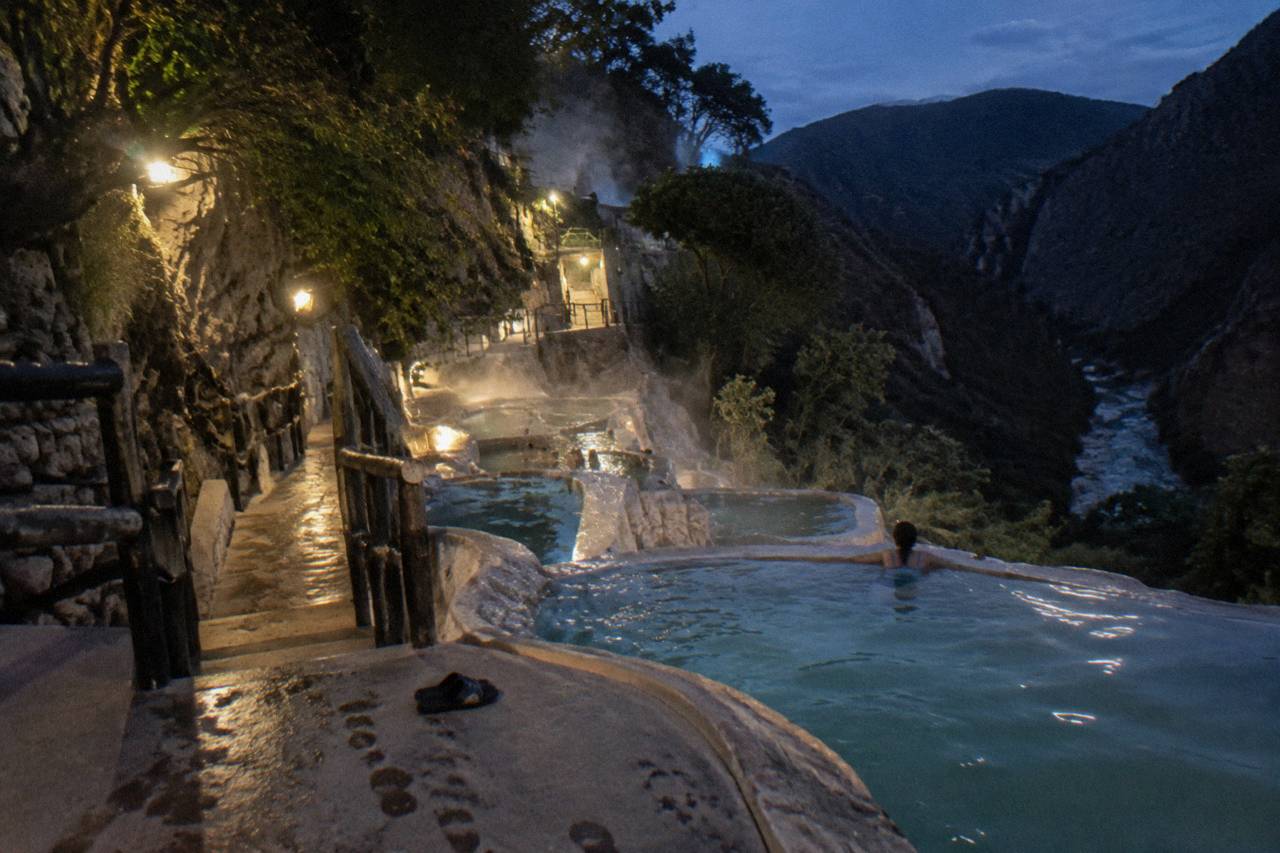
Crowds at Tolantongo are a comfort and crowd-flow issue rather than a security one, but on holiday weekends they genuinely change the experience, and they demand more supervision of children near the river path and the cliffside pools, where there are drops and wet steps rather than lifeguarded edges. The park is open 365 days a year, and the rhythm is consistent: weekdays are calm, while weekends, Mexican long weekends known as puentes, Semana Santa and the Christmas to New Year stretch bring a flood of visitors, with holiday periods drawing several times the weekday volume. Reports consistently describe holiday daily attendance in the several-thousands range. Nobody describes it as dangerous; they describe queues for the pools, full parking and a river full of people.
The practical safety angle is supervision and spacing. With dense holiday crowds, small children need active watching near the water at all times, and the busiest midday hours are when the steps and paths around the pools are most packed. The park does not provide guides of its own; every visit inside is self-guided, which is worth knowing because it means the crowd-management burden inside falls on you. On a busy day, a guided group at least keeps you moving on a plan rather than drifting into the densest spots at the densest hours.
Timing is the single best tool. Arriving early, before the late-morning surge, buys you the caves and the tunnel while they are still walkable at a relaxed pace, and the midweek difference is dramatic enough that it changes which attractions are pleasant rather than merely possible. Our best time to visit guide lays out the month-by-month picture, including why October to December gets the best combination of dry weather, cooler air and a clear turquoise river.
Are The Zipline, Bridge And Activities Safe?
Yes, the paid activities are safe when the published limits are respected, and helpfully the park publishes hard numbers rather than vague warnings: the zipline requires riders to be over 10 years old, sets a maximum weight of 93 kg, and bars riders with heart conditions. The zipline, or tirolesa, is a 1,890 m course in four launches, priced separately from entry at 300 MXN per person. It runs 8 am to 5 pm, operated by park staff whose entire job is this one attraction. The full specifications are on the park's zipline page.
The hanging bridge, the pools and the waterfalls carry simpler rules. Swimsuit only in the water areas, no glass, follow the signage at each attraction, and keep to the marked paths on the canyon sides. The two zones, La Gruta on one side of the canyon and Paraíso Escondido on the other, are connected by internal shuttle at 15 to 20 MXN per person shared, which spares tired legs the climb between them. Visitors consistently report that the infrastructure, steps, railings and walkways, is well maintained for a community-run park of this scale.
One boundary worth understanding: the Tolantongo ticket covers only the ejido's own territory. Across the river lies a different community's land, including La Gloria, and the Grutas de Tolantongo ticket does not give entry, camping or services there. Some guided tours combine both sides, such as the Exclusive Full-Day Tolantongo and La Gloria Hot Springs Adventure at 5.0 across 31 reviews from $149 per person, which is one clean way to cross that boundary with someone who handles the logistics.
Why Does A Tour Make Tolantongo Safer?
A tour removes the two riskiest parts of the day, the canyon descent and the solo decision-making, and replaces them with a professional driver who repeats this route weekly and a bilingual guide who knows which sections close after rain and how the day should be sequenced around the crowds. It is worth being direct about this because safety worries are the single most common hesitation before booking. Every shared day trip from Mexico City puts a professional driver on the descent, handles the early start, includes the entrance ticket in most listings, and puts a guide in the group who tracks conditions on the ground.
The value is not that the park is hard to understand, it is not, but that a 14-hour day with a 4 am wake-up and three and a half hours of mountain road each way punishes fatigue. Fatigue on the drive home, in the dark, after a full day of hot springs, is the quiet argument for the shared bus. The most reviewed options make this concrete: the Tolantongo Caves Small-Group Tour at 4.7 across 724 reviews from $132 per person, and the early express departure at 4.9 across 680 reviews from $133 per person, which trades an even earlier start for more time on site.
For families and groups, the private versions push the same safety benefit further: your own driver, your own schedule, and no dependence on a fixed meeting point. The 100% private tour from Mexico City runs 13 hours at 4.8 across 189 reviews from $167 per person, and there is a fully private day with no reviews yet from $147 if the price matters more than the track record. Whichever shape you choose, the calculus is the same: the park's risks are manageable alone, but the road risk drops sharply when the person behind the wheel has done the descent a hundred times. That is the quiet pitch behind every listing on Grutas de Tolantongo Tours, and it holds up.
What About Cash, Signal And Emergencies?
Plan for a cash-only day with patchy phone signal and the emergency question mostly answers itself through preparation: carry enough pesos for entry, parking, food and extras, download offline maps before Ixmiquilpan, and pace the day so nobody is exhausted on the drive home. There is no ATM in the canyon and no card payment anywhere in the park, so the entry fee, parking at 50 MXN per vehicle, food, lockers and any zipline launches all need pesos carried in. Mobile coverage inside the canyon is limited, Telcel only per the park's information page, and signal on the final approach road disappears roughly 20 minutes before arrival. Screenshot your booking confirmation before you leave.
For medical and mechanical worries: the park has operated as a community cooperative for decades, runs daily, and has staff stationed around the attractions, particularly visible at the river and the zipline. Serious incidents are not part of the park's public record in the way that would show up in reporting; what visitors write about instead is the water, the crowds and the views. The realistic emergency on a Tolantongo day is a twisted ankle on wet steps or an overheated brake rotor on the descent, and both are prevented by footwear with grip, low gears and unhurried pacing.
First-timers benefit most from reading our complete visitor guide before choosing between going alone and joining a group, and the tour versus independent travel comparison runs the full cost and effort maths. If you are travelling with children or older relatives, the kids and older travellers guide addresses stamina, distances inside the park and the shuttle between zones, all of which matter more to safety than any dramatic scenario.
The Short Safety Verdict
Grutas de Tolantongo is a safe destination for the great majority of visitors, with three specific cautions: drive the canyon descent in daylight and low gear, respect the river closures after rain, and pick your date with crowds in mind. The park's own rules, cash only, swimsuit zones, no soap in the water, zipline age and weight limits, exist precisely because the hazards are known and constant rather than random. Millions of Mexican families visit every year; this is a domestic favourite before it is an international one, which is its own kind of evidence. The steam tunnels are the one part of the park that unnerves some visitors, so if tight spaces are a concern, our guide to tunnel safety at Grutas de Tolantongo explains what to expect before you wade in.
The genuine weak points are logistical, not criminal or structural. The road punishes the rushed and the tired. The cash-only, low-signal canyon punishes the unprepared. And the holiday calendar punishes whoever books a random Saturday without checking what Mexico City has that weekend. Every one of those is fixed with a calendar, an envelope of pesos and, optionally, a seat on a bus with a driver who knows every curve by name. Treat those three things as part of the packing list and the safety question mostly answers itself.
Common Questions About Safety At Grutas De Tolantongo
Is It Safe To Go To Grutas Tolantongo?
Yes. The park is community-run, open 365 days a year, and staffed around the main attractions. The real cautions are environmental: slippery rock near the thermal water, the canyon descent by car, and river closures after heavy rain in the June to September season.
Is it safe to travel to Grutas de Tolantongo?
Yes, for most travellers it is safe to travel to Grutas de Tolantongo. The journey is safest in daylight on the official route via Pachuca and Ixmiquilpan, with the last 20 km treated as a slow, low-gear mountain descent. Cash, grippy footwear and an early start cover the remaining practical risks.
Is the canyon road dangerous for ordinary drivers?
It is demanding rather than dangerous in dry, daylight conditions. It is fully paved but narrow and steep, and the park advises automatic cars to descend in first and second gear only. Anyone uncomfortable with mountain switchbacks should take a shared or private tour and leave the driving to a professional.
Is the thermal water safe to swim in?
Yes, the water holds 36 to 38 C year-round and swimming is the main activity. Swimsuits are required, soap and shampoo are banned in all water areas, and the river itself can close for hours after rainy-season storms. Follow staff instructions when a section is roped off.
Is Tolantongo safe for children and older travellers?
Generally yes. Children 0 to 4 enter free and those 5 and over pay full entry, and the zipline has a minimum age of 10 and a 93 kg weight limit. The walks between zones involve steps and inclines, so pace the day and use the internal shuttle between La Gruta and Paraiso Escondido.
Are there ATMs or card payments in the park?
No. Every payment inside the park is cash only, and the nearest ATM is about an hour away in Ixmiquilpan. Carry enough pesos for entry at 230 MXN per person, parking, food and any extras like the 300 MXN zipline before you descend into the canyon.