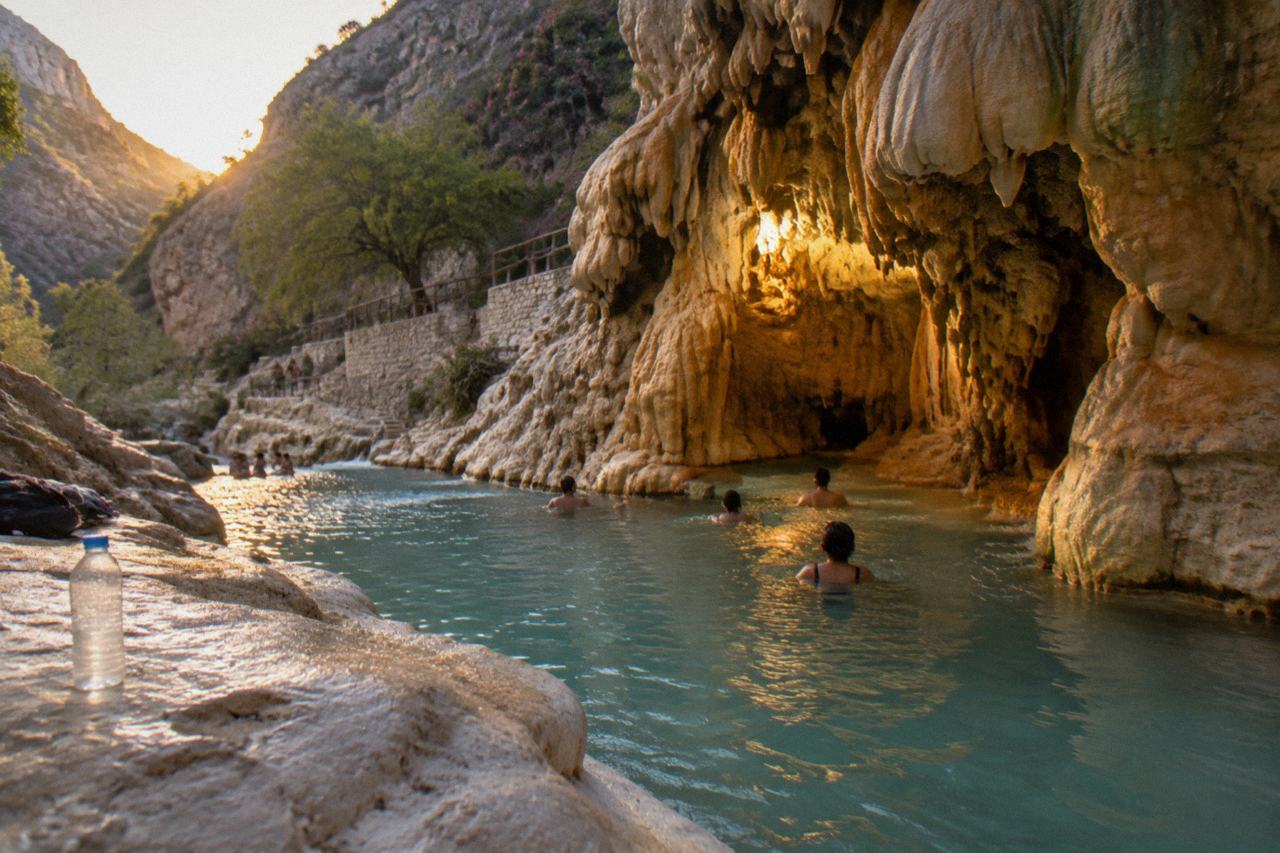
Are The Tunnels In Grutas Tolantongo Safe?
The steam tunnel at Grutas de Tolantongo worries visitors with claustrophobia. Here is what the park's own rules, hours and layout say about tunnel safety.
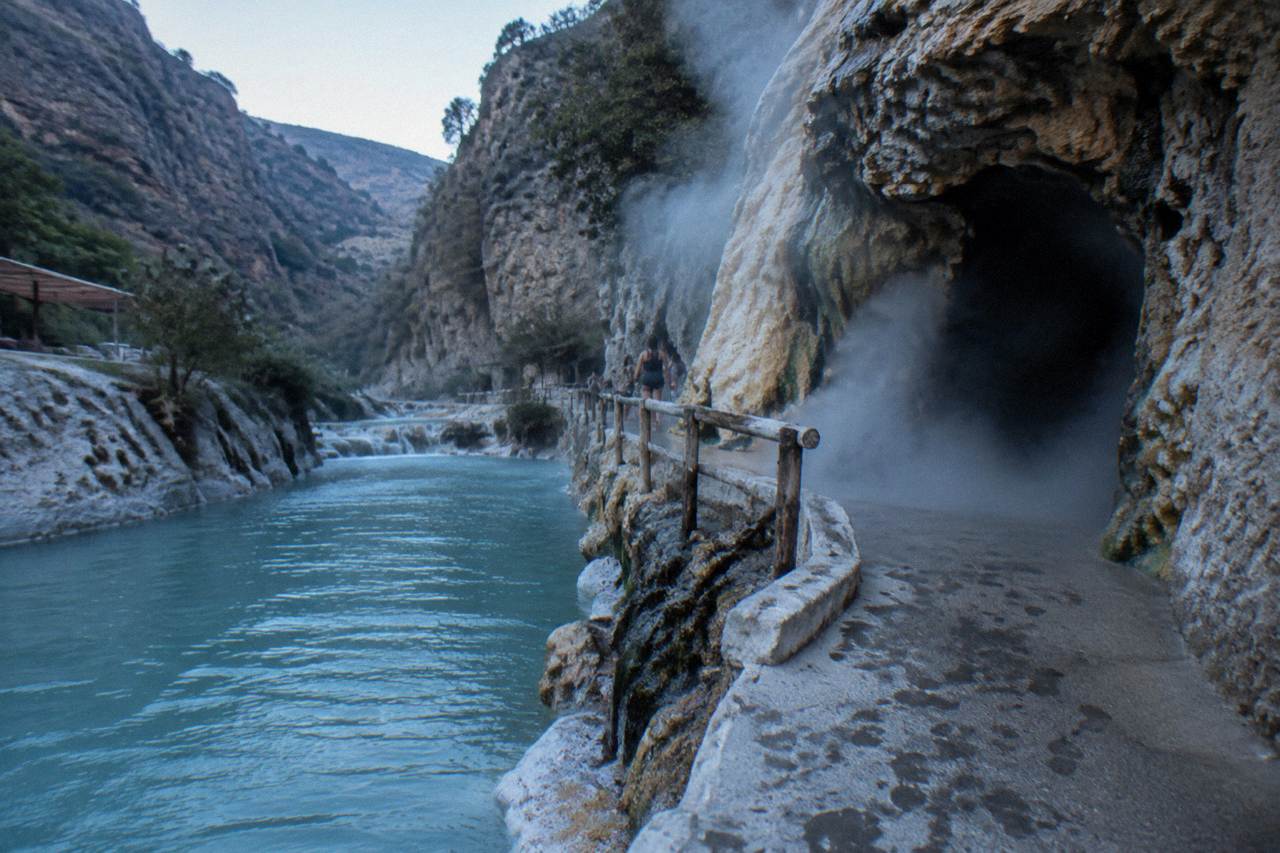
Yes, for most visitors the tunnel is safe under the park's rules: it is an official attraction with fixed opening hours, a posted swimsuit requirement, a ban on soap and food inside, and thermal water held at 36 to 38 degrees Celsius. The park states that visits are self-guided and that its own security rules apply. The real safety question is personal, not structural: anyone with claustrophobia, a heart condition or heat sensitivity should weigh the steam and enclosed space before entering.
The tunnel sits on the La Gruta side of Grutas de Tolantongo, alongside the cave, the thermal river and the waterfalls. On a typical day it is one of the busiest spots in the canyon, because the steam, the warm water and the rock ceiling make it unlike anywhere else in the park. That same combination is exactly what makes some visitors pause. A quick search of the question "are the tunnels in grutas tolantongo safe?" turns up plenty of forum threads, and most of the worry concentrates on three things: the enclosed space, the steam, and the footing. If you want the bigger picture before your visit, our guide to how safe Grutas de Tolantongo really is covers the canyon descent, the slippery rock throughout the park, and why a guided day tour removes most of the worry.
This article works through each of those concerns using the park's own published rules and hours, then looks at who should reasonably skip the tunnel, and how a guided day trip such as the small-group cave tour changes the experience for a nervous first-timer. Nothing here is a guarantee of conditions on any given day; steam thickness, crowds and water levels vary, and the park says so itself for the rainy season.
What Are The Tunnels Like Inside?
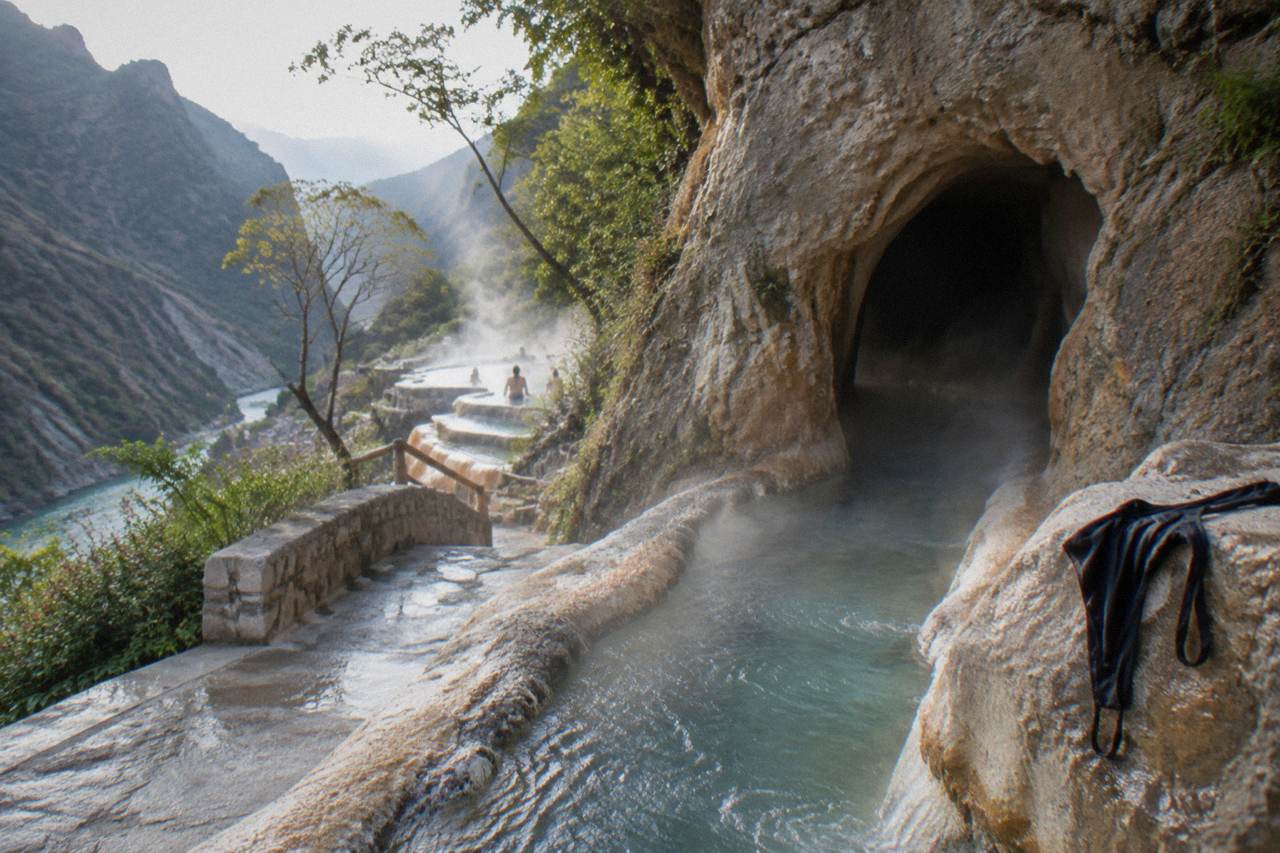
The tunnel is a man-adapted passage in the canyon rock on the La Gruta side, filled with naturally heated thermal water and steam, open from 8 am to 5 pm, and governed by the same rules as the cave: swimsuit required, no food, drink, soap or shampoo inside. The park lists the tunnel among the attractions covered by the general 230 MXN entrance ticket, alongside the gruta, the river, the pools, the waterfalls and the hanging bridge. No separate ticket and no guide are needed to enter.
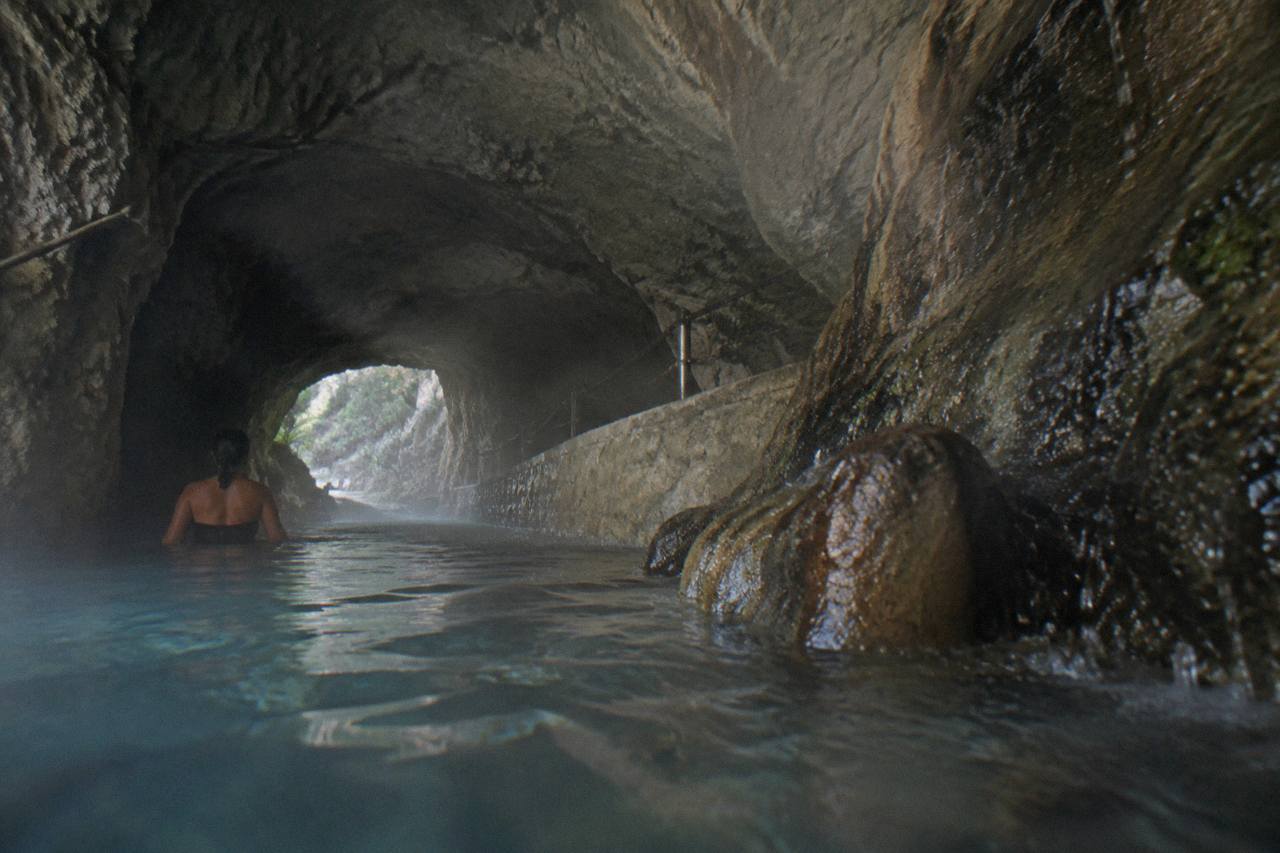
The park's own pages describe the water in the tunnel, the cave and the river as thermal, at a constant 36 to 38 degrees Celsius, which is warm-bath temperature rather than scalding. That warmth is what generates the steam the tunnel is known for. Visitors move through the passage on foot through shallow water, and the experience is closer to walking a warm, humid corridor than to caving: there is no climbing, no roped sections and no darkness requiring a headlamp. The exact length of the passage is not published by the park, so treat any specific figure you read elsewhere with caution. If that warm water makes you want to do more than walk, our breakdown of where you can swim in Tolantongo explains which parts of the park welcome swimmers and which do not.
What the park does publish, on its official costs page, is the full set of conditions of entry. The ticket is valid from 7 am to 8 pm, but the tunnel, the caves, the waterfalls and the pools specifically keep shorter hours, 8 am to 5 pm. Some of the thermal pozas and the river stay open later, until 9 pm. If the tunnel is the reason you are going, plan to arrive in the daytime window, not for an evening soak.
Two practical points follow from the rules. First, the no-soap rule exists because the water is the attraction: soap, shampoo and food would contaminate the thermal flow that every other visitor is sitting in. Second, the swimsuit rule applies to the cave, the tunnel, the river and the pools alike, so there is no dressing for the tunnel differently from the rest of the wet zones. Both rules are stated plainly by the park and enforced by staff.
Who Should Skip The Tunnel?
The honest answer is that visitors with diagnosed claustrophobia, serious heart conditions, heat sensitivity or limited mobility should consider viewing the tunnel from outside rather than walking through, because the park's own zipline rules flag heart conditions and the tunnel adds steam and enclosure on top of warm water. The park does not publish a medical advisory for the tunnel itself, so the decision rests with each visitor, and it is a reasonable one to make conservatively.
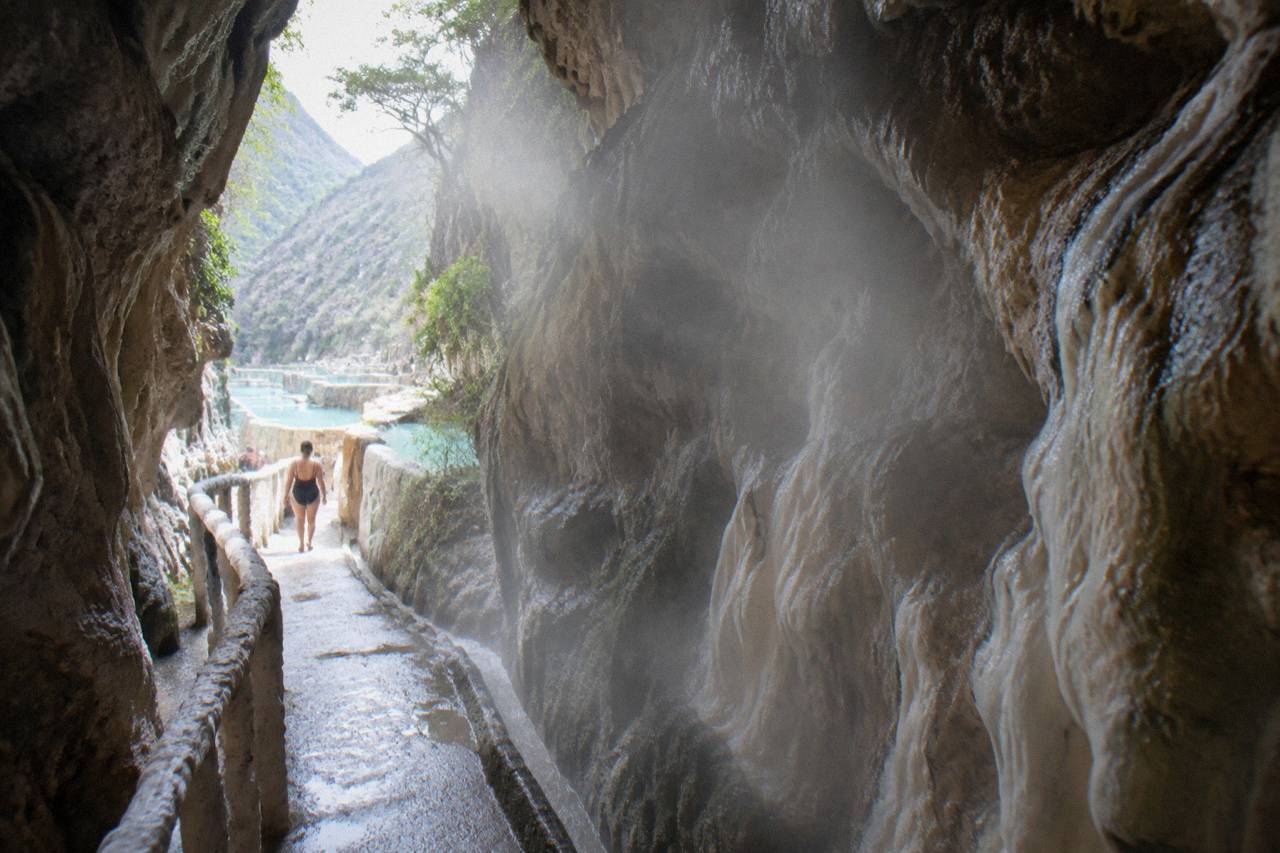
Claustrophobia is the most common reason people ask "are the tunnels in grutas tolantongo safe?" before booking a 14-hour day trip. The tunnel is enclosed, it is steamier than the open-air pools, and on busy weekends you may be sharing it with a steady stream of other visitors moving in both directions. If tight, humid spaces are a problem for you, the rest of the park is not: the pozas of Paraíso Escondido, the cliffside pools and the river are all open to the sky, and the same 230 MXN ticket covers them. Skipping the tunnel costs you nothing but the walk through it. Still wondering whether the long drive pays off, the firsthand reviews from visitors who made the trip give a honest picture of the day from people who skipped nothing.
The heat question deserves a separate word. Water at 36 to 38 degrees Celsius is comfortable for most people for a soak, but an enclosed, steamy passage holds that warmth in the air as well as the water. Visitors who struggle with saunas or hot yoga rooms, pregnant visitors, and anyone advised by a doctor to avoid heat should treat the tunnel the same way they would treat a sauna. The river and the pools, by contrast, let you cool off in open air whenever you like.
Mobility is the third factor. The path into the La Gruta zone involves canyon terrain, and inside the tunnel the footing is wet rock over shallow moving water. The park does not describe the tunnel as accessible, and its internal mototaxi and shuttle services run between zones rather than inside the wet attractions. If you are travelling with someone who would find wet, uneven footing difficult, the viewing points outside the tunnel and the pools with railings are the better stops.
What Rules Apply Inside The Tunnel?
The tunnel carries the park's standard water-attraction rules, published on the official costs and information pages: swimsuit only inside, no food, no drink, no soap and no shampoo, no pets anywhere in the park, and cash only for every payment you make once through the gate, including the entrance ticket itself. Those rules apply equally to the cave, the tunnel, the river and the pools, and staff enforce them across all four.
| Rule or cost | What the park states | Where it applies |
|---|---|---|
| Swimsuit required | Swimwear is the only accepted attire | Cave, tunnel, river and pools |
| No food or drink | Brought-in food and non-alcoholic drinks only in the camping zone | All water attractions |
| No soap or shampoo | Nothing that contaminates the thermal water | Cave, tunnel, river and pools |
| Opening hours | Tunnel, caves, waterfalls and pools 8 am to 5 pm | Ticket valid 7 am to 8 pm overall |
| Entrance | 230 MXN per person per day, cash only | Covers both park zones |
| Locker | 150 MXN with a 50 MXN refundable deposit, 8 am to 5 pm | Near the wet attractions |
| Valuables | Leave jewellery and valuables out of the water | Thermal water can strip jewellery |
The cash-only rule matters more than it sounds. The park states that all payments inside, including entrance, services and rentals, must be made in cash, and that the nearest ATM is in Ixmiquilpan, roughly an hour away. A visitor who arrives with only a card cannot buy the 230 MXN ticket at all, tunnel or no tunnel. Lockers cost 150 MXN with a 50 MXN refundable deposit and run 8 am to 5 pm, which matches the tunnel hours: useful if you want to leave valuables, dry clothes or a phone out of the steam while you walk through. More of these guides are collected on Grutas de Tolantongo Tours.
The park also says to leave valuables out of the water entirely, because the thermal water can strip jewellery. Inside a steam-filled passage, that is doubly sensible advice: a ring loosened by warm water and a dark, wet floor is a combination nobody needs. The park's information page is the authoritative source for the full rule list, and it is short enough to read before you go.
One boundary rule is worth knowing even though it sits outside the tunnel itself. Across the thermal river is a different ejido territory, La Gloria and other communities, and the Grutas de Tolantongo ticket does not grant entry, camping or services there. Visitors sometimes assume the far bank is a quieter extension of the park; it is not, and treating it as such leads to an awkward conversation with staff.
Does A Guided Tour Change Anything?
A guided tour does not change the tunnel itself, the park provides no guides of its own and every visit is self-guided on foot, but a tour changes everything around the tunnel: the drive, the timing, the cash handling and a bilingual guide who can tell you what to expect before you walk in. The park's excursion page is explicit that no park guides exist, so all guiding on site comes from third-party operators.
For a nervous visitor, that framing matters. The safety case for a tour is not that someone holds your hand in the tunnel; it is that you arrive at 8 am instead of mid-afternoon, with cash sorted, with someone who knows the layout of both zones, and with a group to fall back on if you decide the tunnel is not for you. The Tolantongo Caves Hot Springs & Waterfalls Small Group Tour from Amigo Tours does exactly this: 14 hours door to door from Mexico City, rated 4.6 across 352 reviews, from $92 per person, with pickup and inclusions listed on the booking page. You can Check availability alongside our fuller guide to small-group and private tours.
Two neighbouring listings suit different temperaments. The From Mexico City Tolantongo Caves Small-Group Tour, run by Amigo Tours LATAM, is the most reviewed small-group option among the tours listed here, rated 4.7 across 724 reviews from $132 per person, and its listed inclusions cover round-trip transport, a bilingual guide, the entrance ticket and access to the grotto, river, pools and hot springs, with a box lunch if that option is selected. Knowing the entrance is already handled removes one of the two cash-and-queue frictions of an independent visit.
The Full-Day Tour Exploring the Waters of Tolantongo is the most reviewed listing of all, 4.8 across 1,575 reviews, from $134 per person over 14 to 16 hours, and it is the pick for visitors whose plan is to move through every wet attraction in sequence, tunnel included, with the longest window on site. Whichever listing you look at, check what the operator's page says about inclusions and pickup, because they differ listing to listing even when the day looks similar.
What Do Visitors Report About The Tunnel?
Visitor reports on the tunnel cluster around three recurring points: the steam is thicker than expected, the walk is short enough to back out of quickly, and arriving early is the difference between a calm passage and a congested one. The park's own seasonal guidance backs the last point: it says weekends and holidays are far busier than weekdays, and advises arriving before the crowd builds on peak days.
Reviews also reflect the seasonal caveat the park states plainly: in the rainy season, roughly June to September, visitors should stay away from the river when it rains and follow security staff, because heavy rain can change water conditions and close sections temporarily. The tunnel and the cave are less exposed than the river, but a storm day changes the whole canyon, and no operator or park page will promise otherwise. Our complete visitor guide covers the seasonal timing in more depth.
For visitors weighing the tunnel specifically, the practical summary is short. Go in the morning inside the 8 am to 5 pm window. Wear the swimsuit you are already wearing for the pools. Leave jewellery and electronics in a locker. Walk in only as far as feels comfortable, since the exit is behind you the whole way. If steam or enclosure is a known problem for you, spend the day in the open-air pozas and pools instead, and see the tunnel mouth from the path. The same ticket buys both.
If the decision is between an independent trip and a guided one, the arithmetic is on the tour versus going on your own page: the bus and combi route from Mexico City runs about four hours door to door with a connection in Ixmiquilpan, against roughly three hours fifty minutes of driving by the park's own distance table. A tour compresses all of that into one booking. Whatever you choose, the park's rules, hours and prices in this article come from its own pages, and the live listing for any tour shows the current price.
Common Questions About The Tolantongo Tunnels
How hot is the water in the Tolantongo tunnel?
The park states that the thermal water in the tunnel, the cave, the river and the pools holds a constant 36 to 38 degrees Celsius year-round, which is warm-bath temperature. The enclosed tunnel holds that warmth in the air as steam, so it can feel hotter than the open-air pozas.
Do you need a guide for the tunnel?
No. The park provides no guides at all, and every visit, including the tunnel, is self-guided on foot. Guided day tours from Mexico City include a bilingual operator guide who handles transport, timing and tickets, but inside the park everyone walks the tunnel on their own.
Can you bring food or soap into the tunnel?
No. The park's rules ban food, drink, soap and shampoo in the cave, tunnel, river and pools, and allow brought-in food only in the camping zone. The no-soap rule protects the thermal water that every visitor soaks in.
Is the tunnel open in the evening?
No. The tunnel, caves, waterfalls and pools keep hours of 8 am to 5 pm, even though the entrance ticket itself is valid from 7 am to 8 pm. Some thermal pozas and the river stay open until 9 pm for evening visits.
What happens to the tunnel in rainy season?
The park advises visitors to stay away from the river in rain and to follow security staff, and heavy rain in the June to September season can close sections of the park temporarily. Check conditions before you go, and expect the open-air attractions to be the ones most affected.