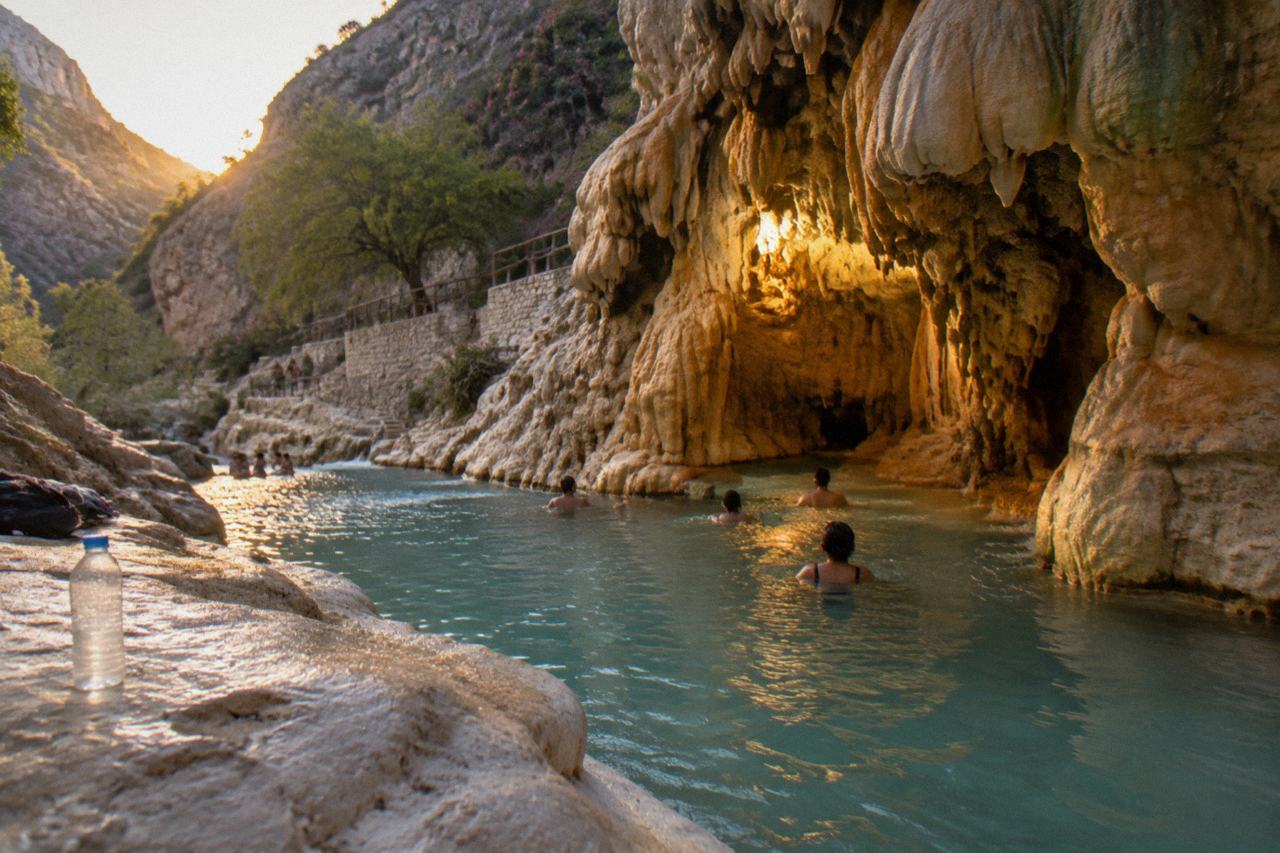
Tolantongo River, Waterfalls And Cliffside Pools Explained
The river, the waterfalls and the cliffside pools are the three water features visitors remember longest at Grutas de Tolantongo. Here is what each one is, where it sits in the canyon, and how to plan a day around them.
Short answer
One 230 MXN ticket covers the thermal river, the waterfalls, the cliffside pozas and the pools on both sides of the canyon, open 8 am to 5 pm for the main attractions and until 9 pm for parts of the river. Water stays 36 to 38 C year round. Shared tours from Mexico City run from $78 to $140 per person, private from $147.
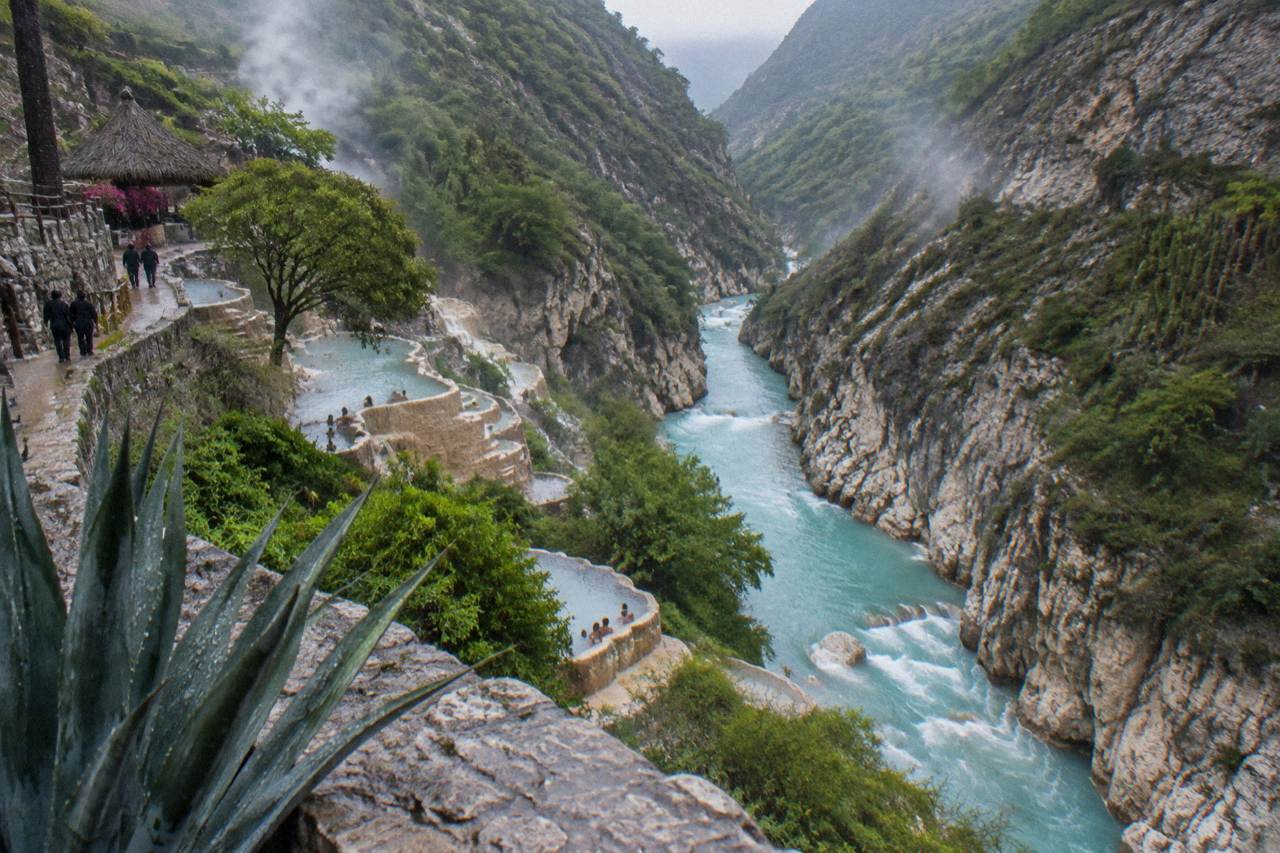
The river at Grutas de Tolantongo runs turquoise between canyon walls that rise steeply on both sides, and it is heated by the same thermal system that fills the cave and the steam tunnel above it. The park's own pages put the water at a constant 36 to 38 C, which means the river, the waterfalls that spill down the cliff faces and the dozens of small pools terraced into the rock all share one warmth, one mineral signature and, on a dry-season weekday, one unmistakable colour. This guide walks through each of the three water features in turn: what it is, where it sits in the canyon, what the rules are, and how the parts of a day trip fit together if water is the reason you are going. If you want to widen the day beyond the canyon, our guide to pairing Tolantongo with Huasca de Ocampo weighs whether both towns fit into a single route.
Most visitors arrive on a shared day tour from Mexico City, and the choices differ more than the marketing suggests. The early express Tolantongo hot springs departure runs 13 hours from Mexico City, rated 4.9 across 680 reviews, from $133 per person, and its whole pitch is arriving ahead of the crowds that flood the river banks after midday. The full-day Exploring the Waters of Tolantongo tour, 4.8 across 1,575 reviews and from $134, is the most reviewed listing on this site. There are also budget options from $78 and private tours from $147, and we will point at the specific ones that suit a water-first day as each section unfolds. Whichever departure you pick, the guide to Tolantongo's cliffside pools and which to try first explains how to plan your time once the bus drops you at the entrance.
Why Is The Tolantongo River That Colour?
The turquoise colour comes from mineral-rich thermal water: calcium carbonate and other dissolved minerals settle out of the warm spring water as it cools, scattering light in the blue-green range, and the effect is strongest when the water is clear and the sun is high. Rain changes everything, because runoff from the canyon walls carries silt that turns the river brown until the sediment settles again.
The colour is the single most photographed quality of Tolantongo, and it is also the most conditional. On a dry-season morning the river can look almost artificially blue, and the cliffside pozas above it hold the same tone in still water. After heavy rain the tone shifts to a muddy brown, and visitors who arrived expecting the postcard are sometimes disappointed. The park itself simply states the temperature range and the rules; it makes no promise about colour, and neither should any honest planner.
The seasonal pattern matters more than most first-time visitors realise. The rainy season in Hidalgo runs roughly June to September, and during that window storms can turn the river brown and close sections of it for hours at a time while the current runs high. Park security staff actively move swimmers away from the river in rain, and the official guidance is to follow their instructions without argument. If a turquoise river is the whole point of your trip, the dry months from October to December are the safest bet, and May, before the rains begin, is reported to be nearly as reliable.
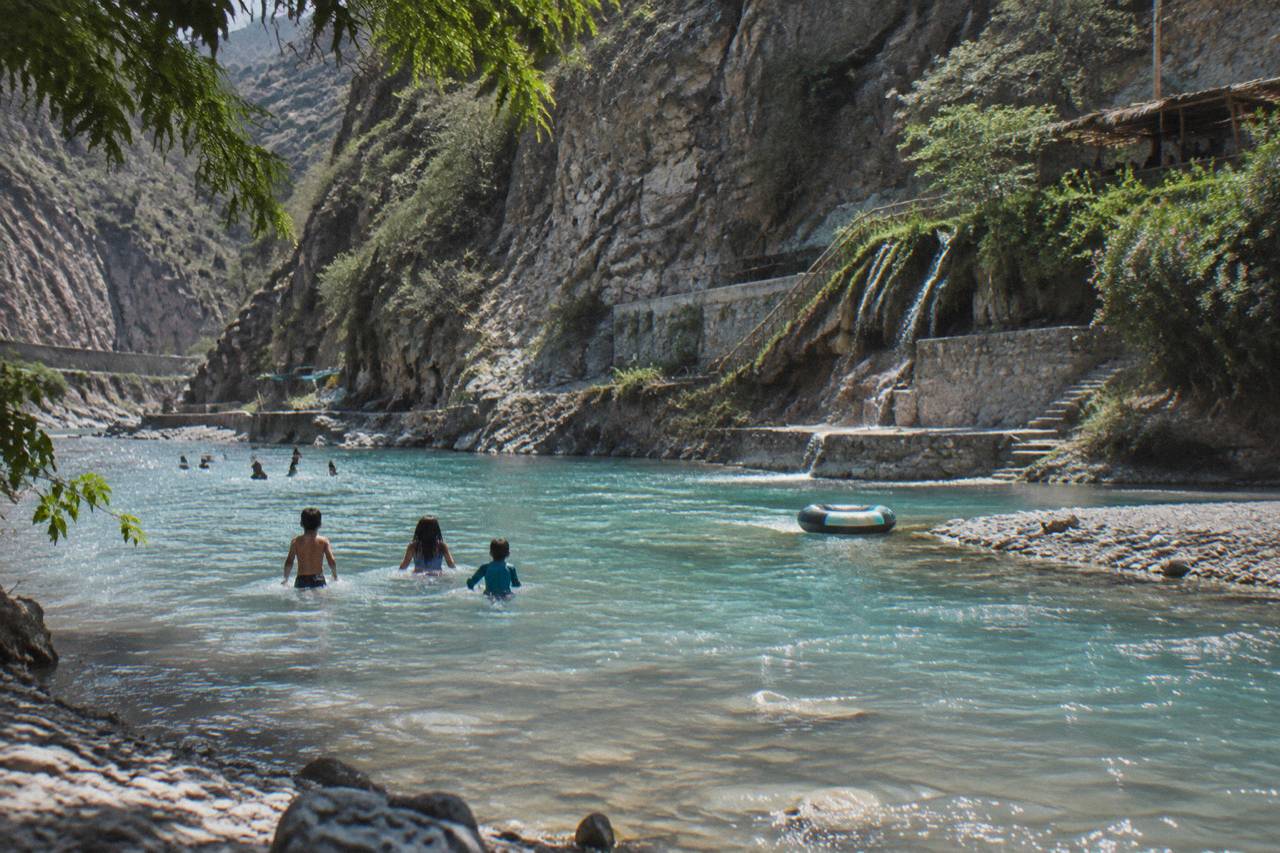
Two practical notes round this out. First, the river is shallow along most of its swimming stretch, which is why families with children spend so much time in it, and the swimsuit rule applies: street clothes are not allowed in the river, the pools or the cave. Second, what you see from the bridge and the viewpoints above is not always what you get at water level, so walk the length of the river path before committing to a spot for the day.
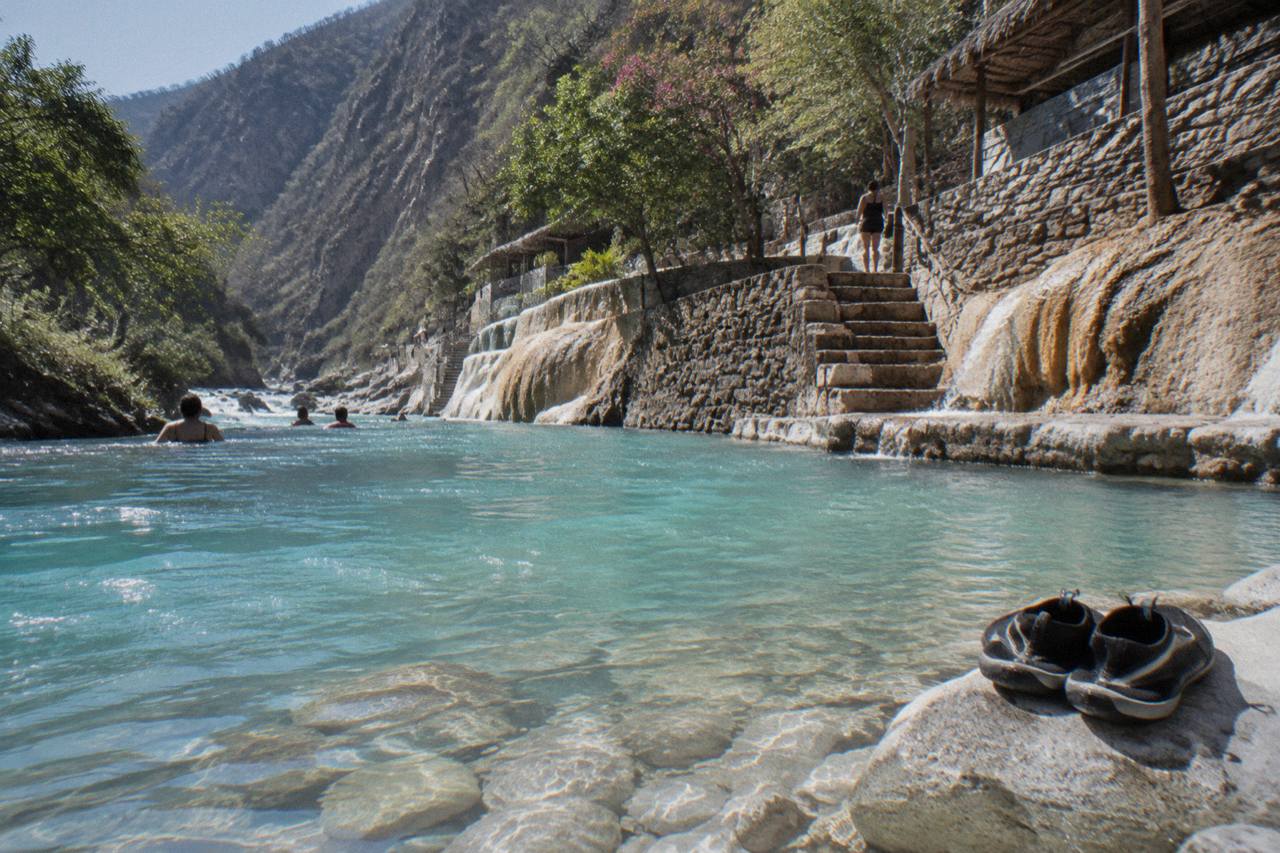
The river also has a companion feature that surprises visitors who only know the photos: the waterfalls. Water spills down the canyon walls at several points, warm where it is fed by thermal seeps and colder where it is runoff, and the largest falls sit close to the cliffside pool terraces. The next section covers them properly.
Where Are The Waterfalls And How Do You Reach Them?
The waterfalls sit on the Paraíso Escondido side of the canyon, below and beside the terraced cliffside pools, and you reach them on foot along the river path after crossing the canyon from the La Gruta side. No vehicle is needed inside the park, the walking is moderate, and the same 230 MXN ticket that covers the river covers the falls.
The canyon has two zones, and the ticket covers both. La Gruta is where the cave and the steam tunnel sit, close to the entrance road and the main hotel section. Paraíso Escondido, "hidden paradise" in Spanish, is the other side of the river, and it holds the cliffside pozas, the pools (albercas) and the falls that drop down the rock face into the thermal river below. A hanging bridge crosses the river between the two zones and is listed among the included attractions, and there is an internal shuttle between zones for 15 to 20 MXN per person shared if the walk back up feels long on a hot afternoon.
The waterfalls themselves are not one single drop. Visitors describe a series of cascades along the cliff, some wide sheets of warm water you can stand under and some thin ribbons that feed the pools above. The rocks around the falls are worn and, in places, slippery, so footwear with grip matters more here than anywhere else in the park. The trail between the falls and the pool terraces is short but uneven, carved into the hillside rather than engineered.
Timing the falls is about crowds more than water. On weekdays the paths around the cascades stay walkable all day. On weekends and holidays the park is far busier, and the natural perches under the falls fill by late morning, which is exactly the pressure the early express departure from Mexico City is built to beat: 13 hours door to door, rated 4.9 across 680 reviews, from $133 per person, with the early start putting you at the falls while they are still quiet. Its pickup details are on the listing.
| Water feature | Zone | Hours | Access |
|---|---|---|---|
| Thermal river | Both, main stretch below bridge | 8 am to 9 pm for parts of the river | Swimsuit only, shallow, follow staff in rain |
| Waterfalls | Paraíso Escondido cliff face | 8 am to 5 pm | On foot along river path, slippery rocks |
| Cliffside pozas | Paraíso Escondido terraces | 8 am to 5 pm | Terraced steps, no hotel guest requirement |
| Main pools (albercas) | Paraíso Escondido | 8 am to 5 pm | Swimsuit only |
| Cave and tunnel | La Gruta | 8 am to 5 pm | Swimsuit only, no soap |
For a fuller picture of the cave and tunnel side of the canyon, see the thermal cave and tunnel guide, which covers the La Gruta zone in detail.
What Are The Cliffside Pozas Really Like?
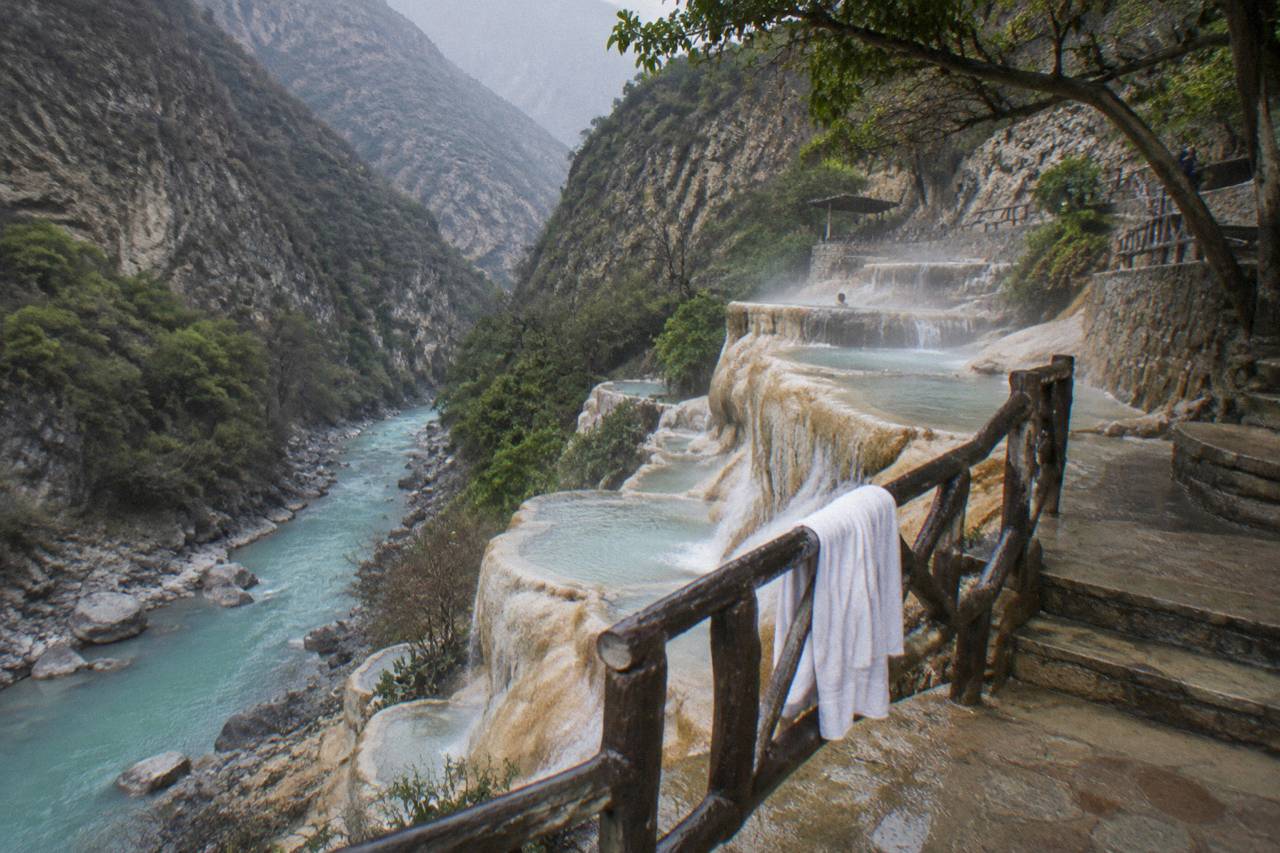
The pozas are dozens of small terraced pools built into the cliffside above the river, each fed by warm mineral water and each holding a few people comfortably, and you do not need to be a hotel guest to use them: the park's own pozas page states this directly. They are the most sought-after photo spot in the canyon and the first thing that fills on a busy day.
Wikipedia and most travel coverage say "about 40 pozas"; the park does not publish an exact count, so think dozens rather than a number. They step down the cliff in rows, some large enough for six or eight people, some barely big enough for two, and the water in each is a shallow soak rather than a swim. The temperature is the same 36 to 38 C as everything else in the canyon. What varies is the view: the higher rows look straight down the canyon toward the river and the falls, and those are the ones that appear in nearly every photograph of Tolantongo.
Because the pozas are the headline image, they are also the crowding bottleneck. On a weekday in the dry season you can move between pools at will. On a weekend the best rows have queues by mid-morning, and etiquette matters: visitors generally limit themselves to a soak and a photo and move on. Arriving early is the only real countermeasure, and it is why the early-express style of departure exists at all.
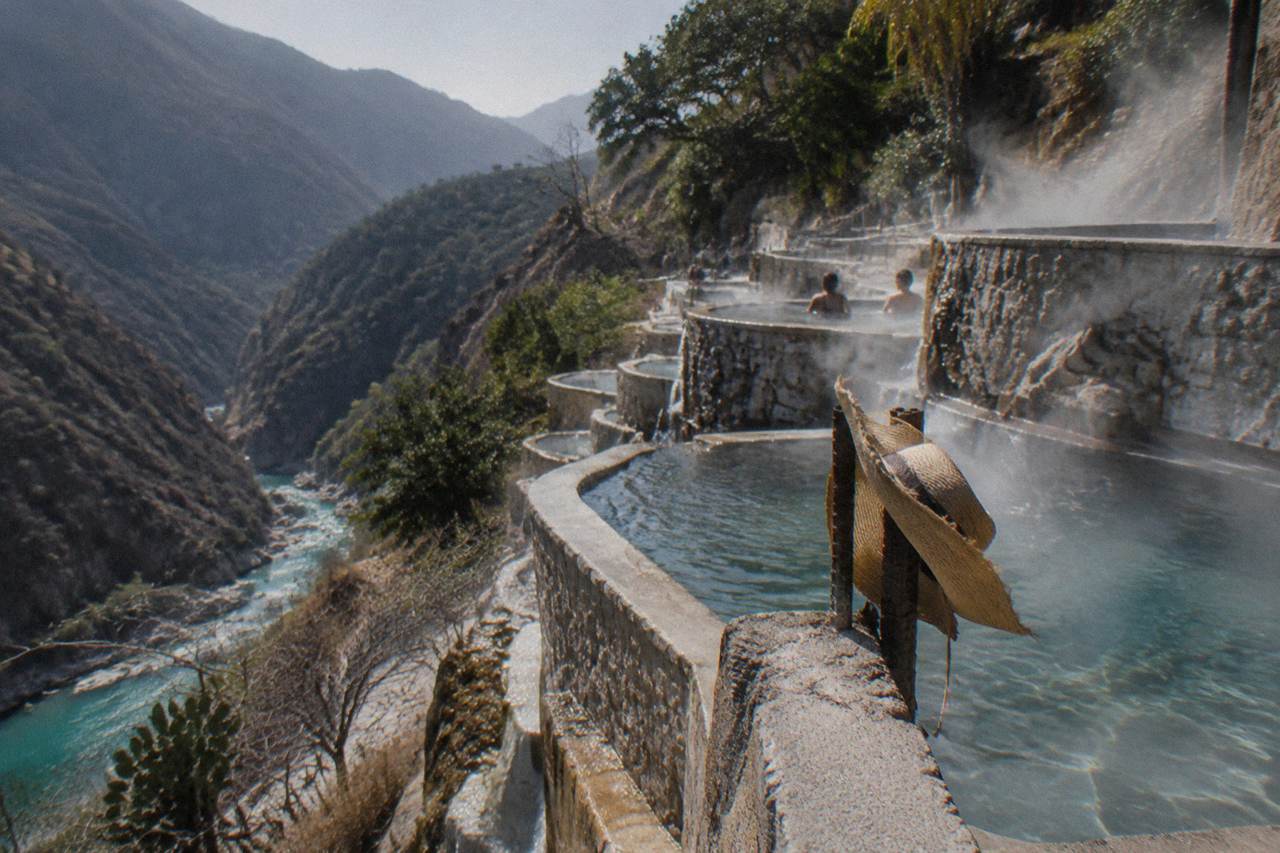
There is one rule specific to this area worth repeating: no food, drink, soap or shampoo in the pozas, the pools, the river, the cave or the tunnel. It is stated on the park's attraction pages, and it exists because the water is what the whole ejido economy is built on. Lockers at 150 MXN with a 50 MXN refundable deposit, operating 8 am to 5 pm, let you keep snacks and dry clothes out of the water zone entirely.
If the pozas, the falls and the river all appeal equally, the trio above is the honest shortlist: the early express for a fast, crowd-beating day, the full-day Exploring the Waters tour for the most reviewed itinerary at 4.8 across 1,575 reviews from $134, and the exclusive Tolantongo and La Gloria adventure, 5.0 across 31 reviews from $149, if you want a second hot springs area across the river thrown in. Each has its own pickup details and inclusions on the live listing, so check what the listing includes before assuming entrance or food is covered.
Can You Swim In The River, The Pools And Under The Waterfalls?
Yes to all three, with a swimsuit mandatory in every one of them and the river the only spot with an active safety caveat: in the rainy season, roughly June to September, park staff clear swimmers from the river when it runs high or brown, and the official instruction is to follow security staff immediately. The pozas and pools are soak-and-wade, the river is shallow swimming.
The swimming question deserves its own careful answer because the three experiences are quite different. The river is the most forgiving: shallow, warm and slow on a normal day, with a sandy and stony bottom, and safe enough that it is where most families with small children spend their time. Children aged 0 to 4 enter the park free and those 5 and over pay the full 230 MXN, and there is no separate children's rate for the water attractions because the ticket covers everything.
The pozas are sitting water. You lower yourself in, you sit, you look at the canyon, and you get out. Under the waterfalls you can stand and let the warm water hit your shoulders, but the rock is slick and there is no lifeguard culture here; the park positions security staff, not swimming supervisors. Strong swimming ability is not needed anywhere in the canyon, but sure footing is.
Two more rules shape the day. No pets are permitted anywhere in the park, which surprises some road-trippers. And the no-soap rule extends to sunscreen and cosmetics in the water attractions: the park's pages are blunt about keeping anything artificial out of the thermal system. For the full picture on swimming conditions through the seasons, the dedicated can you swim in Tolantongo piece goes deeper on depth, temperature and season.
How Much Time Do The River, Falls And Pools Need?
A comfortable water-first circuit takes four to five hours on site: about an hour and a half for the pozas and falls on the Paraíso Escondido side, an hour in the river, and the rest for walking between zones, eating and drying off. Tour itineraries typically budget around four hours on site, which is enough for all three water features if you skip the cave and tunnel.
Every shared day tour from Mexico City spends roughly the same structure: three and a half to four hours of driving each way, then a block of hours in the canyon. How you spend that block is the real decision. A water-first visitor should start on the Paraíso Escondido side while energy and morning light are high, do the pozas and the falls before the terraces fill, then descend to the river for a long shallow soak, then decide whether the cave and tunnel on the La Gruta side fit the remaining time.
| Hour on site | Where | Why |
|---|---|---|
| First half hour | Bridge and viewpoints | Photos before crowds, orient yourself |
| 8 to 10 am | Pozas and waterfalls | Highest rows still open, light on the cliff |
| 10 to 11:30 am | River, upper stretch | Warm soak, shallow water, families |
| 11:30 to 12:30 | Restaurant or brought snacks | Food only in the camping zone |
| 12:30 onward | Cave and tunnel, or river again | Cave closes 5 pm sharp |
The small-group Tolantongo Caves Hot Springs and Waterfalls tour, run by Amigo Tours from Mexico City at 14 hours, rated 4.6 across 352 reviews and from $92 per person, is a good fit for this water-plus-everything pacing, and there is a closely related Amigo Tours LATAM small-group listing at from $132 that states its inclusions outright: entrance, round-trip transport, a bilingual guide and an optional box lunch. Compare the two on their live listings, because they are different listings with different prices, not versions of one tour.
If you would rather build the timing yourself, the hour-by-hour Tolantongo itinerary lays out a full day from the 5 am pickup to the return to Mexico City, including where the water features sit in the sequence.
What Do The River, Waterfalls And Pools Cost?
The 230 MXN daily entrance covers the river, the waterfalls, the cliffside pozas, the pools, the cave, the tunnel, the hanging bridge and the hiking trails, and it is valid 7 am to 8 pm, not 24 hours. Everything extra costs more in cash: 50 MXN parking, 300 MXN for the zipline, 150 MXN lockers, and there is no card payment or ATM anywhere in the canyon.
The cash rule is the one that catches visitors out. The park's official costs page states it plainly, and the nearest ATM is in Ixmiquilpan, roughly an hour away by road. A day visitor who arrives with only a card will be turning around at the gate. Tours that include the entrance fee remove this friction entirely, which is one quiet argument for a shared day trip over an independent drive.
| Item | Cost (MXN) | Notes |
|---|---|---|
| Park entrance | 230 per person per day | Children 0 to 4 free, 5 and over full price |
| INAPAM seniors | 50% off entrance | Credential required, entrance only |
| Parking | 50 per vehicle | Space, not custody |
| Zipline | 300 per person per launch | 1,890 m total, over 10 years old, max 93 kg |
| Locker | 150 with 50 refundable | 8 am to 5 pm |
| Zone shuttle | 15 to 20 per person | Shared, between zones |
For tour prices, the shared per-person range from Mexico City runs from $78 to $140 depending on the listing, with the full-day Tolantongo Caves listing at 5.0 across 54 reviews the cheapest at from $78, and the two Amigo Tours LATAM options at from $132. Two private listings, at from $333 and from $611, do not confirm on this site whether the price is per person or per vehicle, so the booking page shows the price basis. The park's own costs are published on the official costs page, and the two-zone attraction layout is described on the official information page.

When Is The River At Its Best?
October to December is the sweet spot: dry weather, cooler air between roughly 10 and 24 C that makes 38 C water feel wonderful, moderate crowds on weekdays and the river at its clearest turquoise. May runs close behind. June to September brings rain that can brown the river and close sections, and weekends year round are far busier than weekdays.
The seasonal logic at Tolantongo is unusual because the water temperature never changes. In most hot springs destinations the question is whether the water is warm enough; here the constant 36 to 38 C means the variable is air temperature, rainfall and people. Cold-season nights from December to March drop enough that the park's own camping page tells overnight visitors to bring blankets and jackets, and the contrast between cold morning air and hot water is part of the appeal.
| Period | River and falls | Crowds | Verdict |
|---|---|---|---|
| January to March | Clear, cold nights | Busy on holidays and puente weekends | Good, bring layers |
| April | Clear; Semana Santa peak | Extremely busy over Easter week | Avoid or arrive very early |
| May | Clear, pre-rain | Moderate | Excellent |
| June to September | Rain risk, brown river possible, closures possible | Moderate | Check conditions before you go |
| October to December | Clearest, dry | Weekdays quiet, Christmas busy | Best window |
Semana Santa is the single busiest stretch of the year, and the dates move with Easter: the 2026 edition ran 29 March to 5 April, and Easter Sunday 2027 falls on 28 March, so expect the following week to be the 2027 peak. Christmas and New Year, roughly 24 to 31 December, and Mexican long weekends are the next busiest. On any of those days, arriving before 8 or 9 am is the standard advice, and the park is open 365 days a year with the ticket office running 6 am to 11 pm.
The weather-driven colour changes are documented on the park's official river page, which also carries the rainy-season instruction to keep clear of the river and follow security staff. Water conditions, like every natural feature in the canyon, are reported conditions, not promises.
Which Tours Suit A Water-First Day?
For a day built around the river, the falls and the pozas, the strongest fits are the early express departure at from $133, the full-day Exploring the Waters tour at from $134, and the exclusive Tolantongo and La Gloria adventure at from $149, with the budget full-day caves listing at from $78 the pick if price leads the decision. All four run from Mexico City.
The reason timing dominates this choice is simple: the pozas and the falls degrade fastest under crowds, and the river holds up all day. The early express Tolantongo hot springs listing, 13 hours and rated 4.9 across 680 reviews, exists precisely to win the morning. The full-day Exploring the Waters tour, 14 to 16 hours and 4.8 across 1,575 reviews, is the most reviewed of the listings here and gives the longest duration block on this site, which suits visitors who want the cave and tunnel as well as all three water features. The exclusive La Gloria adventure, 14 hours and 5.0 across 31 reviews from $149, adds a second hot springs area across the river, though note the Tolantongo ticket itself does not cover La Gloria's territory, which belongs to a different ejido.
Private options reshape the day entirely: the 100% private tour from Mexico City, 13 hours, 4.8 across 189 reviews, from $167 per person, lets a family or small group set their own pace through the zones, and there is a longer private 1- or 2-day version at from $175 if one day of water is not enough. Pickup details and inclusions for each are on the operator's live listing, and the park provides no guides of its own, so the guide you get is the operator's, not the park's.
A water-first day rewards the earliest realistic start, and of the listings above the early express is the one engineered for exactly that. Its free-cancellation terms and pickup points are on the live listing, and the price shown is a snapshot, so the booking page shows the live figure.
For everything else around the water: what to pack is covered in what to bring to Tolantongo, and the wider question of whether a tour beats an independent trip is settled, listing by listing, in Tolantongo tour versus going on your own. This page is part of the coverage at Grutas de Tolantongo Tours, where every water feature, ticket price and tour listing is documented in one place.
Common Questions About The Tolantongo River And Pools
Is the Tolantongo river natural?
Yes. The river is fed by thermal springs inside the canyon and the water emerges at 36 to 38 C. The pozas are pools terraced into the cliffside by the community that runs the park, but the water and the waterfalls themselves are natural features of the canyon.
Why does the river turn brown sometimes?
Rain. Runoff from the canyon walls carries silt into the river during storms in the June to September rainy season, and the colour can shift from turquoise to brown until the sediment settles. Sections may also close for safety while the current runs high. The dry months are the most reliable for clear water.
Do you need a swimsuit for the waterfalls and pools?
Yes, a swimsuit is mandatory in the river, the pozas, the pools, the cave and the tunnel, and the same rule bans food, drink, soap, shampoo and cosmetics in all of them. The park states these rules on its attraction pages and enforces them at the entrances to the water areas.
How long do you need for the river, waterfalls and cliffside pools?
Plan on four to five hours to enjoy all three without rushing. Tour itineraries typically budget around four hours on site, which covers the pozas, the falls and a river soak, with the cave and tunnel only fitting if you move with purpose.
Does the 230 MXN entrance cover everything?
It covers the river, the waterfalls, the pozas, the pools, the cave, the tunnel, the hanging bridge and the hiking trails in both zones. It does not cover parking (50 MXN), the zipline (300 MXN), lockers (150 MXN) or the zone shuttle, and everything inside the park is cash only.
Which tour is best for the water features?
An early-start shared tour is the strongest fit. The early express hot springs departure, from $133 per person and rated 4.9 across 680 reviews, is built to reach the pozas and falls before crowds build, while the full-day Exploring the Waters tour at from $134 gives the longest time on site. Compare pickup points and inclusions on each live listing.