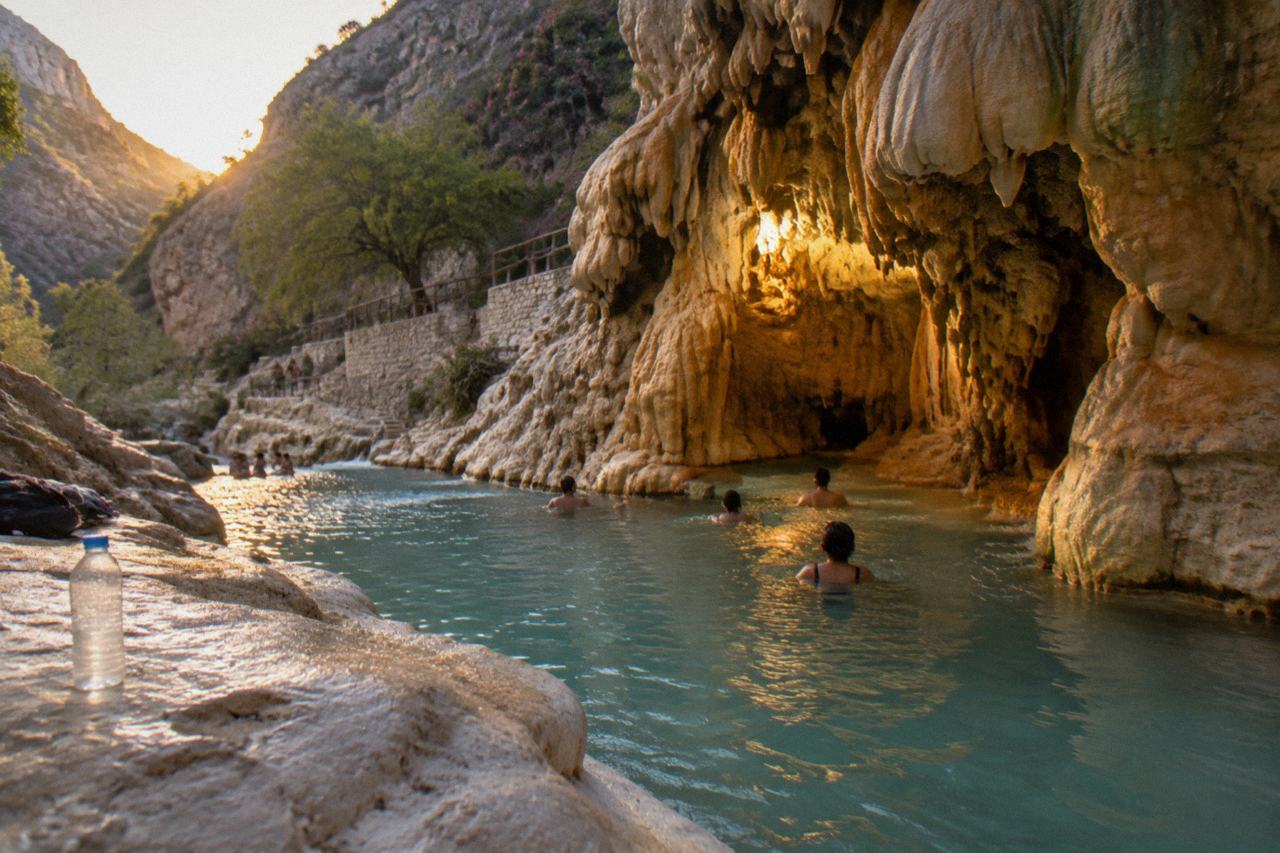
Tolantongo And Huasca De Ocampo: Can You Combine Them
Tolantongo and Huasca de Ocampo sit in the same state but on opposite sides of the Hidalgo highlands, so the honest answer is a two-day plan, not a single sprint.
Short answer
Tolantongo lies 201 km and about 3 hours 50 minutes from Mexico City, while Huasca de Ocampo sits in the mountains beyond Pachuca, 117 km and roughly 2 hours 28 minutes from the park. One rushed day is technically possible but miserable; two days, sleeping at the park or in Pachuca, is the sequence that works.
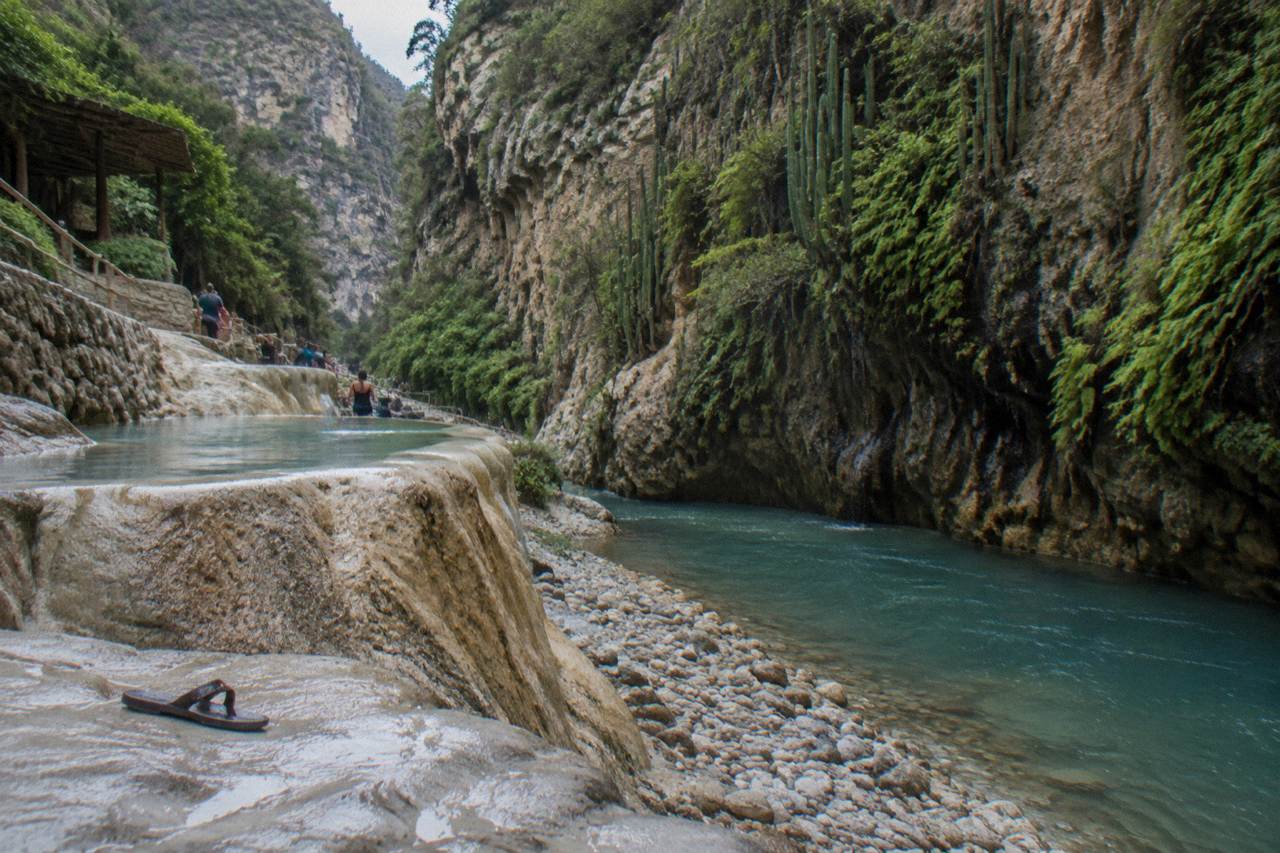
Tolantongo and Huasca de Ocampo are the two names that keep appearing together in Hidalgo trip plans, and the pairing makes sense on paper: one is a hot-spring canyon, the other a former mining town in pine forest with the famous prismatic basalts nearby. The catch is geography. The park sits at the bottom of a deep canyon in the Mezquital Valley side of the state, while Huasca perches in the cooler mountains on the far side of Pachuca. The official distances page of the park puts Pachuca, the natural junction between the two, at 117 km and about 2 hours 28 minutes of driving from the canyon rim, and Mexico City at 201 km and 3 hours 50 minutes.
That junction number is the whole story of this article. Anyone hoping to swim in the thermal river in the morning and stand under the basalt columns in the afternoon needs to count hours honestly, because the road between the two runs through mountain switchbacks, not a straight highway. This guide lays out the real distances, a two-day sequence that travelers actually enjoy, the lodging options that make it work, and which of the bookable tours fit each day. The early express departure from Mexico City is the most efficient way to clear day one, rated 4.9 across 680 reviews and priced from $133 per person, and it pairs neatly with a second day built around Huasca.
How Far Apart Are Tolantongo And Huasca De Ocampo?
There is no verified direct distance between the two, because there is no direct road anyone would recommend; every sensible route runs through Pachuca, which the park's own getting-there page lists at 117 km and 2 hours 28 minutes from the park, and Huasca lies beyond Pachuca in the mountains above Real del Monte, adding roughly another hour of climbing on regional roads. Count on the full Tolantongo to Huasca leg taking close to four hours each way with stops, which is why every realistic itinerary splits the pair across two days. The park publishes its distances plainly on its official getting-there page, and those numbers are the backbone of any Hidalgo loop plan.
The table below pulls the verified official distances from the park. Notice that Actopan, not Pachuca, is the exit you take coming from Mexico City, while Pachuca is the city you bend toward when Huasca is the goal.
| From the park | Distance | Drive time |
|---|---|---|
| Ixmiquilpan | 42.9 km | 1 h 11 min |
| Actopan | 82.4 km | 1 h 49 min |
| Pachuca | 117 km | 2 h 28 min |
| San Juan del Río | 143 km | 2 h 36 min |
| Querétaro | 193 km | 3 h 06 min |
| Mexico City | 201 km | 3 h 50 min |
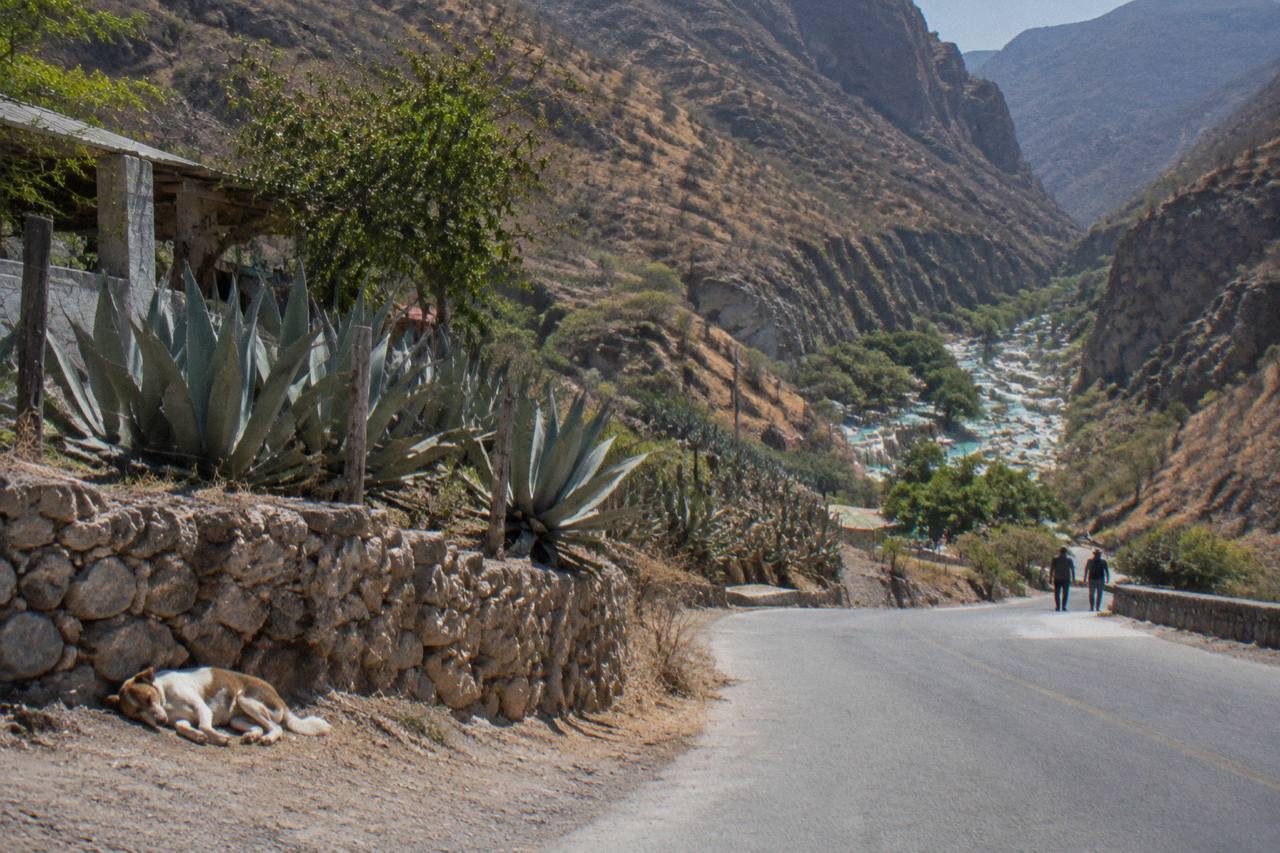
Two practical notes shape the drive. The final 20 km down into the Tolantongo canyon is paved but tight, with curves the official page says automatic cars should descend in first and second gear, and cell signal drops on the approach, so offline maps should be downloaded in Ixmiquilpan. Fuel and the nearest ATM are also in Ixmiquilpan; the park takes cash only for everything, entrance included, so plan the wallet before the descent. For a fuller treatment of the canyon road itself, see the driving-safety questions covered in is it safe to drive from Mexico City.
Can You Visit Both Tolantongo And Huasca In One Day?
No, not in any way worth doing. A Tolantongo day tour from Mexico City already runs 12 to 14 hours door to door, and adding a four-hour mountain transfer to Huasca and back would push the day past twenty hours, so the honest options are two separate day tours on consecutive days, or one overnight split with a night at the park or in Pachuca. The cheapest full-day cave tour from Mexico City, from $78 per person and rated 5.0 across 54 reviews, shows just how long even a no-frills day already is at 12 hours 30 minutes. There is no listing among the tours on this site that combines both destinations, and the park itself provides no guides, so any pairing is one you sequence yourself.
The two-tours-in-two-days approach is the one most Mexico City visitors land on, and it works without a rental car. Day one is a shared or private Tolantongo departure; day two is a Huasca-focused trip, which you arrange locally from Pachuca or as a private excursion, since the tours listed on this site are Tolantongo-centred. The small-group cave tour from Mexico City, from $132 per person and rated 4.7 across 724 reviews, includes round-trip transport, a bilingual guide, entrance to the park and access to the grotto, river, pools and hot springs, which removes the two biggest frictions of day one: the drive and the cash-only ticket line.
If you would rather not return to the capital between the two days, the overnight split is better. The full-day Exploring the Waters of Tolantongo tour, the most reviewed listing on this site at 4.8 across 1,575 reviews and from $134 per person, runs 14 to 16 hours, which is a lot to then repeat the next morning; sleeping at the park instead turns day two into a short drive to Huasca rather than a five-hour loop back through Mexico City. The trade-offs of that overnight are laid out in the lodging section below.
What Does A Two-Day Tolantongo And Huasca Itinerary Look Like?
The sequence that works is Tolantongo on day one with an overnight either inside the canyon or in Pachuca, then Huasca de Ocampo on day two with the prismatic basalts as the anchor stop, returning to Mexico City in the evening; reversed, it also works, but doing Tolantongo second means a long final day after a cold mountain night. The reason for this order is energy, not just distance: the hot springs reward a full afternoon, and Huasca's walks are gentle enough to enjoy on tired legs. A private option such as the 1- or 2-day Tolantongo tour from Mexico City, from $175 per person and rated 4.6 across 20 reviews, is built with exactly this kind of flexibility in mind, letting a group stretch one visit into two days.
Here is a realistic hour-by-hour frame for the two days, using the park's verified opening hours.
| Time | Day 1: Tolantongo | Day 2: Huasca |
|---|---|---|
| 05:30 | Early pickup or pre-dawn drive from Mexico City | Breakfast in the canyon or Pachuca |
| 08:00 | Park opens; caves, tunnel and pools from 8 am | Drive toward Huasca via Pachuca |
| 10:00 | Grotto and steam tunnel before crowds build | Prismatic basalt columns and canyon walk |
| 13:00 | Lunch at the on-site restaurant, cash only | Huasca town square and lunch |
| 16:00 | Pozas and river; some pozas and the river run to 9 pm | Return drive toward Pachuca |
| 18:00 | Settle in at the lodging section or drive to Pachuca | Drive back to Mexico City |
| 20:00 | Dinner; camping zone has 24 h bathrooms | Arrive in the capital |
Two warnings keep the plan honest. The ticket is valid 7 am to 8 pm and does not run 24 hours, so if you sleep at the park for two nights you pay the 230 MXN entrance for each day. And in the rainy season, roughly June to September, the park itself advises staying away from the river and following security staff, which can reshape a day-one afternoon. The month-by-month detail is in the best time to visit guide.
An early start is the single biggest lever on day one, and the early express departure from Mexico City exists precisely for it: 13 hours total, from $133 per person, rated 4.9 across 680 reviews. Because the operator's live listing carries the current price and free cancellation, it is a low-risk booking to make before the rest of the Hidalgo plan is fixed.
What Are The Prismatic Basalts Near Huasca De Ocampo?
The prismatic basalts are tall, geometrically fractured columns of volcanic rock formed when a lava flow cooled and shrank, located in the Santa María Regla ravine just outside Huasca de Ocampo, and they are the reason most travelers add Huasca to a Hidalgo trip at all. The columns rise in near-perfect hexagonal faces along a canyon with a waterfall running through it, a formation striking enough that it anchors the town's tourism. Walking the ravine is easy, on paths and steps rather than a hike, which is why it pairs so well with a second, tired day.
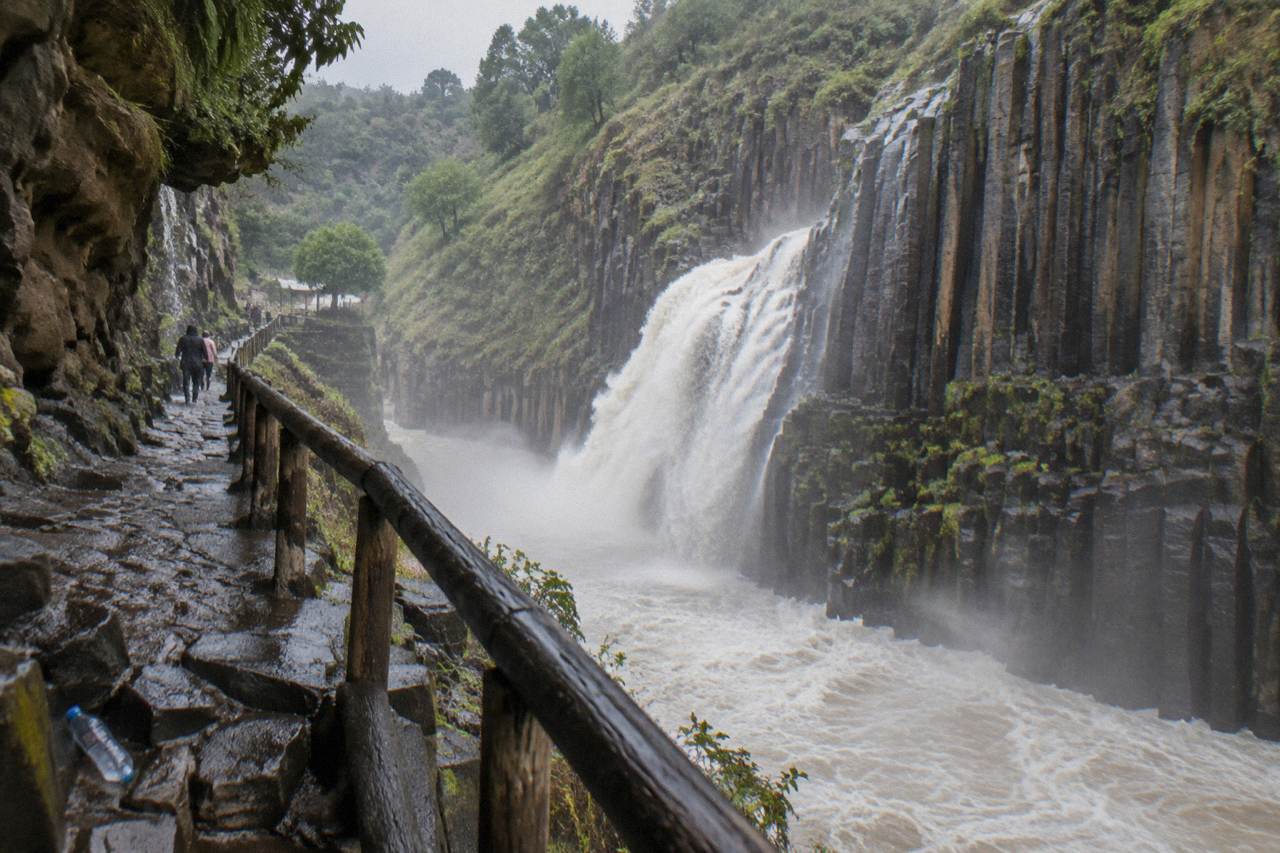
Huasca itself is a small former mining town, one of the pueblo mágico entries in Hidalgo, with a quiet square, old haciendas in the surrounding valleys and a noticeably cooler climate than the canyon. That temperature gap matters for packing: nights in the mountains from December to March are cold enough that the park's own camping page tells overnight guests to bring blankets and jackets, and Huasca sits higher still. Visitors pairing the two should pack for two climates, swimwear for 36 to 38 C thermal water on day one and layers for a pine-forest evening on day two.
Admission and hours at the basalt site are set locally and change; check current terms before the visit rather than relying on older blog figures. If a Hidalgo loop appeals but the basalt columns are not the priority, the article on combining Tolantongo with Tula or Pachuca covers two other pairing options with shorter transfers.
Where Should You Sleep Between Tolantongo And Huasca?
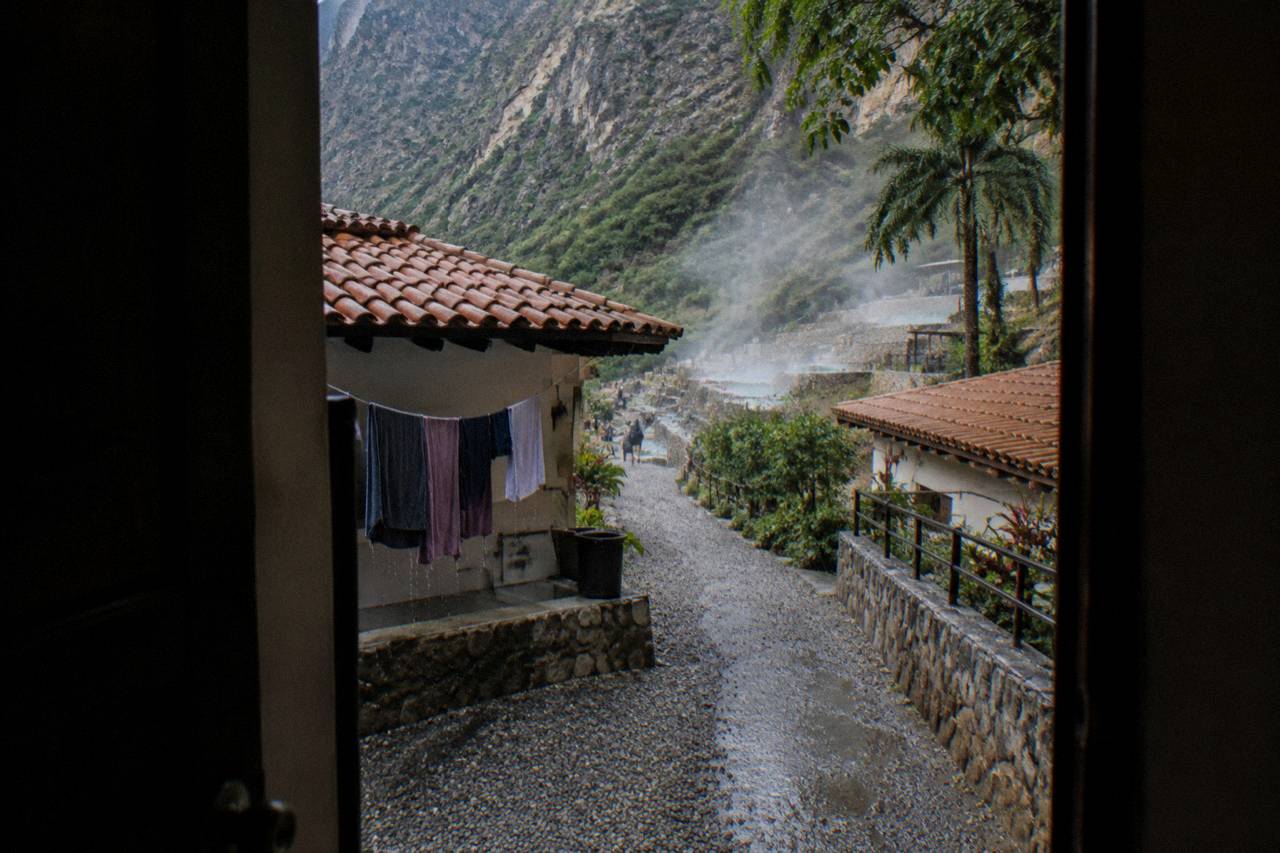
Inside the park there are lodging sections ranging from 1,000 MXN for a simple single room in La Gruta to around 2,300 MXN for a triple in Paraíso Escondido, all cash, none including the daily entrance ticket, with reservations only possible for the Rancho and Paraíso #2 sections; Pachuca is the alternative, adding drive time but giving card payments, restaurants and a shorter run to Huasca. The park's official lodging page lists each section, and the differences between them are practical, not cosmetic.
| Section | Rate per night | Availability | Reservations |
|---|---|---|---|
| La Gruta | Single 1,000 MXN, double 1,300 MXN | Daily | No, on arrival |
| Paraíso Escondido | Singles from 1,150 MXN, cabaña 2,000 MXN, triple 2,300 MXN | Daily | No, on arrival |
| La Huerta | Single 1,150 MXN, double balcony 1,400 MXN | Weekends, holidays, school vacations | No, on arrival |
| Rancho | Listed on the official page | Listed on the official page | Yes, by WhatsApp |
| Paraíso #2 | Single 1,500 MXN, double 2,200 MXN | Daily | Yes, by WhatsApp |
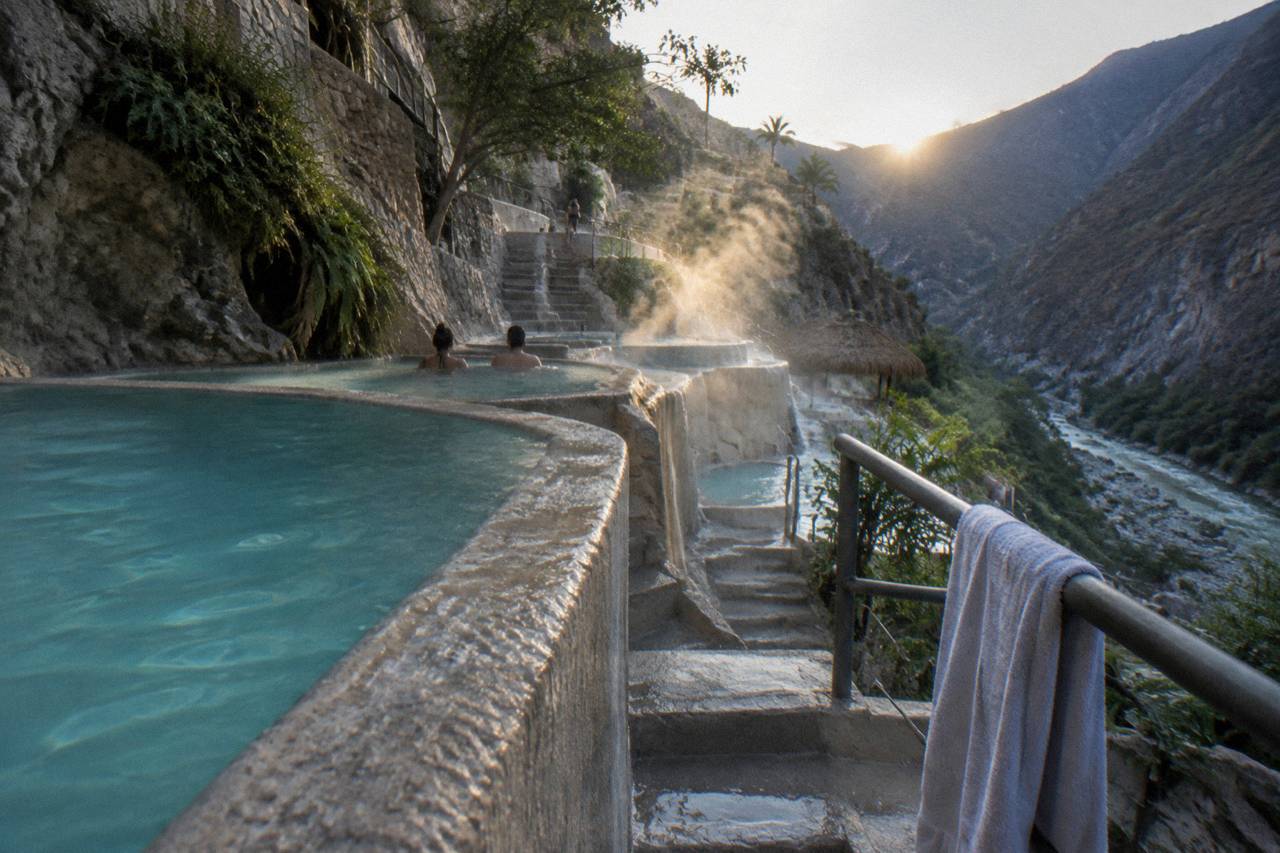
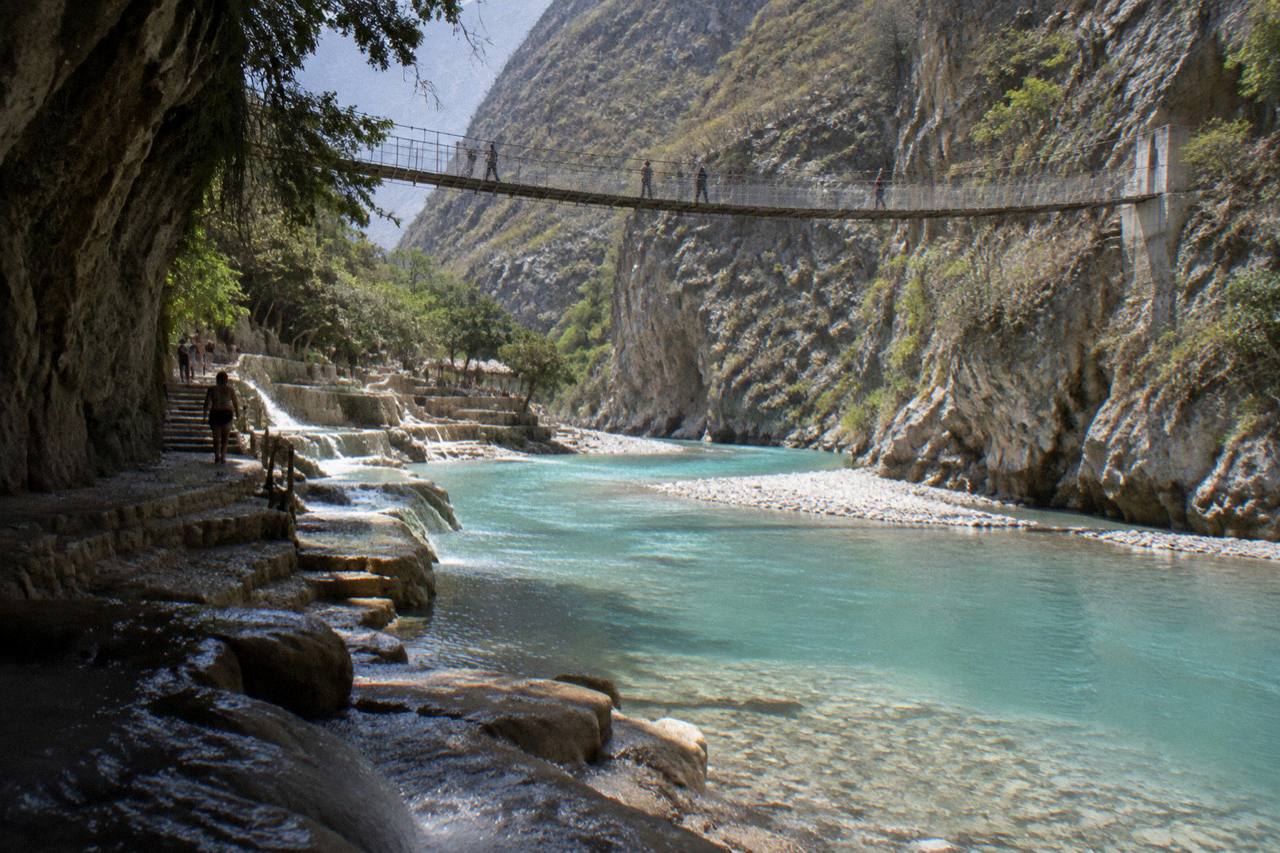
Camping is the budget route: a four-person tent rents for 250 MXN per night plus a 200 MXN refundable deposit, no reservations, checkout at noon, and the camping zones have 24-hour bathrooms and showers. The park says not to camp near the river in the rainy season, which is a rule, not a suggestion. Full detail on every section is in where to stay at Tolantongo; the short version for the Huasca pairing is that one night in the canyon followed by one night in or near Huasca turns the whole loop into something restful rather than a driving grind.
Which Tours Fit Best If You Only Have One Day To Spare?
If the two-day plan collapses to one, drop Huasca and spend the day at Tolantongo on a tour that matches your budget: the cheapest full-day cave tour runs from $78 per person, the most reviewed full-day option from $134, and a fully private day from $167, all from Mexico City. Trying to keep Huasca and cut Tolantongo instead means arranging everything independently, since the tours listed here cover the hot springs, not the basalt columns. The choice then becomes which style of Tolantongo day.
| Tour | Price | Duration | Rating |
|---|---|---|---|
| Full day Tolantongo Caves | from $78 per person | 12 h 30 min | 5.0 from 54 reviews |
| Tolantongo Grotto Tour from Mexico City | from $89 per person | 14 to 15 h | no rating yet |
| 100% private tour from Mexico City | from $167 per person | 13 h | 4.8 from 189 reviews |
| Full-Day Exploring the Waters of Tolantongo | from $134 per person | 14 to 16 h | 4.8 from 1,575 reviews |
| Early & Express Tolantongo Hot Springs | from $133 per person | 13 h | 4.9 from 680 reviews |
The private tour from Mexico City deserves a look for families and anyone who hates 5:30 am group pickups; at 13 hours and 4.8 across 189 reviews it is shorter than the big shared days because it skips multiple hotel stops. Travelers coming from the Bajío side have a parallel choice in the Querétaro and San Miguel departures, such as the full-day Tolantongo tour from Querétaro at from $190 per person, rated 4.9 across 26 reviews. Whatever the pick, check what the listing includes before booking: inclusions vary listing to listing, and the park sells nothing on credit, so any entrance not covered by the tour still needs cash on the day.
For travelers whose real interest is adventure rather than scenery, the La Gloria side of the canyon, a separate ejido territory across the river, is reachable through listings like the exclusive Tolantongo and La Gloria full-day adventure, from $149 per person and rated 5.0 across 31 reviews. It is a different, higher-energy day than the pools-and-river version, and a good fit on day one of a two-day plan when day two is as gentle as Huasca.
What Should You Know Before Driving The Hidalgo Loop Yourself?
Driving the loop yourself is entirely reasonable: the Mexico-Pachuca tolls run roughly 127 MXN for a car, the Pachuca to Ixmiquilpan stretch is a free road, parking at the park is 50 MXN per vehicle per day, and the canyon descent demands low gear and full attention, with the last reliable fuel, ATM and cell signal all in Ixmiquilpan. The park is cash only throughout, Telcel is the sole network with signal there, and the ticket office runs 6 am to 11 pm even though attractions inside close by 5 or 9 pm depending on the zone. Budget cash for entrance, parking, food, lockers at 150 MXN with a 50 MXN refund, and the zipline at 300 MXN per launch if that is on the list.

Beyond the mechanics, two seasonal realities shape the calendar. The water stays 36 to 38 C year-round, so the springs themselves never close, but the rainy season from June to September can turn the river brown and close the lower water for a day or two at a time. The park is open 365 days a year, yet it is far busier on weekends and Mexican holiday puentes, which is why a weekday two-day loop is the quietest version of this itinerary. For the complete practical picture, the day trip from Mexico City guide walks through every transport option, tour and private choice in detail; this Grutas de Tolantongo Tours article is the distance-and-sequencing companion to it.
Common Questions About Combining Tolantongo And Huasca
Can you do Tolantongo and Huasca de Ocampo in one day?
Not comfortably. A Tolantongo tour from Mexico City already takes 12 to 14 hours, and the transfer between the park and Huasca, routed through Pachuca 117 km away, adds roughly four hours of mountain driving each way. Two days is the realistic plan.
How far is Tolantongo from Huasca de Ocampo?
There is no direct verified distance because the sensible route runs through Pachuca, which the park lists at 117 km and 2 hours 28 minutes from the canyon, with Huasca a further climb beyond the city. Count on close to four hours of driving between the two with stops.
Which should you visit first, Tolantongo or Huasca?
Tolantongo first is the better sequence. The springs reward a full afternoon and an early start is easier on day one, while Huasca's gentle walks suit tired legs, and doing Huasca second avoids a long final drive after a cold mountain night.
Can you sleep at the park between the two days?
Yes. Rooms run from 1,000 MXN per night in La Gruta upward, all cash, none including the daily 230 MXN entrance. Only the Rancho and Paraíso #2 sections take reservations; the rest rent on arrival. Camping with a rented tent is 250 MXN per night plus a refundable deposit.
Do any tours include both Tolantongo and Huasca?
No listing on this site combines the two. Pair a Tolantongo tour, such as the early express departure from $133 per person, with a separately arranged Huasca day from Pachuca, or book a private Tolantongo tour and extend the itinerary with the operator directly.
What is the best time of year for the two-day loop?
October to December is the sweet spot: dry weather, a clear turquoise river, cooler hiking temperatures in Huasca and moderate weekday crowds. Avoid rainy-season river plans from June to September, when the park itself warns visitors away from the river.