Does Mexico Have Natural Hot Springs?
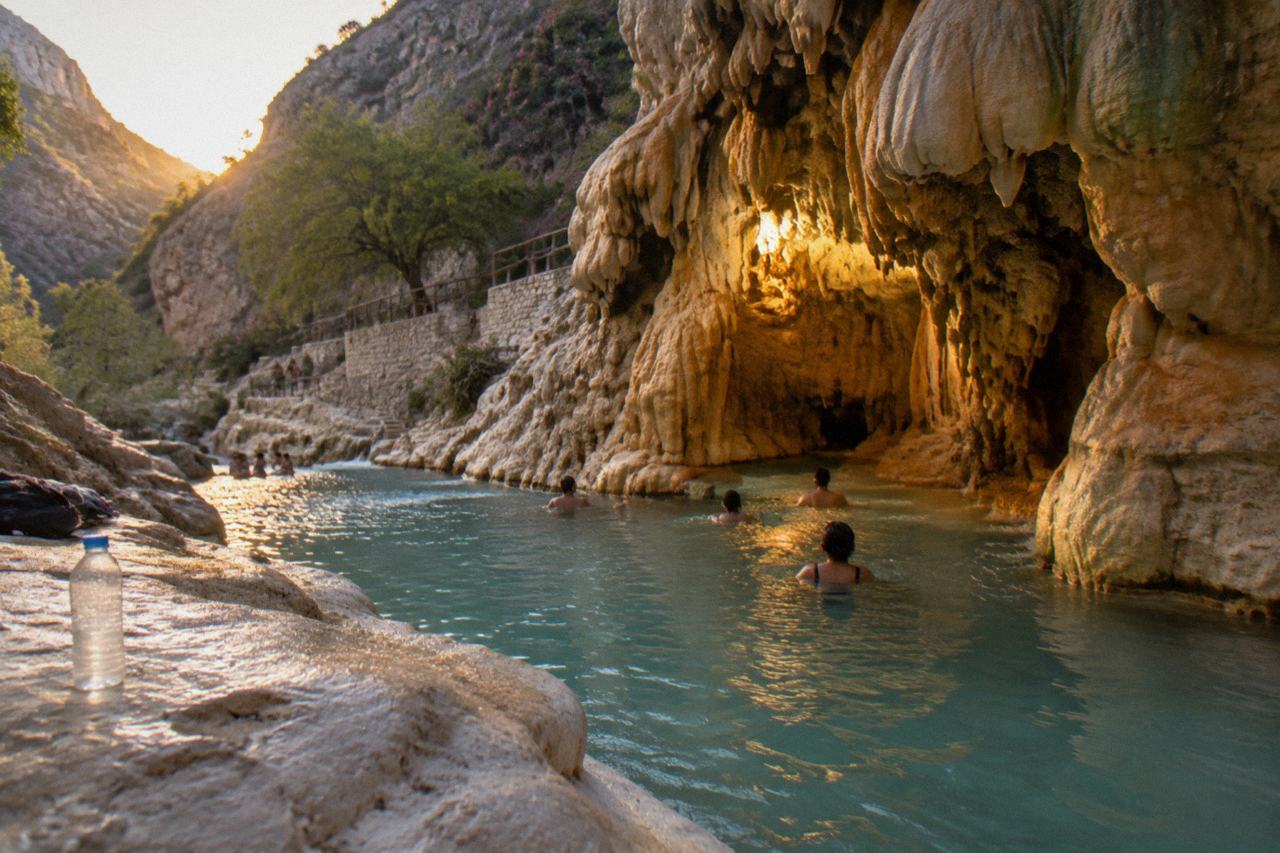
Yes, Mexico has natural hot springs, and the best-known day trip from Mexico City is Grutas de Tolantongo, where thermal water at 36 to 38 C fills a cave, a tunnel and dozens of pools.
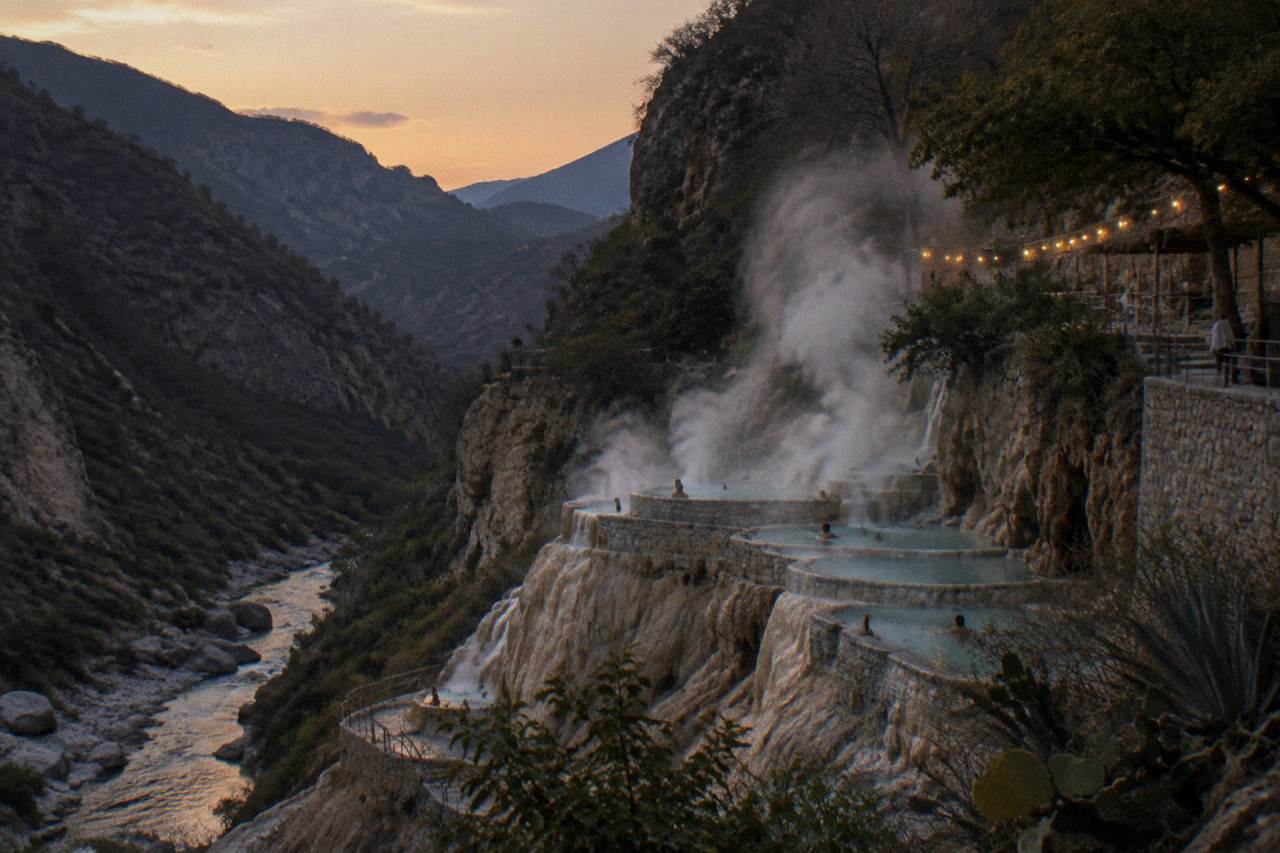
The short answer is yes, and by a wide margin. Mexico sits across an active volcanic belt, and thermal water reaches the surface in dozens of places from Hidalgo and Querétaro in the centre to Michoacan, Jalisco and Baja California. The single best-known example for travellers based in the capital is Grutas de Tolantongo in Hidalgo, where water at a steady 36 to 38 C emerges inside a cave, a steam tunnel and a canyon of pools, all covered by one 230 MXN daily entrance ticket. If you're working out where to sleep before and after the visit, this guide to the closest cities and base options for a Tolantongo trip compares what each starting point means for your route.
Yes. Mexico has natural hot springs across much of its territory, concentrated along the volcanic axis that crosses the country roughly east to west. The park at Grutas de Tolantongo, about 201 km from Mexico City, is the most visited thermal site reachable as a day trip, with water the park itself measures at 36 to 38 C in every attraction.
The country's thermal springs are not a niche curiosity. They line the Trans-Mexican Volcanic Belt, the chain of mountains and volcanoes that includes Pico de Orizaba and the peaks around Mexico City, and groundwater that circulates deep through that rock comes back up warm. In practice this means hot springs appear in clusters: the Hidalgo canyon country around Tolantongo and Ixmiquilpan, the spa towns of Querétaro, lakefront pozas in Michoacan, and well-known resort springs in Jalisco. Travellers comparing options often start with our rundown of the hot springs near Mexico City compared, because from the capital most of them sit within a four hour radius.
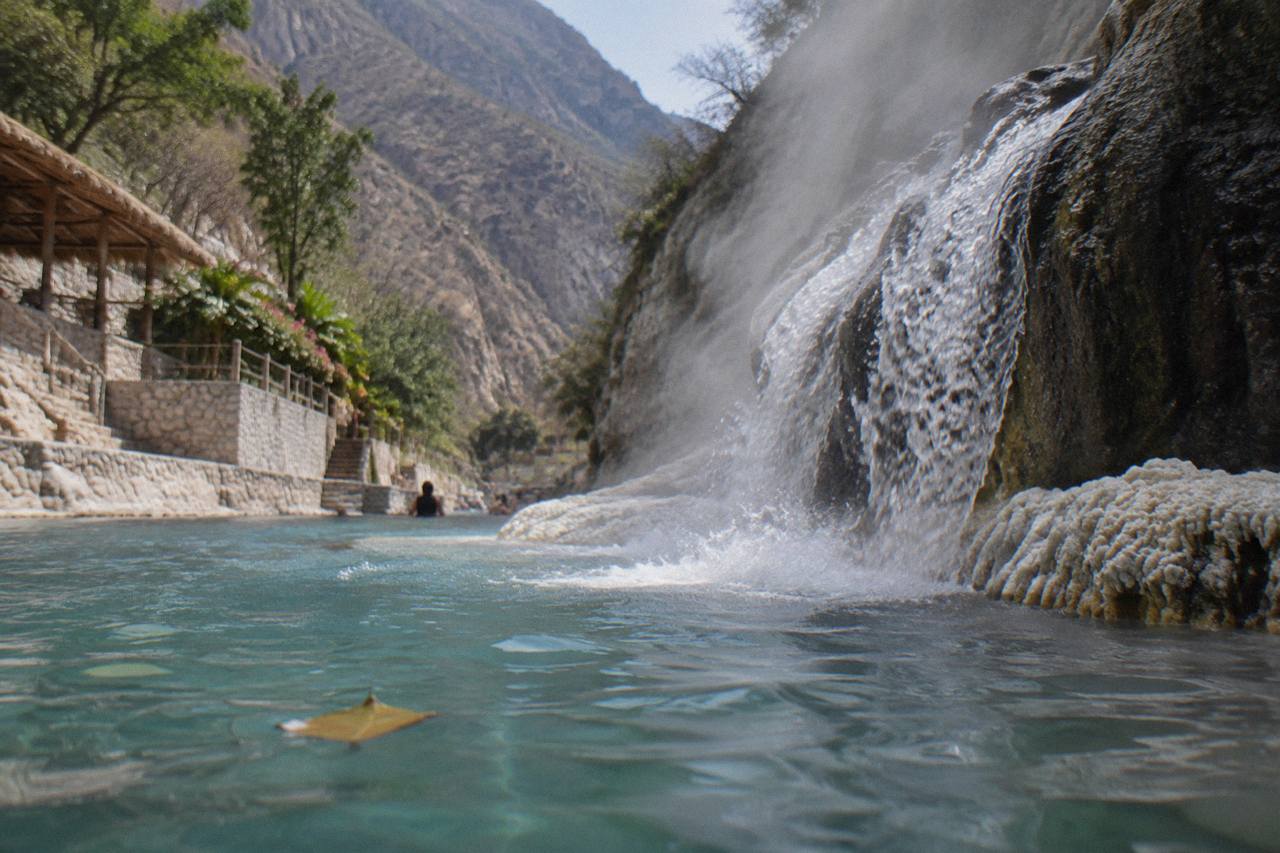
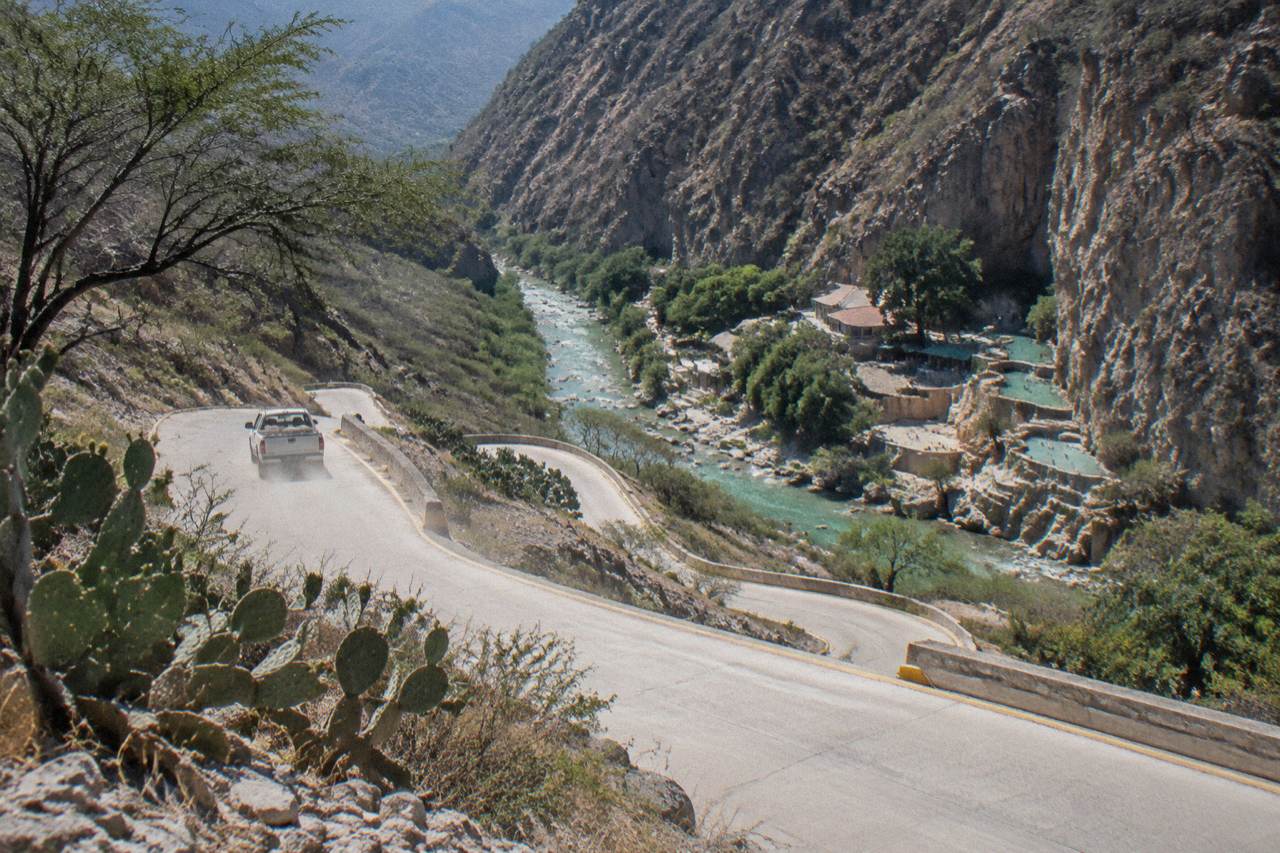
What makes Tolantongo the headline example is not just the temperature, it is the format. Most Mexican hot springs are either small riverside pools or developed spas. Tolantongo is a full canyon: a hot spring grotto you walk inside, a steam tunnel, a warm river running through the gorge, cliffside pools stacked above the water and a hanging bridge linking the two park zones. One ticket covers all of it, the park states the same 36 to 38 C range for every attraction, and the whole thing works as a single long day trip from the capital.
For visitors who want the short version of how the water gets hot, the physics is covered in our companion piece on why the water at Tolantongo is hot. The thermal character is also why the springs are genuinely natural rather than heated, a question worth settling separately since plenty of Mexican "hot springs" resorts do pipe and reheat water.
Why Tolantongo Is The Best-Known Hot Springs Day Trip
Because it combines scale, access and reliability. The canyon is roughly 201 km from Mexico City, shared day tours run there year round from about $78 to $140 per person, and the water temperature does not change with the season, staying at 36 to 38 C in December as in June. Few other Mexican springs are this easy to reach without a car.
The economics explain the crowds. A shared day trip such as the Tolantongo Caves Small Group Tour costs from $132 per person, runs 14 hours from a central Mexico City meeting point, and includes round-trip transport, a bilingual guide, entrance to the park, and access to the grotto, river, pools, hot springs and hiking trails, with a box lunch if that option is selected. It is rated 4.7 across 724 reviews. Cheaper shared options exist, down to the $78 full-day cave tour, and the early express departure at from $133 per person trims the day to 13 hours. The listings here include private tours too, from $147 per person upward, for anyone who wants the canyon without a group schedule. Whatever tour you choose, you may also find yourself wondering how the warm water at Tolantongo stays hot year-round, and the short answer involves geothermal groundwater rising through the canyon.
The park itself is run by the local ejido community of San Cristobal, which is part of why the format feels unlike a commercial resort: cash-only payments, simple on-site lodging, and rules set by the cooperative rather than a hotel chain. Practicalities like the two-zone layout and what each zone offers are laid out in the complete visitor guide to Grutas de Tolantongo, which is the right next read once the day-trip question is settled.
The comparison below shows how the main shared day trips stack up. Every price comes from the operator's live listing and can move with demand, so treat the figures as a snapshot and check availability before planning around a specific number.
| Tour | Departure | Duration | Rating | Price |
|---|---|---|---|---|
| Tolantongo Caves Small Group Tour | Mexico City | 14 hours | 4.7 from 724 reviews | from $132 per person |
| Early & Express Tolantongo Hot Springs | Mexico City | 13 hours | 4.9 from 680 reviews | from $133 per person |
| Full day Tolantongo Caves | Mexico City | 12 hours 30 minutes | 5.0 from 54 reviews | from $78 per person |
| Full-Day Tour Exploring the Waters of Tolantongo | Mexico City | 14 to 16 hours | 4.8 from 1,575 reviews | from $134 per person |
| Full Day Tour in Tolantongo from Queretaro | Querétaro or San Miguel | 14 to 17 hours | 4.9 from 144 reviews | from $210 per person |
No matter which trip you choose, it helps to know that these springs are run by a local community rather than a private operator, and the story of the ejido behind Grutas de Tolantongo explains what that means for your visit.
What The Water Is Actually Like In The Canyon
Every attraction at Tolantongo runs between 36 and 38 C, the range the park states for the cave, the tunnel, the river and the pools alike. The water is mineral-rich, which is why visitors are told not to wear jewellery in it, and it emerges inside the mountain rather than being heated on site.
The signature experience is the grotto itself, a hot spring cave where warm water pools in natural basins, joined by a steam tunnel that carries the same thermal flow. Down in the gorge the warm river runs shallow between rock walls, and above it the cliffside pools of the Paraiso Escondido zone step down the canyon wall. Visitors consistently describe the combination as the draw: one entrance ticket, one canyon, several very different ways to sit in hot water. The two zones and what each one feels like are detailed in the pools and hot springs guide, which answers the follow-up question most people have within minutes of arriving.
The most reviewed tour on the route, the Full-Day Tour Exploring the Waters of Tolantongo, is rated 4.8 across 1,575 reviews and costs from $134 per person for a 14 to 16 hour day from Mexico City. It suits travellers who want the full canyon with the longest on-site window, while the early express departure at 13 hours suits anyone who wants the drive shortened at both ends. Both are shared formats with a guide.
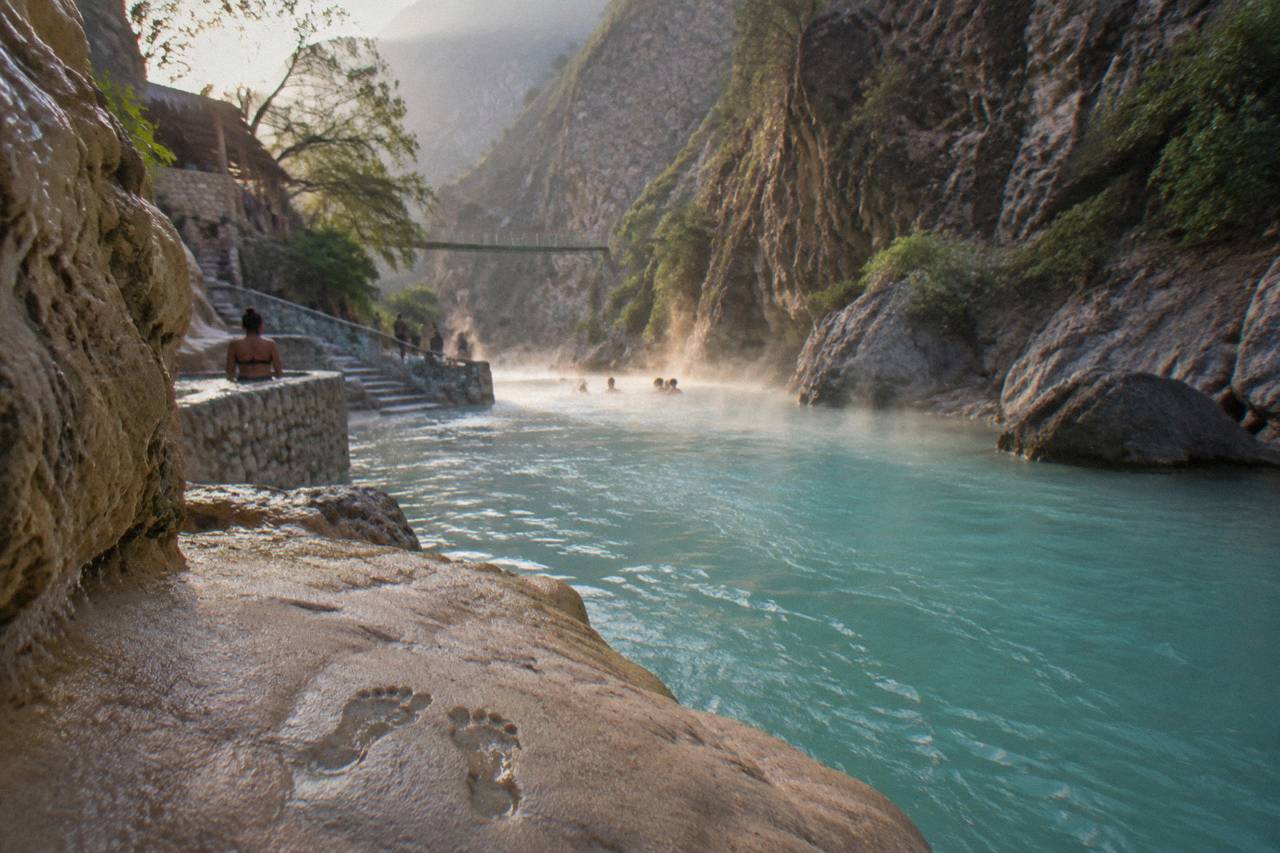
Swimming is allowed in all of it, with the park's own rules: swimsuit only in the cave, tunnel, river and pools, and no soap or shampoo anywhere in the water. The full picture on where you can and cannot swim, including rainy-season river cautions, is in can you swim in Tolantongo. And yes, the springs are fully natural, a question we answer directly in are the Tolantongo hot springs natural.
How To Get To A Mexican Hot Spring Without A Tour
Independent travel to Tolantongo works but takes commitment: a bus from Mexico City's Terminal Norte to Ixmiquilpan, then an 80 MXN combi for the final roughly 50 minutes to the park, with no direct bus down the canyon road. Driving is about 201 km and typically 3.5 to 4.5 hours each way on a winding final descent.
The public transport chain is documented on the park's own getting-there pages. Ovnibus and Flecha Roja buses leave from platforms 7 or 8 at the Central del Norte terminal and stop at Ixmiquilpan; from the San Antonio parking lot beside the church, official combis run to the park for 80 MXN each way, with departures Monday to Thursday at 09:30, 11:30, 13:30, 15:30 and 17:30, and more frequent service Friday to Sunday. Large buses cannot descend into the canyon at all, they stop at Molanguito 8 km short, where a separate 30 MXN shuttle covers the last stretch. The whole route, timings and pitfalls are mapped in how to get to Tolantongo from Mexico City.
Driving brings its own questions, and the honest answer is that the final 20 km descent is paved but tight, with curves steep enough that the park advises automatic-transmission cars to use first and second gear going down. The safety question is treated in full in is it safe to drive from Mexico City to Grutas de Tolantongo. For most capital-based visitors the trade-off favours a shared tour, which is why the format dominates: someone else handles the canyon road, the cash-only entrance and the early start.
For travellers starting farther north, the Querétaro tours change the math: the Full Day Tour in Tolantongo from Queretaro runs 14 to 17 hours at from $190 per person, rated 4.9 across 26 reviews, and a shorter 10 hour version from Querétaro costs from $189 per person. Both beat self-driving from the Bajio region on total driving time. There is also a 17 hour private tour from Guanajuato at from $619 per group for up to four people, the only Guanajuato departure among the tours listed here. More of these guides are collected on Grutas de Tolantongo Tours.
When To Go, And What The Seasons Change
The water never changes: 36 to 38 C all year, every day, because the park opens 365 days a year. What changes is everything around it. October to December brings dry weather and a clear turquoise river, the June to September rainy season can turn the water brown after heavy rain, and weekends run far busier than midweek days.
The seasonal rhythm matters more at Tolantongo than at a spa, because the river's colour is weather-dependent. Heavy rain in the canyon watershed carries silt that muddies the thermal river and can close the lower water temporarily, and the park's own guidance says to stay away from the river and follow security staff when it rains. Campers are told not to pitch near the river in the rainy season at all. None of this affects the cave, tunnel and pools, which sit in the same warm water regardless.
Crowds follow the Mexican calendar. Long weekends and holiday periods run far busier than ordinary weekdays, Semana Santa is the annual peak, and the park advises arriving before 8 or 9 am on busy days. A tour actually solves this neatly: shared departures leave Mexico City in the early hours specifically so the group arrives close to opening, ahead of the late-morning influx from private cars and buses. The month-by-month detail is in the best time to visit Tolantongo.
Budget planning is straightforward once the entrance is known. On-site costs beyond the ticket are modest: parking at 50 MXN per vehicle, lockers at 150 MXN with 50 MXN refunded with the key, and the internal shuttle between zones at 15 to 20 MXN per person shared. A full cost breakdown for both the independent and the tour route is in Tolantongo entrance fee and tour prices.
So Are Mexico's Hot Springs Worth The Trip?
Yes, and Tolantongo is the strongest single case: a natural thermal system at 36 to 38 C set in a canyon, reachable as a day trip from Mexico City for from $78 to $140 on shared tours, open every day of the year. The main costs are the long day, roughly 12 to 16 hours door to door, and weekend crowds.
The honest framing for a first-time visitor: this is not a spa day, it is a canyon day. You will walk, possibly hike between zones, and spend several hours outdoors at 1,280 m elevation. Tours build the day around that reality, typically giving the group about four hours on site out of a 12 to 14 hour total. Reviews reflect the split: the most reviewed options sit at 4.8 across 1,575 reviews and 4.7 across 724 reviews, with the long transfer the most common complaint and the canyon itself the most common praise.
For anyone whose answer to "does Mexico have natural hot springs?" opens a wider interest, the next reads are the complete visitor guide for planning, what to bring to Tolantongo for the packing list, and is Tolantongo worth it for the full argument on both sides.
Common Questions About Mexico's Natural Hot Springs
Are there hot springs in mexico?
Yes, there are hot springs across much of Mexico, concentrated along the Trans-Mexican Volcanic Belt. Tolantongo in Hidalgo is the most visited thermal canyon, about 201 km from Mexico City, with shared day tours from $78 to $140 per person and a 230 MXN park entrance that covers every attraction.
Is the water at Tolantongo naturally hot?
Yes. The park states the water temperature at 36 to 38 C in the cave, tunnel, river and pools, and it emerges from the mountain rather than being heated on site. The temperature holds year round, which is why the springs are considered natural thermal water.
Can you visit mexico's hot springs on a day trip?
Yes. Tolantongo is roughly 201 km from Mexico City, about 3.5 to 4.5 hours each way by road, and shared tours run there daily in 12 to 16 hour formats. Independent travel is also possible by bus to Ixmiquilpan plus an 80 MXN combi for the final leg.
What is the best time of year for mexican hot springs?
For Tolantongo, October to December combines dry weather, cooler air of roughly 10 to 24 C and a clear turquoise river. The rainy season from June to September can turn the river brown and muddy after heavy rain. Midweek visits are far quieter than weekends and holiday periods.