Are The Tolantongo Hot Springs Natural?
Yes, the Tolantongo hot springs are natural: geothermal groundwater surfaces at 36 to 38 C year-round in a community-run canyon park in Hidalgo, Mexico.
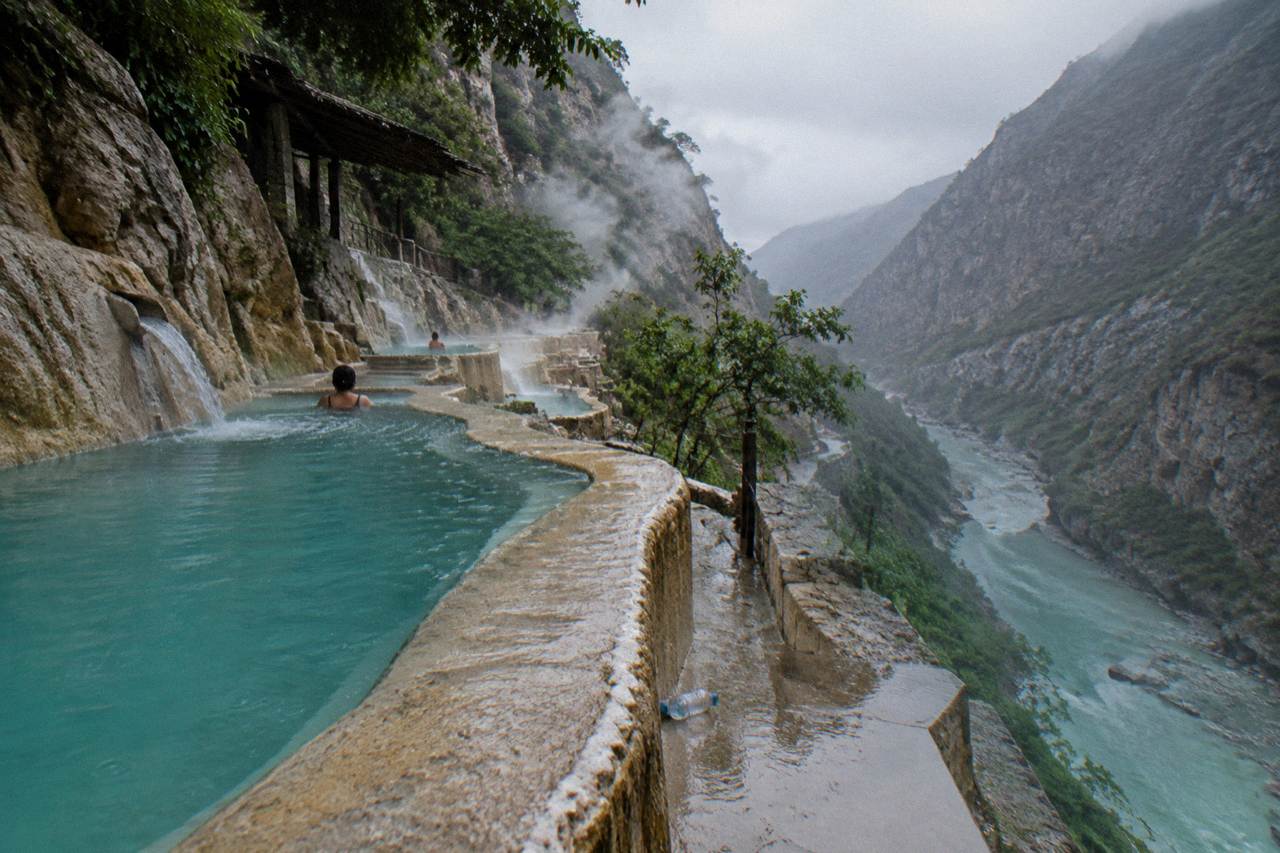
Yes. The water at Grutas de Tolantongo is naturally thermal: groundwater is warmed by heat deep beneath the earth's surface and emerges in the canyon at a steady 36 to 38 degrees Celsius, all day, all year. The park did not drill, heat or chemically treat anything. What it built is infrastructure, pools, walkways and steps, placed around springs the canyon has always produced. If you're curious what keeps that warmth flowing in the first place, the geothermal explanation covers it in plain language.
That distinction matters to a lot of travellers, and it is a fair question to ask before paying for a long day trip. Mexico has plenty of resorts where "thermal waters" means a heated spa pool with a marketing story attached. Tolantongo is the opposite case: a rural canyon in Hidalgo, in the municipality of Cardonal, where warm mineral water rises out of the rock and has been developed by the local ejido community, the cooperative of Ejido San Cristóbal, into a park that now opens 365 days a year.
The park's own pages are blunt about the physics. The official description of the cave and springs gives the water temperature as 36 to 38 C and describes the source as thermal groundwater emerging into the canyon, not anything pumped or warmed by machinery. Every attraction the ticket covers, the cave, the steam tunnel, the thermal river, the cliffside pools and dozens of small soaking pools, runs on the same natural flow.
If the point of your visit is to soak in water that came out of the ground warm, you are in the right place. The three tours below all include transport to the canyon and, in most cases, the entrance that gets you into both thermal zones.
Is Tolantongo A Natural Hot Spring?
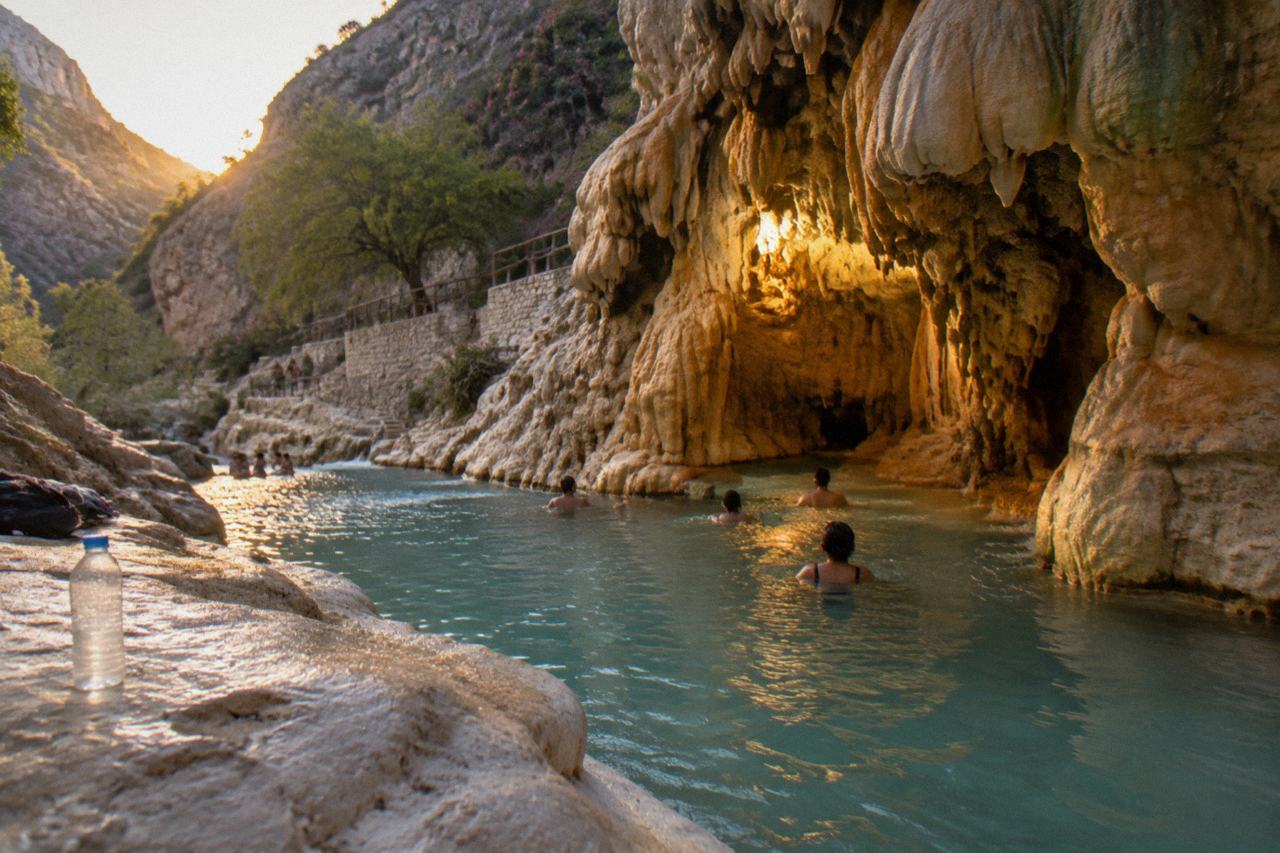
Yes, in the strict sense of the phrase. A natural hot spring is a place where groundwater heated underground surfaces on its own, and that is exactly what happens in the Tolantongo canyon. The springs feed a thermal river, a warm cave you can walk into, a steam tunnel and the pools terraced down the cliffside. The water arrives warm and leaves warm, without boilers.
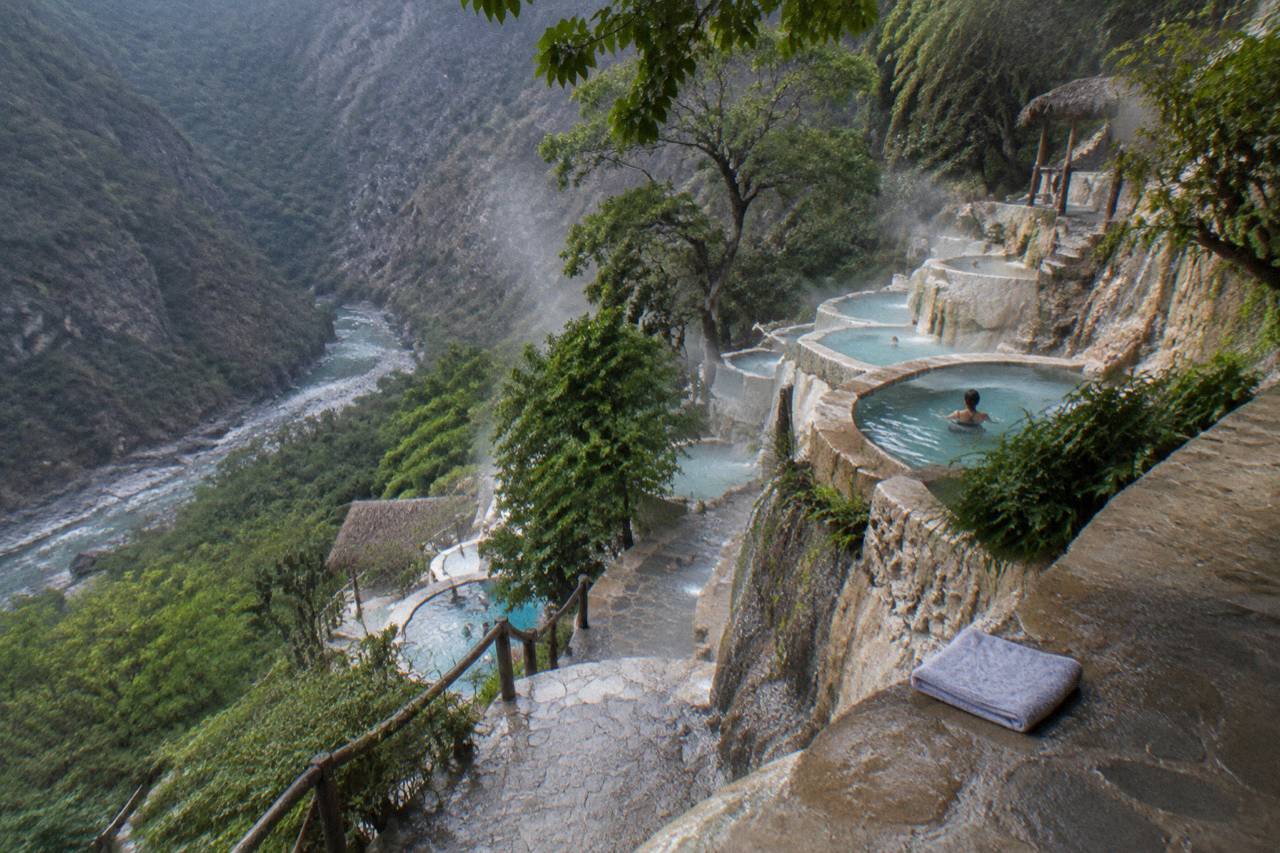
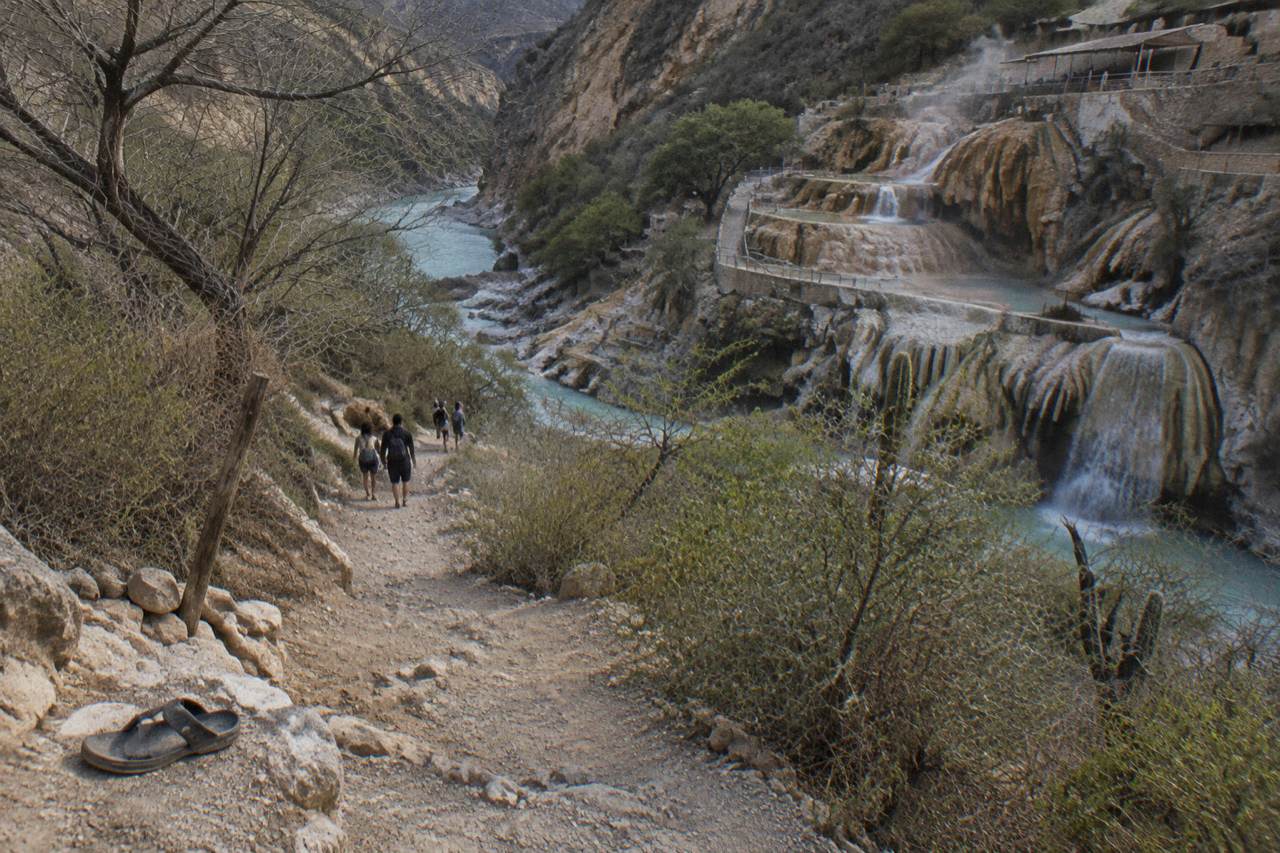
The word to be careful with is "spring" in the singular. Tolantongo is not one tidy outflow with a plaque. Warm water emerges at multiple points along the canyon, which is why the park spreads across two distinct zones. On the La Gruta side you get the cave and the steam tunnel, both cut into rock where the warm water surfaces. Across and downstream, Paraíso Escondido holds the larger pools and dozens of small soaking pools, called pozas in Spanish, built along the hillside so the thermal water can flow through them continuously.
What makes the setup unusual is how light the human footprint is on the water itself. The pools are man-made, yes, but they are containers, not heaters. Water enters them at spring temperature, circulates, and drains back toward the river. Nothing is recirculated through a heating system, and nothing is added. The park's rules reinforce that: no soap, no shampoo and no food or drink in the cave, tunnel, river or pools, precisely because the water is a natural flow that everyone downstream shares.
So when reviews describe the pools as "natural hot springs," they are being accurate about the water and approximate about the masonry. The springs are natural; the infinity-edge styling is the community's craft. Visitors consistently report the water feels warm rather than scalding, which matches the verified 36 to 38 C range, roughly the temperature of a well-run bath, pleasant in any season and striking on a December night when canyon air turns cold.
Where The Warm Water Comes From
Rain and surface water soak down through fractured rock, warm as they descend toward heat deep in the earth's crust, then rise and surface in the Tolantongo canyon at 36 to 38 C. This is ordinary geothermal circulation, the same process behind hot springs worldwide. The park's official pages state the temperature and that the water is thermal; they do not publish depth or geology figures, and none are needed.
In plain terms, the canyon sits over rock that lets water travel down and back up. Water that falls as rain in the hills percolates through cracks, spends time at depth where the earth is warmer, and then finds a fast path back to the surface along the faulted canyon walls. By the time it emerges it has reached that steady 36 to 38 C. Because the heating happens continuously underground, the output barely varies: the same temperature range is published for the cave, the tunnel, the river and the pools, and it holds through winter and summer alike.
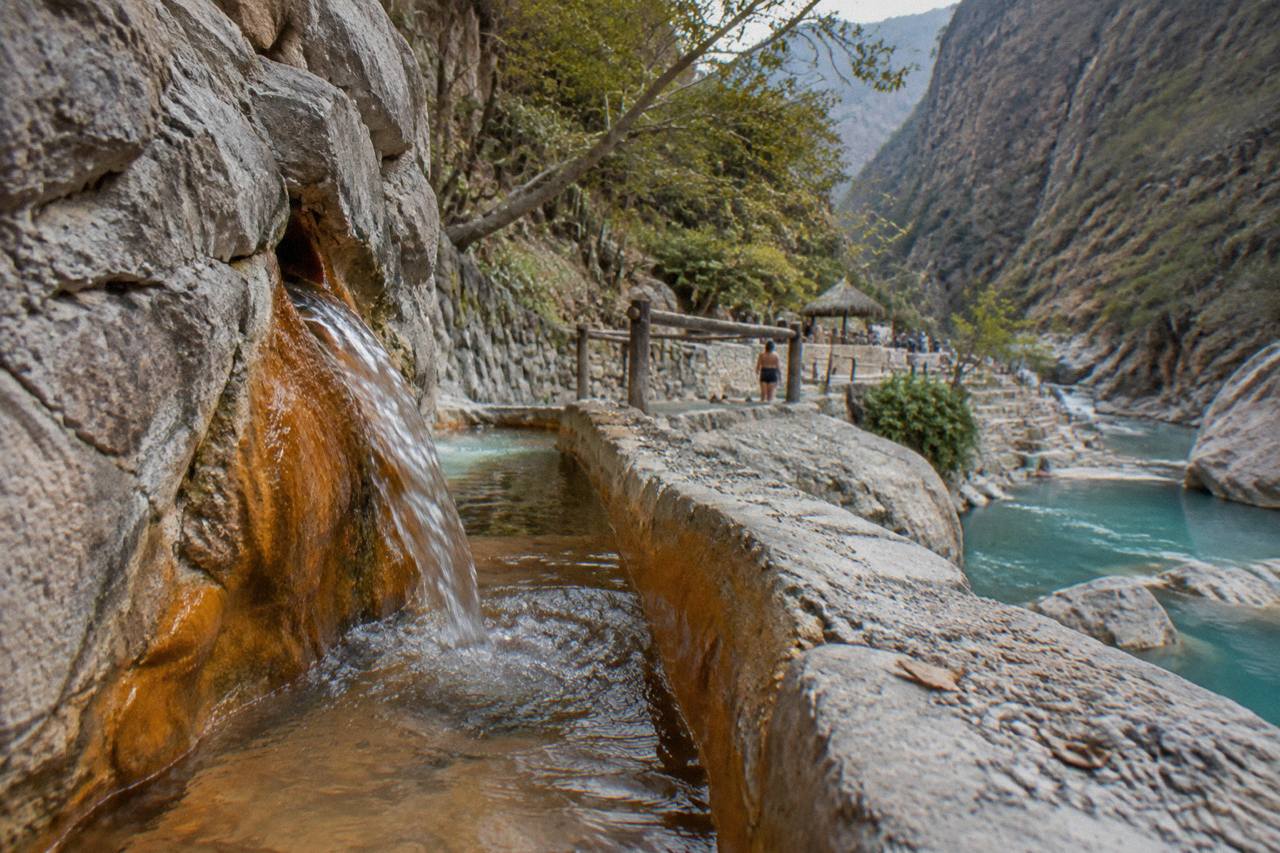
What you should not expect is a boiling spring or a geyser. This is not a volcanic showpiece. The water is warm, mineral and steady, which is exactly why it works for soaking: hot enough to feel therapeutic on a cool morning, cool enough that children and older visitors use the same pools comfortably. One thing the thermal water is not is medicine. The park makes no health claims, and neither will we: it is warm mineral water in a beautiful canyon, and that is the whole, sufficient story.
The warm water also explains the canyon's look. The thermal river carries a faint mineral tint, often described as turquoise in the dry months, and the cliffs around the springs are streaked where mineral-laden water has run for centuries. Visitors photograph that streaked rock almost as much as the pools themselves, and it is a visible clue that the water surfacing here has been underground doing exactly what the temperature says it has. For viewpoints and where to stand for that shot, the Grutas de Tolantongo Tours homepage comparison links through to a dedicated photo guide.
Because the springs are the destination, the practical question becomes how much of the canyon you can see in one day. This is where a guided day trip earns its price.
What The Ticket Covers: Both Thermal Zones
One entrance ticket, 230 MXN per person per day, buys access to both thermal zones and every water attraction: the cave, the steam tunnel, the thermal river, the pools and dozens of hillside soaking pools. Children 0 to 4 enter free, and the ticket runs from 7 am to 8 pm. The park takes cash only, and the nearest ATM is an hour away in Ixmiquilpan.
That single-ticket structure is worth understanding before you go, because the two zones are separated enough that many visitors under-plan the walking between them. La Gruta is the cave-and-tunnel side; Paraíso Escondido is the pools-and-pozas side. The ticket does not distinguish between them, and an internal shuttle runs between zones for a small shared fare. Notably, the park's pozas page states you do not need to be a hotel guest to use the pozas, which closes a common rumour that the nicest pools are reserved for people staying overnight. More of these guides are collected on Grutas de Tolantongo Tours.
| Attraction | Zone | Water | Hours |
|---|---|---|---|
| Gruta (cave) | La Gruta | Thermal, 36 to 38 C | 8 am to 5 pm |
| Steam tunnel | La Gruta | Thermal steam and warm water | 8 am to 5 pm |
| Thermal river | Runs through the canyon | Thermal, swimsuit only | 8 am to 9 pm |
| Albercas (larger pools) | Paraíso Escondido | Thermal, spring-fed | 8 am to 5 pm |
| Pozas (hillside soaking pools) | Paraíso Escondido | Thermal, continuously flowing | 8 am to 9 pm for some |
| Waterfalls and hanging bridge | Canyon trails | River water | 8 am to 5 pm |
One boundary the ticket does not cross: the land across the river belongs to a different ejido, including La Gloria. A Tolantongo ticket gives no entry, camping or services over there, so if you booked an experience labelled La Gloria, it is a separate operation with its own access. The ownership story of the park explains how one canyon ended up split between community territories.
The all-cash rule deserves its own sentence because it catches visitors every week: there is no card machine and no ATM in the canyon. Bring pesos for the entrance (230 MXN), parking if you drive (50 MXN per vehicle), a locker if you want one (150 MXN with 50 MXN returned), and food. The park permits non-alcoholic drinks in cans or plastic bottles, but only in the camping zone.
Why The Water Stays Warm All Year
The temperature does not swing with the seasons because the heating happens underground, before the water ever reaches the surface. The park publishes 36 to 38 C for its water attractions year-round, and it opens 365 days a year. What does change with the seasons is the river's colour and, after heavy rain, access to the lower water.
The practical version: in the rainy season, roughly June to September, storms can wash silt into the canyon and turn the thermal river brown for a stretch, and the park's own guidance says to keep away from the river in rain and follow security staff. The springs themselves keep flowing warm regardless, and the pools on the hillside are generally the steadier experience in wet months. In the dry months, October through December especially, visitors report the clearest turquoise water and the most photogenic conditions.
Cold-season nights, December to March, are the secret weapon of a natural spring. Canyon nights get genuinely cold, and the contrast between chill air and 36 to 38 C water is the whole pleasure of winter soaking. Campers are told to bring blankets and jackets, which tells you how far the temperature drops once the sun leaves the canyon. None of this is a promise about conditions on any given day; weather varies, and the park's staff decide river access on the ground.
For planning around the seasons, the site's best time to visit guide breaks down crowds, weather and water month by month, and it is the right companion read before you pick a date.
Which Tours Take You To The Natural Springs
Every day trip from Mexico City or Querétaro that this site covers goes to the same natural springs; the difference is duration, price and group size. Shared day trips run from $78 to $140 per person, the small-group cave tour is from $92, and private options climb from there. The park itself provides no guides, so the guide on your tour works for the operator, not the park.
That last point is worth internalising. The park's excursion page is explicit that visits are self-guided and the park supplies no tourist guides. What an operator brings is the 3.5 to 4.5 hour drive from Mexico City, the entrance logistics and someone who knows the canyon's layout and timing, which matters when you have roughly four to five hours on site before the return leg.
The Tolantongo Caves Hot Springs & Waterfalls Small Group Tour from Amigo Tours is the balanced pick for most first-timers: 14 hours door to door, from $92 per person, rated 4.6 across 352 reviews, with round-trip transport and a bilingual guide. If you want the most-reviewed option instead, the Full-Day Tour Exploring the Waters of Tolantongo, from $134 per person, carries a 4.8 rating across 1,575 reviews over 14 to 16 hours Visitor feedback is rounded up in Tolantongo Reviews.. And for a two-park day that pairs the springs with the La Gloria side of the canyon, the Exclusive Full-Day Tolantongo & La Gloria Hot Springs Adventure runs from $149 per person with a 5.0 rating across 31 reviews.
| Tour | Departs | Duration | Rating | Price |
|---|---|---|---|---|
| Tolantongo Caves Hot Springs & Waterfalls Small Group Tour | Mexico City | 14 hours | 4.6 from 352 reviews | from $92 per person |
| Full-Day Tour Exploring the Waters of Tolantongo | Mexico City | 14 to 16 hours | 4.8 from 1,575 reviews | from $134 per person |
| Exclusive Full-Day Tolantongo & La Gloria Hot Springs Adventure | Mexico City | 14 hours | 5.0 from 31 reviews | from $149 per person |
| Full day Tolantongo Caves (budget option) | Mexico City | 12 hours 30 minutes | 5.0 from 54 reviews | from $78 per person |
Check availability on whichever listing fits your dates and budget; prices shown are from-prices and the live listing confirms the current figure.
The La Gloria adventure deserves one clarification since this article is about natural water. That tour crosses the river to the neighbouring ejido's springs, which are also natural, but they are a separate territory with separate access. Reviews for the combined day tend to highlight exactly what you would expect: twice the water, a longer, fuller day. If your time is short, one zone done slowly beats two zones done at a run.
How To Verify It Yourself Before You Pay
You can cross-check the natural claim in under five minutes: the park's official costs and information pages state the 230 MXN entrance, the 36 to 38 C water and the full attraction list, and the ejido's own pages describe the springs as thermal groundwater. If any seller claims heated pools, miracle cures or an "all-inclusive" package, that seller is not describing this park.
Start with the park's own official costs page, which sets out the entrance, the zipline, lockers and camping in pesos, all cash. The park warns that look-alike websites sell fraudulent all-inclusive packages; the only official domain is grutastolantongo.com.mx. A tour listing that bundles transport with a legitimate entrance is a different thing from a site selling the park itself, and knowing the real park prices is the fastest way to tell them apart.
On site, the evidence is sensory. Warm vapour rises off the river at dawn. The cave breathes steam. The pozas on the hillside are warm at the top and warm at the bottom, with nothing between but gravity and rock. No plumbing produces that particular combination of mineral smell, steady temperature and streaked canyon walls, and once you are standing in it, the question answers itself.
For everything the water decides, when to go, what to wear in it, how the zones connect, this site's complete visitor guide carries the detail, and the tour picker on the homepage matches a listing to your dates.
Common Questions About The Tolantongo Hot Springs
How hot is the water at Grutas de Tolantongo?
The park states 36 to 38 degrees Celsius for its water attractions, and the range holds year-round because the heating happens underground before the water surfaces.
Are the pools at Tolantongo man-made?
The soaking pools and pozas are built structures, but the water flowing through them is natural spring water at spring temperature. The masonry contains the water; it never heats it.
Can you swim in the thermal river?
Yes, in a swimsuit, during open hours. The park advises staying out of the river during rain in the rainy season and following security staff, since storm runoff can change conditions quickly.
Does the park add chemicals to the water?
No. The park's rules prohibit soap and shampoo in the cave, tunnel, river and pools precisely because the water is a shared natural flow, and nothing is treated or recirculated.