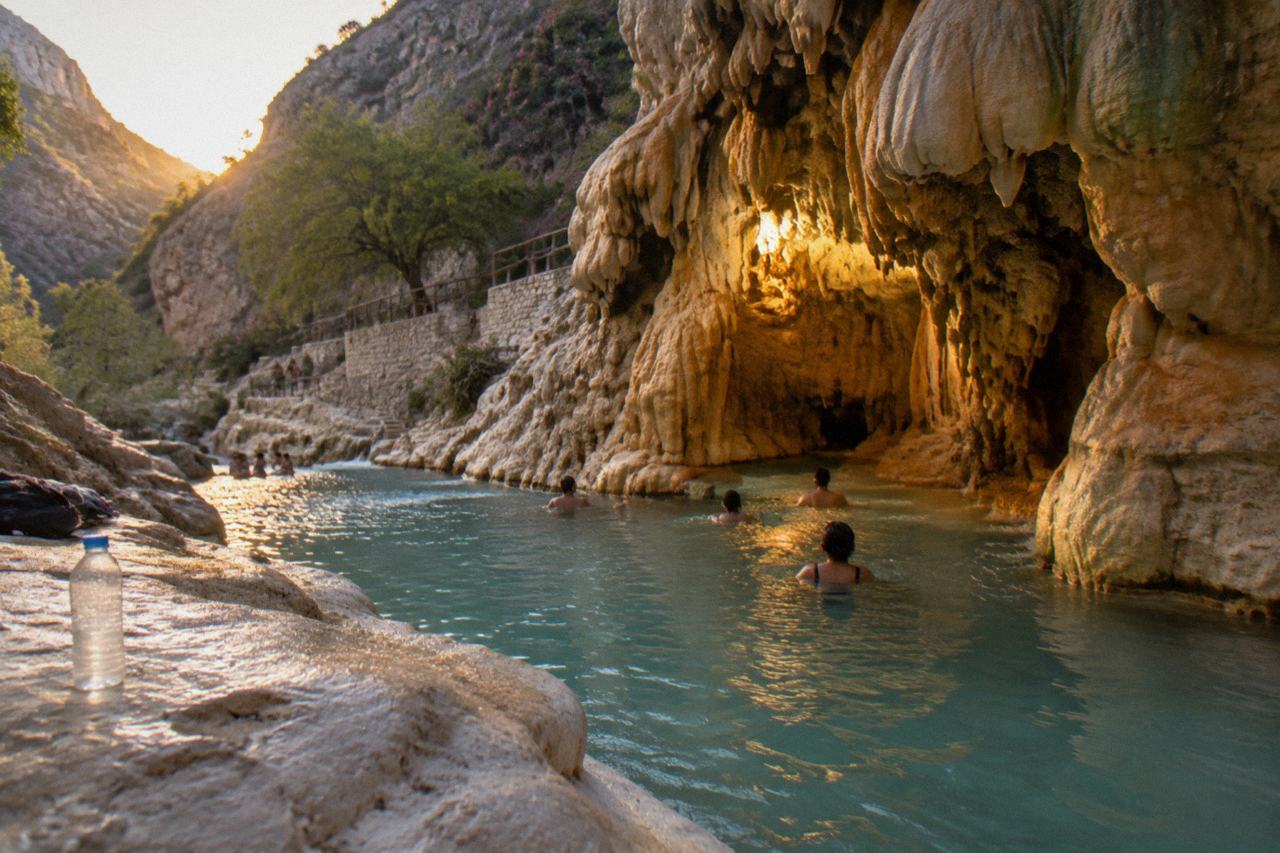
Who Owns Grutas De Tolantongo?
The hot springs and caves of Tolantongo are owned and run by an indigenous ejido cooperative, not a company or the government. Here is what that means for your visit.
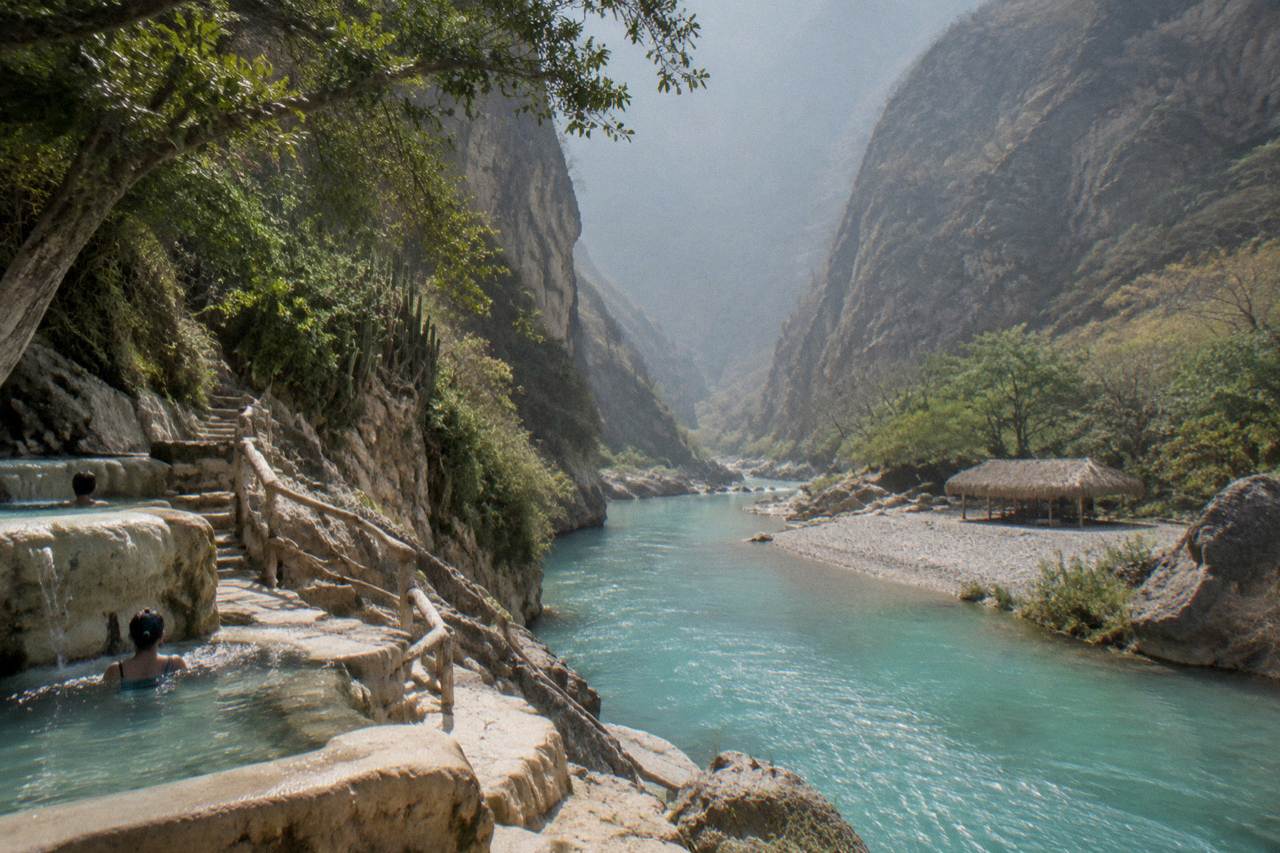
Grutas de Tolantongo is owned by Ejido San Cristóbal, an indigenous Ñähñu (Otomí) community in the municipality of Cardonal, Hidalgo, and it is operated by the community itself through an ejidal cooperative rather than by a company, a hotel chain or the government. Wikipedia and local press describe the operating body as the Sociedad Cooperativa Ejidal Grutas de Tolantongo, reported as formally recognised in 1998, and the park's own official site confirms the ejido structure by naming a Consejo de Vigilancia y la Administración as its governing bodies. That single fact explains more about how the park works, what it costs and why its rules read the way they do than any other line in its rulebook.
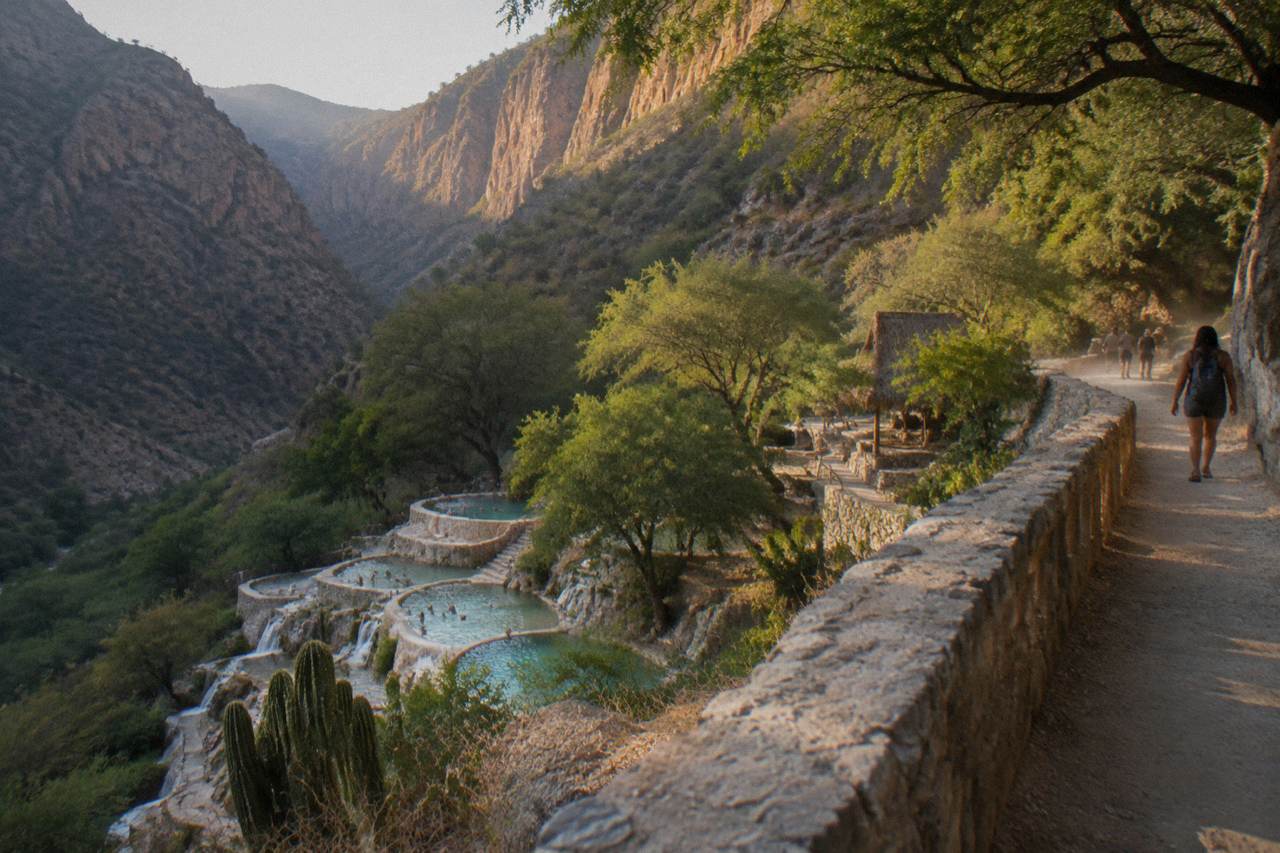
The canyon was not always a tourist destination. Before the cooperative structure existed, the land was communally held ejido territory, a land tenure form created in post-revolutionary Mexico in which the community, not individuals, holds rights over the land. The hot springs, the steam tunnel and the cliffside pools sit inside that communal territory in San Cristóbal, and the income they generate flows into the ejido rather than to outside shareholders. The park's official information page is the place where the community states its own operating rules, and its phrasing repeatedly refers back to ejido decisions rather than corporate policy.
For a visitor, the practical footprint of that ownership is visible before you ever reach a pool. The entrance is 230 MXN per person per day, charged in cash, and the ticket covers both zones, La Gruta and Paraíso Escondido, with all their attractions. A community cooperative with no outside investors has priced a full day of thermal pools at roughly the cost of a city lunch, which is a deliberate ejido policy rather than a promotional deal. The same logic drives the small on-site hotels, the 50 MXN parking and the 300 MXN zipline, all paid inside the canyon where there is no ATM and card payment is not accepted anywhere.
If the visit itself is what brought you here rather than the land question, the ownership story does not change how you book a day trip. Most visitors arrive on a third-party tour such as the Tolantongo Caves Hot Springs & Waterfalls Small Group Tour, from $92 per person with Amigo Tours, because the park itself employs no guides and provides no transport beyond Ixmiquilpan. Longer shared options such as the full-day tour exploring the waters of Tolantongo, rated 4.8 across 1,575 reviews, run the same idea at a bigger scale, and a private tour from Mexico City, from $167 per person, suits families who want the canyon with a driver waiting. Grutas de Tolantongo Tours compares all three formats side by side.
What Is An Ejido And Why Does It Change The Visit?
An ejido is a form of communal land holding created after the Mexican Revolution, in which a community holds rights over land collectively rather than through individual titles, and roughly half of rural Mexico was organised this way by the mid-twentieth century, which is why so many of the country's canyon and hot-spring parks sit on ejido land run by the community itself. In Tolantongo's case the community is San Cristóbal in Cardonal municipality, Hidalgo, and the people selling your ticket, staffing the restaurant and running the zipline are members of that same community or its employees. There is no concessionaire, no franchise and no state park service in the middle.
This matters in ways a first-time visitor can feel. Decisions about opening hours, pricing tiers and rules are made by ejido bodies, so the park's policy page speaks in the voice of a community council, not a corporate legal team. The rules are blunt: no pets anywhere in the park, no alcohol, no soap or shampoo in the cave, tunnel, river or pools, and no firewood or gas tanks brought in. An ejido that lives with its own river enforces its river rules directly, and the security staff who tell visitors to move away from the water in rain are community employees enforcing community decisions.
It also explains what Tolantongo does not have. The park states plainly that it provides no tourist guides and that every visit inside the canyon is self-guided, which is why every guided experience sold from Mexico City or Querétaro is run by an outside operator. Our complete visitor guide to Grutas de Tolantongo covers what that self-guided day looks like hour by hour. The ejido runs infrastructure, the hotels, the camping, the two zones, the shuttle between them, and leaves guiding and transport to third parties entirely.
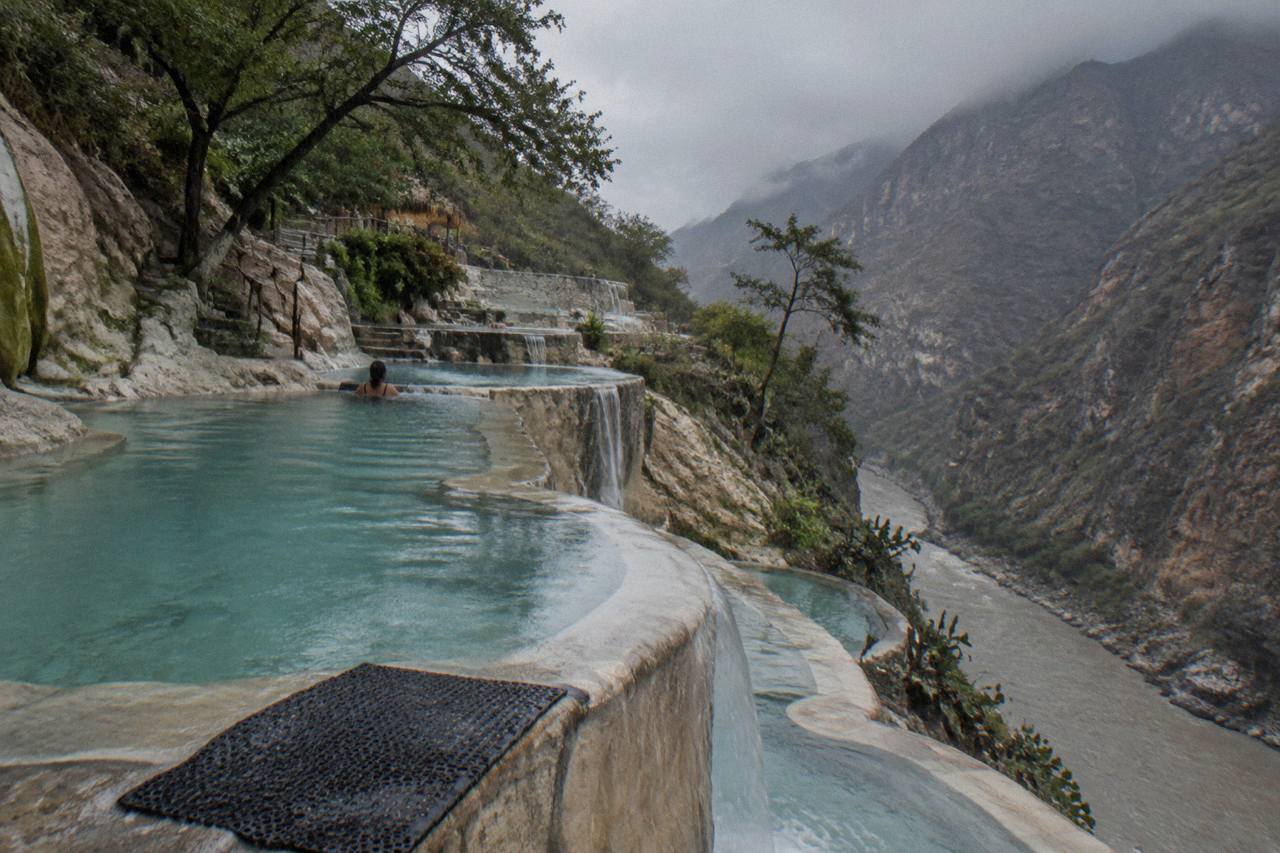
The contrast with privately developed hot-spring resorts in the same region is stark. Where a private operator would typically gate the best pools behind hotel-guest-only access, the ejido's official pozas page states that you do not need to be a hotel guest to use the pozas, and one entrance ticket covers both zones and every attraction on the list: the cave, the steam tunnel, the river, the pools, the waterfalls, the hiking trails and the hanging bridge. Community ownership chose open access over exclusivity, and that choice is the single biggest reason the park photographs the way it does, full of ordinary Mexican families rather than resort guests.
Where Does The Entrance Money Go?
The 230 MXN per person daily entrance, the 50 MXN parking fee, the hotel rooms from 1,000 MXN per night and the 300 MXN zipline launches all flow to the ejidal cooperative and its community, which funds park maintenance, staffing and local projects rather than shareholder returns, and the park's pricing history shows deliberate restraint, holding the entrance at 150 MXN for years before stepping it to 200 MXN in 2024 and 230 MXN for 2026. That fee schedule, with its dated increase notices, is published on the park's own costs page, which is the community accounting for itself in public.
The discount structure tells the same story. Children aged 0 to 4 enter free, children 5 and over pay the full rate, seniors with an INAPAM credential get 50% off park entrance, and organised groups of 40 or more get 10% off plus two free entries for the organiser. Those are social pricing decisions aimed at Mexican families and local seniors, the constituency an ejido answers to, and they are not the kind of tiered yield-management pricing a commercial resort would run. Nothing about the schedule is aimed at maximising revenue per visitor.
| What you pay | Amount | Notes |
|---|---|---|
| Park entrance | 230 MXN per person per day | Valid 7 am to 8 pm, both zones, all attractions |
| Children 0 to 4 | Free | Children 5 and over pay full price |
| INAPAM seniors | 50% off entrance | Credential required, entrance only |
| Groups of 40+ | 10% off, 2 free for organiser | Ejido group policy |
| Parking | 50 MXN per vehicle per day | Space only, no custody |
| Zipline | 300 MXN per person per launch | Full 1,890 m circuit, separate from entrance |
| Shuttle between zones | 15 to 20 MXN per person shared | Special trip 150 MXN, max 5 |
Cash is the other signature of the model. Everything inside the canyon, entrance, restaurants, hotel, shop, is cash only, and the nearest ATM is in Ixmiquilpan about an hour away. A community cooperative has little use for the card-terminal fees and settlement infrastructure a corporate park would install, so the rule is absolute and the park repeats it on multiple pages. Mobile signal inside the canyon is Telcel only, which compounds the planning point: arrive with pesos in hand, and read our guide to Tolantongo entrance fees and tour prices before you budget the day.
The hotels close the loop. La Gruta singles run at 1,000 MXN per night, Paraíso Escondido rooms from 1,150 MXN, and only the Rancho and Paraíso #2 sections take reservations, by WhatsApp, while the rest rent first-come on arrival. Rates never include the daily entrance ticket, because lodging and entry are separate ejido services. None of these rooms are sold on this site, and the park warns that look-alike websites selling "all-inclusive" packages are not its official channel; the community's only official page is its own domain.
Does The Community Run The Tours Too?
No, the tours are run entirely by third-party operators such as Amigo Tours, TuroTours and smaller local agencies, because the park employs no guides and sells no transport beyond the local combi network, so the cooperative owns the destination while independent companies own the way most visitors reach it, and the two layers meet at the park gate where your operator buys or includes your entrance. The split is clean and the park states it openly on its excursion information page: visits are self-guided on foot once you are inside.
That is why the tour market around Tolantongo is so varied in price. The cheapest shared day trip from Mexico City, the full-day Tolantongo Caves listing at from $78 per person, sits at the bottom of a range that runs to from $140 for per-person shared departures, with private options from $147 and up. The operators are competing with each other on transport comfort, group size and inclusions, not on the park itself, whose price the community fixes. The Tolantongo Caves Small Group Tour with pickup, from $132 per person and rated 4.7 across 724 reviews, is one of the most reviewed of these, and the listing notes entrance and round-trip transport from the meeting point among the inclusions.
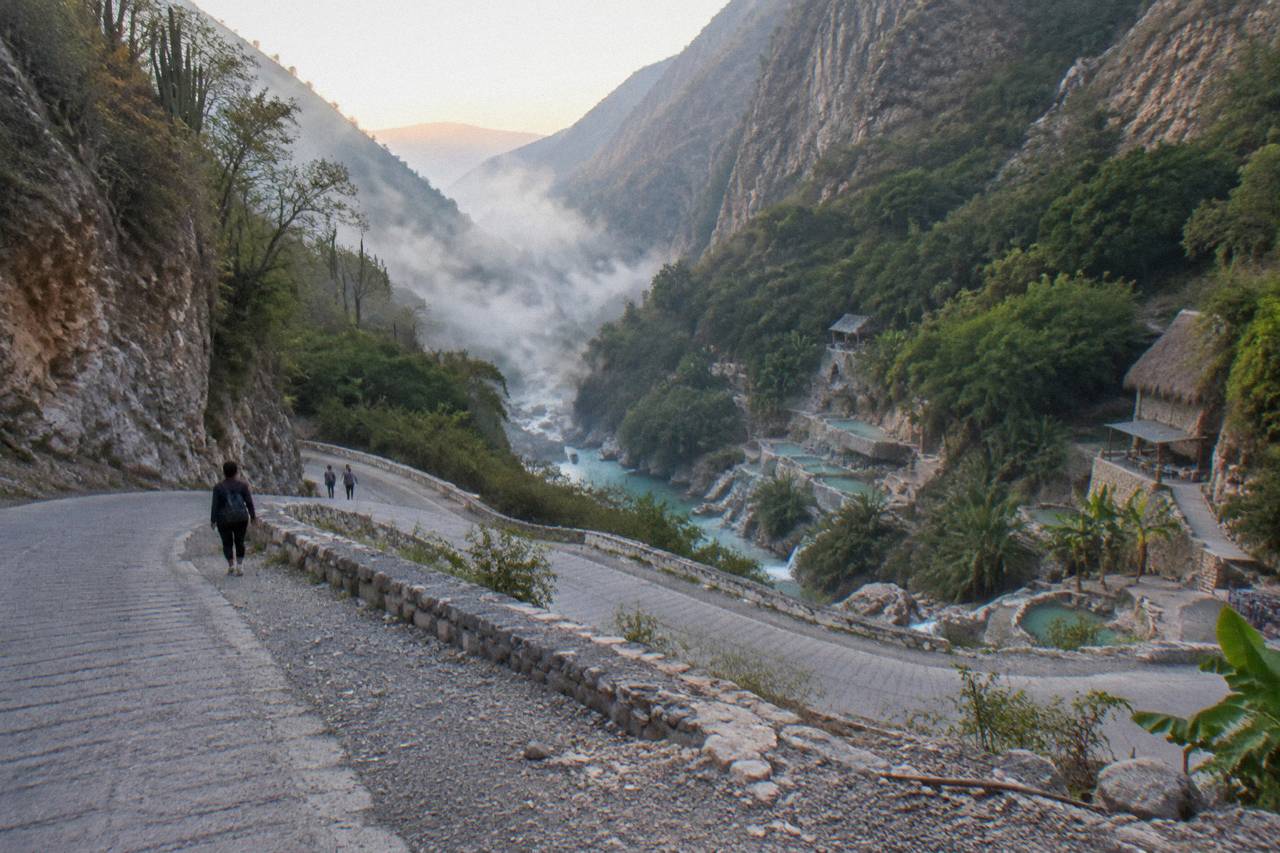
Some operators lean into the community story more than others. A few private listings, such as the Tolantongo Private Tour with pastes and a day at the hot springs from $161 per person, build in stops at local businesses on the route, which spreads tour spending beyond the ejido gate into the wider Mezquital Valley economy. Others, like the Tolantongo Hot Springs Day Trip with Guide, from $132 per person and rated 4.8 across 103 reviews, focus the day on the park's own attractions, with a certified guide travelling with the group even though the park employs none.
One boundary is worth understanding before you book anything labelled "Tolantongo". Across the thermal river sits a different ejido territory, and the Grutas de Tolantongo ticket does not give entry, camping or services there. The La Gloria hot springs you may see advertised are a separate community's operation on the other bank, with their own management and their own fee, which no source we trust has verified. Combining both banks in one day, as some La Gloria-inclusive tours from Mexico City do, means paying two communities, not one big park.
What Does Community Ownership Mean For The Rules?
Because the rulebook is written by the community that lives with the canyon, the rules are specific, physical and strictly enforced on site: swimsuits only in the cave, tunnel, river and pools, no food, drink, soap or shampoo in any of them, no pets, no alcohol, valuables left out of the water because the mineral water can strip jewellery, and security staff who can close the river outright in heavy rain. None of these read like liability boilerplate. They read like a community protecting the thermal water that is its livelihood.
The river rule is the one that surprises visitors most. In the rainy season, roughly June to September, the river can turn from turquoise to brown with silt and the community closes sections of it, sometimes for hours at a time, and campers are told not to pitch near the water at all in the wettest weeks. A private park might keep the river open and post a waiver; an ejido that drinks the same watershed closes it. Our page on whether Tolantongo is worth it weighs how these closures affect a planned day trip.
The camping zone carries the same voice. Tents rent for 250 MXN per night plus a 200 MXN deposit, no reservations are taken, checkout is at noon, quiet hours start at 11 pm, and you pay the entrance for every day you stay. You may bring your own food and non-alcoholic drinks in cans or plastic bottles, but they are consumed in the camping zone only, a rule that keeps the pools clean and the restaurants viable at the same time. Blankets are not included in tent rental, and cold-season nights from December to March genuinely need one.
Even the driving advice comes from the community. The official getting-there page instructs automatic-transmission vehicles to descend the final canyon curves in first and second gear, and publishes its own distance table from the park: 42.9 km to Ixmiquilpan, 201 km to Mexico City, 193 km to Querétaro. It is advice written by people who drive that road daily, published on their own directions page, and our guide to reaching Tolantongo from Mexico City builds on it. The ejido also runs the official combi from Ixmiquilpan's San Antonio parking lot at 80 MXN each way, its only scheduled transport service.
How Does Tolantongo Compare With Other Community-Run Parks?
Tolantongo is one of Mexico's best examples of a successful ejido tourism venture, in the same family as other community-operated canyon and water parks in Hidalgo and the Sierra Gorda, and it stands apart from most of them in scale, with two full hotel sections, a camping zone, a four-launch zipline and daily national-level visitation, all still owned by the same Ñähñu community that held the land before tourism arrived. Local press coverage in 2025, when it described the cooperative structure, treated the park as a regional flagship for exactly that model.
The model's strength is stability. Because no outside investor can buy in, the community cannot be bought out, and the park's trajectory since the cooperative was recognised, reported as 1998, has been steady internal reinvestment: paved descent road, hotel sections, the zipline circuit, the shuttle system. Its weakness is the flip side: cash-only operations, Telcel-only signal, no card machines and a booking system built on WhatsApp rather than a reservations platform. Visitors who arrive expecting resort infrastructure meet a rural institution with resort-scale crowds on weekends.
For tour buyers, the ownership question resolves into a simple planning fact. Book the transport and the guide from a city, because the community does not sell them, and pay the community directly, in cash, once you are inside. The full-day Exploring the Waters tour from Mexico City, the early express departure at 13 hours, and the private options from Querétaro or San Miguel de Allende all end at the same ticket booth, where the money enters the ejido that has run this canyon for a generation.
Common Questions About Tolantongo Ownership
Who owns Tolantongo, mexico?
The local community of Ejido San Cristóbal owns and runs the entire operation: entrance, hotels, camping, restaurants, zipline and shuttle. The park's own site confirms the ejido structure, naming a Consejo de Vigilancia y la Administración as its governing bodies.
Does the Mexican government run Grutas de Tolantongo?
No. The land is communal ejido territory and the operation is run by the community's cooperative. The government's role is limited to the general legal framework for ejidos and for natural protected areas; the park is not a national park and charges its own entrance.
Can you stay overnight at Grutas de Tolantongo?
Yes, the community runs hotel sections from 1,000 MXN per room per night plus camping with tent rental at 250 MXN per night and a 200 MXN deposit. Rates never include the daily 230 MXN entrance, everything is cash only, and only the Rancho and Paraíso #2 sections take reservations.
Do the tours belong to the community?
No. The park provides no guides and no long-distance transport. Every day tour from Mexico City, Querétaro or San Miguel de Allende is run by an independent operator, and the community's involvement begins at the gate, where operators include or purchase the 230 MXN entrance.
Is La Gloria part of Grutas de Tolantongo?
No. La Gloria sits across the river in a different ejido territory, and the Grutas de Tolantongo ticket does not give entry, camping or services there. It is a separate community operation with its own management and fee.