Why Is The Water At Tolantongo Hot?
The water at Grutas de Tolantongo stays between 36 and 38 degrees Celsius year-round. Here is the plain-language explanation of the geothermal mechanism behind it, and how to get into it.
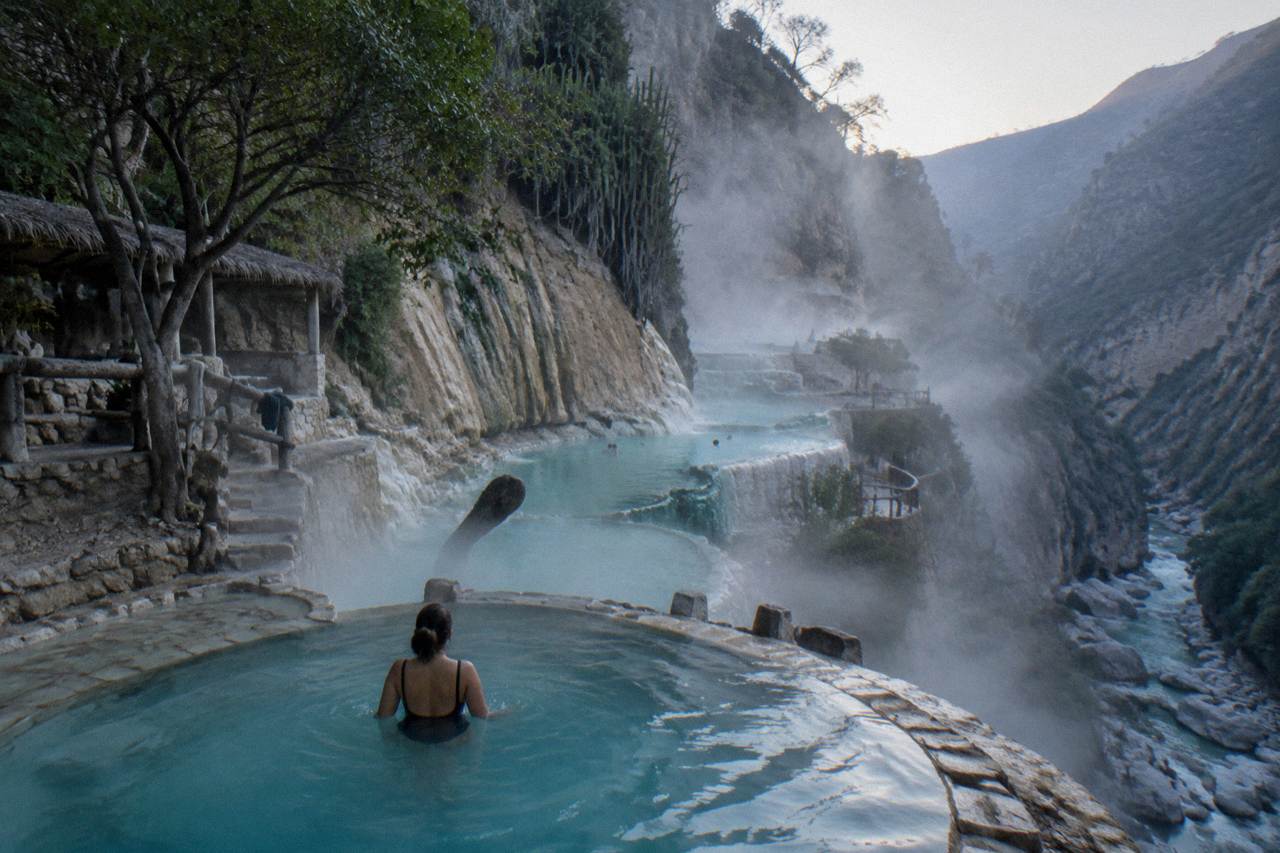
The water pouring out of the cliffside at Grutas de Tolantongo never goes cold. The park's own pages state it plainly: the thermal water holds between 36 and 38 degrees Celsius, all year, in every season, in the cave, the steam tunnel, the river and the dozens of pools stacked along the canyon wall. That is roughly body temperature, which is why soaking in a Tolantongo pool in December feels like stepping into a warm bath while the night air around you demands a jacket. This article explains, in plain terms, where that heat comes from, why it never switches off, and how the tours from Mexico City put you in that water with the least friction. The mechanism is geothermal, and it needs no volcano, no geyser and no boiler.
The water at Tolantongo is hot because it is geothermal: rain that falls on the mountains seeps down through fractured rock, is warmed by heat from deep in the earth's crust, and rises back to the surface through the faults of the canyon, arriving at a steady 36 to 38 degrees Celsius. Nothing at the park is artificially heated. The temperature you feel in the pools, the cave and the tunnel is the temperature the water comes out of the ground at, and it does that every single day of the year. The park sits in the Mezquital Valley of Hidalgo, a region threaded with faults and hot springs, and the park's own page on the gruta describes the water emerging as thermal flow from within the hillside rather than as anything heated on site. The short version: the canyon is a natural leak in a natural plumbing system, and the leak is warm.
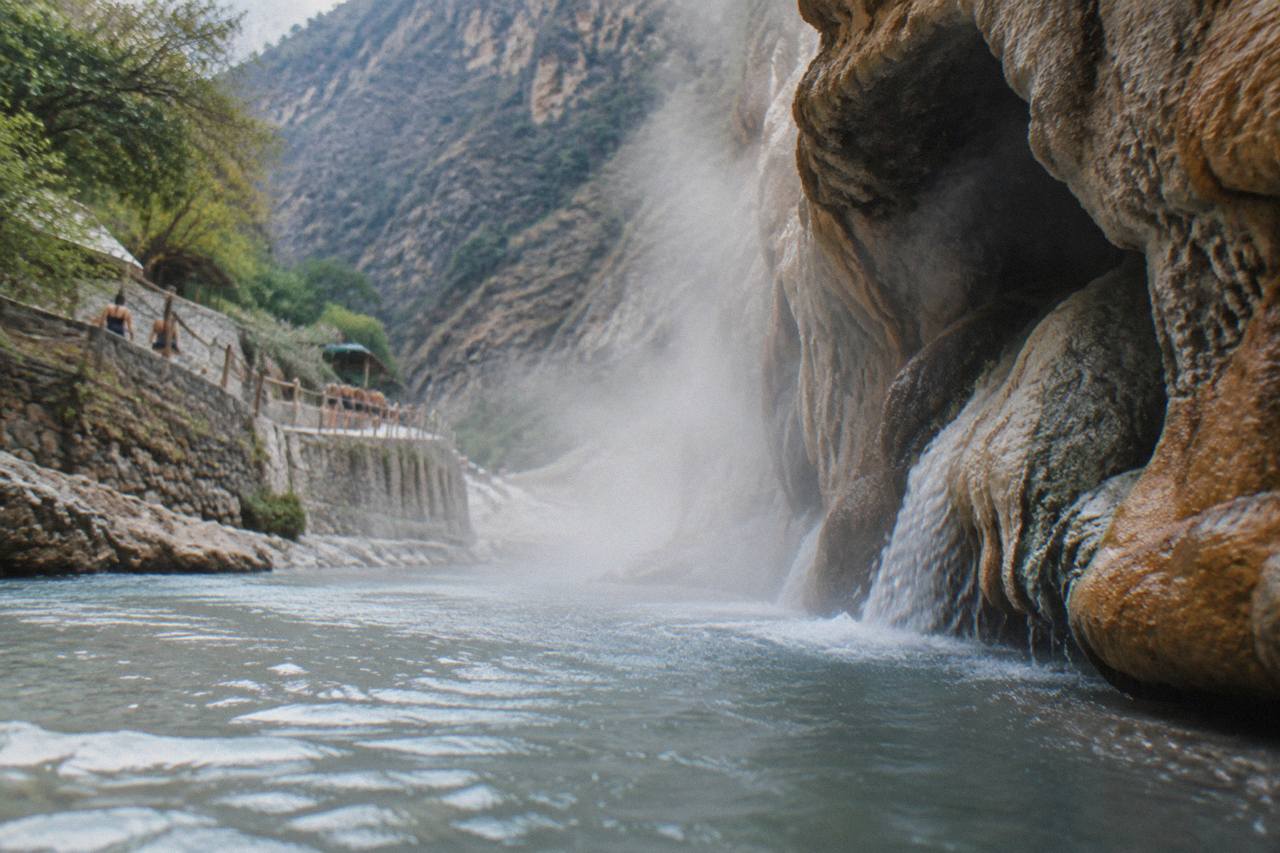
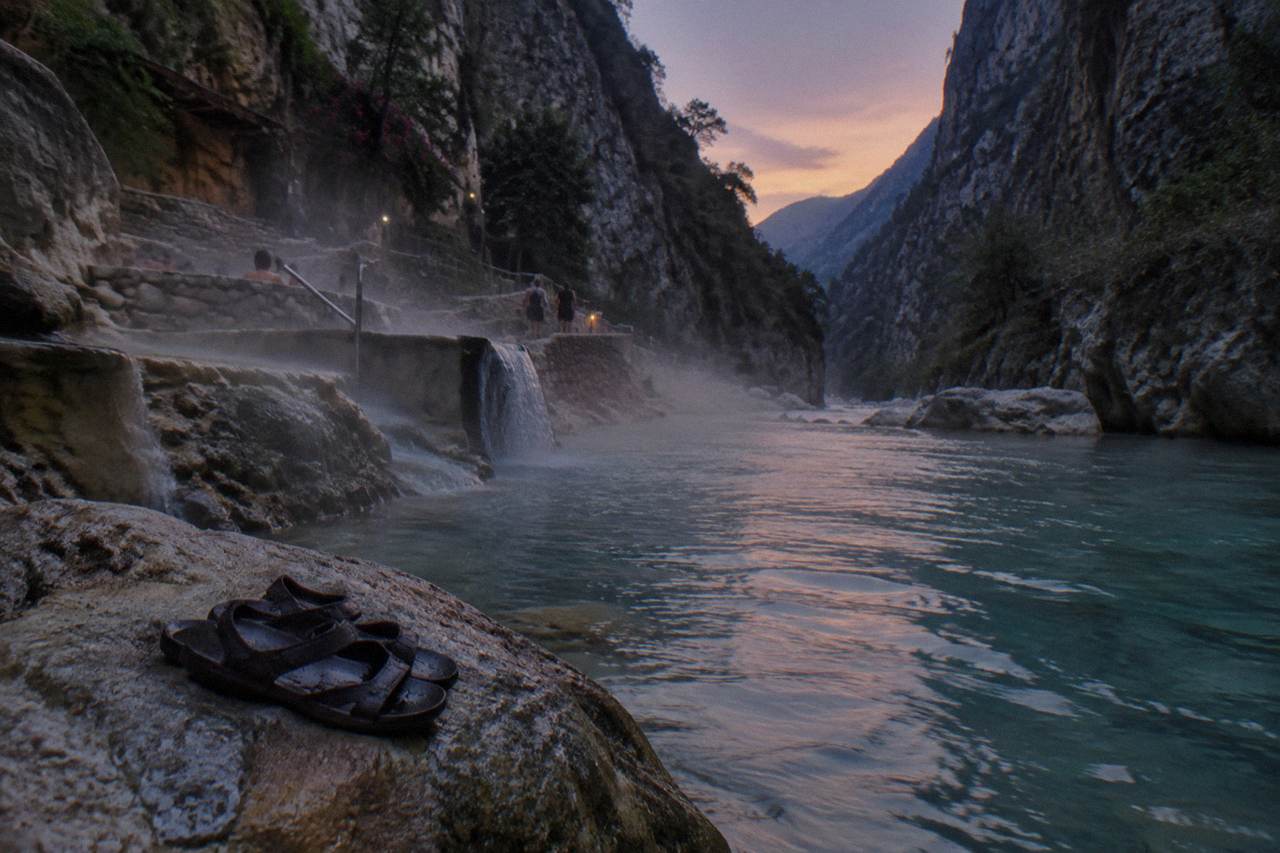
To picture the system, imagine the hills above the canyon as a sponge made of cracked limestone and broken rock. Rain falls on the high ground. Some of it runs off into streams, but a portion sinks, following fractures and faults downward over years. The deeper you go into the crust, the warmer the rock becomes; that background warmth, the same thing that makes deep mines hot, is the engine. The water picks up that heat, becomes less dense, and begins to rise, finding the fastest way back to the surface along the fault lines that the Tolantongo canyon has cut open. Where the fault meets the canyon wall, the warm water exits: into the cave, into the tunnel, into the seeps that feed the pozas terraced down the slope, and into the river that runs along the canyon floor.
This is why the heat is so steady. The underground reservoir is large and the journey through the rock is slow, so a cold week or a hot afternoon barely registers by the time the water arrives. What you feel at the surface is the average of years of rainfall, warmed and delivered on a schedule the weather cannot interrupt.
If reading about warm water makes you want to stand in it, the fastest routes there are the shared day trips from Mexico City. The early express departure gets you there and back in 13 hours, the full-day tour runs 14 to 16 hours with more time on site, and the small-group tour keeps the group smaller at a lower price point.
Where Does The Heat Actually Come From?
The heat comes from the natural warmth of the earth's crust beneath Hidalgo, transferred to water that has percolated deep into fractured rock along the region's faults; the water then rises through those same faults and surfaces in the Tolantongo canyon at a stable thermal temperature. There is no volcanic crater, no lava tube and no machinery involved. The crustal warmth that heats the water is the ordinary background heat of the planet, the same gradient that warms deep groundwater almost everywhere, expressed strongly here because the geology gives the water a fast route down and a fast route back up. Regions like this, with deep faults and warm springs, dot the volcanic belt across central Mexico, and Hidalgo's Mezquital Valley is one of them.
The honest limit of this explanation is worth stating. The park publishes the water temperature, 36 to 38 degrees Celsius, and the fact that it is thermal year-round, but it does not publish the depth the water reaches, the temperature of the source rock, or the specific geologic formations involved. Any article quoting those numbers is guessing, and this one will not. What is verifiable is the outcome, on the park's official pages and in every visitor's experience: warm water, at a near-constant temperature, from a hillside that has no heating plant behind it.
A useful way to test the claim yourself is to visit in the cold months. December to March nights in the canyon are cool enough that the park's camping page tells overnight visitors to bring blankets and jackets. Stand by the river at dawn in that season and the water still reads warm, still steams against the cold air, because the heat supply has nothing to do with the weather above ground. The contrast between cold air and warm water is, in fact, the reason many travellers time a winter visit.
Because the water needs nothing but the ground to heat it, the "facility" at Tolantongo is really a set of cleverly placed containers. The pools are built where the warm seeps emerge, the cave is a natural collection point where warm water pools chest-deep, and the steam tunnel is a modified passage where the warm flow fills the air with vapour. For a trip built around those containers, Check availability on the early express departure, which is rated 4.9 across 680 reviews and priced from $133 per person.
Why The Temperature Never Changes
The temperature stays between 36 and 38 degrees Celsius because the water's heat was collected deep underground over a long time: the reservoir is insulated from surface weather, so summer heat and winter cold cannot reach it, and the flow rate out of the rock is steady enough that the pools neither overheat nor cool. This is the same reason a deep well delivers cool water in August. Depth is a thermostat. The park's pages state the range without seasonal qualification, which is itself the tell: a spring fed by surface runoff would swing with the rains, and this one does not.
That stability shapes how you plan a visit. You cannot pick a "warm week" to aim for, because every week is a warm week. What actually varies is everything around the water.
| What varies | What does not |
|---|---|
| Air temperature: cool nights December to March, warm days April and May | Water temperature: 36 to 38 C in the cave, tunnel, river and pools |
| River colour: can turn brown in the rainy season, roughly June to September | Water source: geothermal, not heated on site |
| Crowd level: far busier on weekends and Mexican holidays | Daily operation: open 365 days a year |
| Attraction hours: pools and cave 8 am to 5 pm, river and some pozas into the evening | Entrance: 230 MXN, cash only, covers both zones |
The one thing the season does change is the river's appearance. The thermal flow itself is constant, but the canyon's river carries runoff from the surrounding hills, and in the rainy season heavy rain can wash silt into it, turning the turquoise water brown for a stretch. The park's own guidance is to keep away from the river in rain and follow the instructions of the security staff. The pools and the cave, fed directly by the warm springs, keep their temperature and clarity regardless.
Does Every Part Of The Park Feel The Same?
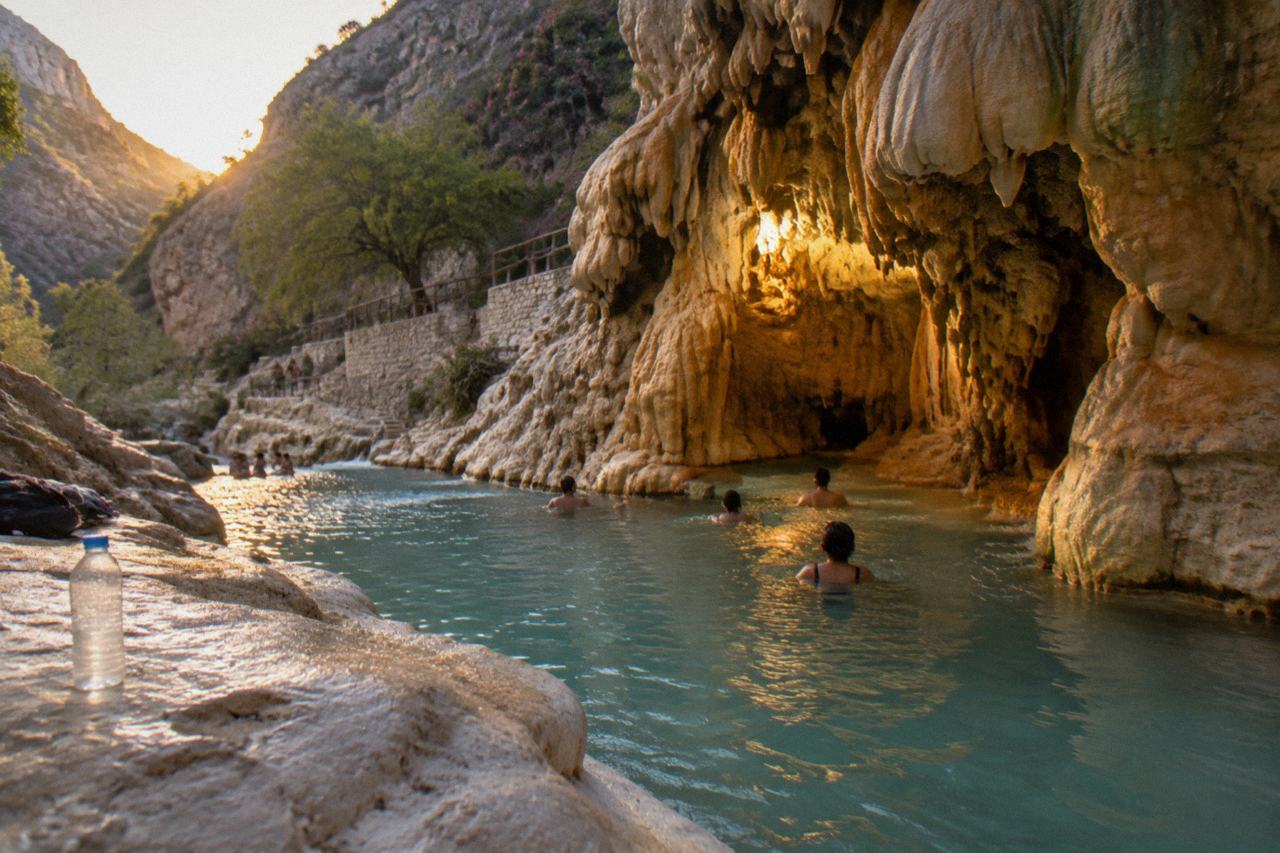
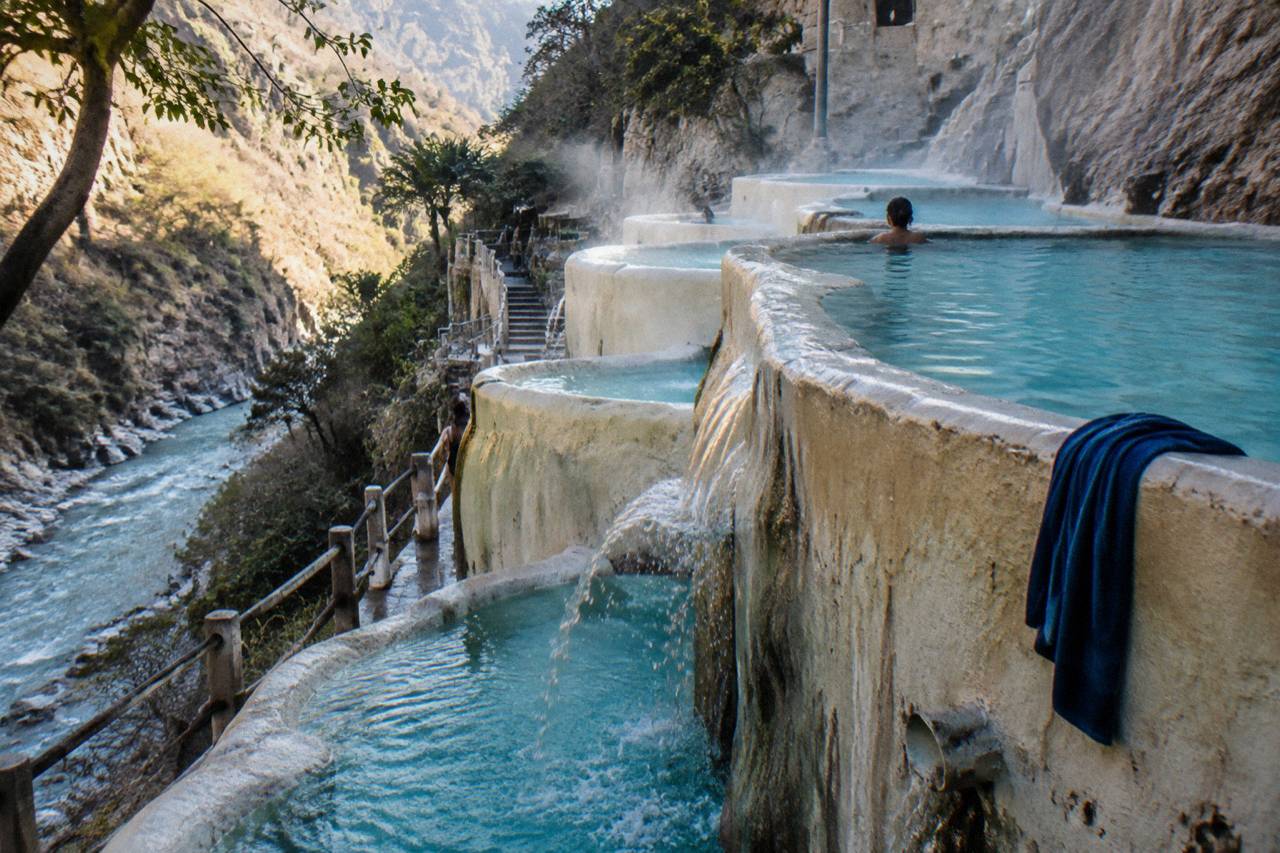
No: all the water at Tolantongo is the same thermally heated water, but each spot delivers it differently, from the steam-saturated air of the tunnel, to the chest-deep still pool inside the cave, to the dozens of cliffside pozas in Paraiso Escondido and the shallow thermal river along the canyon floor. The ticket covers all of it, both zones, one price, one day, and the park states clearly that you do not need to be a hotel guest to use the pozas. Which spot you prefer is a matter of taste: the cave and tunnel concentrate steam and heat, the pozas give you the postcard view down the canyon, and the river is where families with small children tend to settle because the water is shallow.
The park provides no guides of its own; visits are self-guided on foot once you are inside. That is the quiet argument for a tour. A day trip handles the drive, roughly 201 km from Mexico City on the official distances page, and hands you a ticket and a schedule, so the only decisions left are which warm water to stand in first. The full-day Exploring the Waters tour, rated 4.8 across 1,575 reviews and from $134 per person, is built around exactly that: maximum time across the park's water attractions. Its live listing shows the current price and pickup details. Other pages covering the same trip are gathered on Grutas de Tolantongo Tours.
One practical note about the warmth: the park's rules treat the water as what it is, a shared natural feature. Swimsuits are required in the cave, tunnel, river and pools, and soap and shampoo are banned in all of them, because anything added to the water goes straight into the system everyone is soaking in. Food and drink outside the camping zone are banned too. The warmth is the attraction, and the rules are what keep it clean.
For a fuller rundown of each zone, the hot springs and pools guide breaks down where to soak and when, and the cave and thermal tunnel guide covers the two warmest, steamiest spots on the La Gruta side in detail.
Is Hot Water The Same As Safe Water?
Yes in the sense that the warmth itself is natural and constant, and the park treats the water as a self-renewing thermal flow, but visitors should still respect the posted rules: no soap in the water, no pets anywhere in the park, cash for everything, and caution around the river in the rainy season when staff may close sections. The heat is not a sanitiser and the park makes no health claims about the water, and neither does this site. What the park does state is mechanical: the water emerges warm, the attractions have fixed hours, and security staff manage the river when rain raises the risk.
A few specifics help. The zipline is separate from the entrance and costs 300 MXN per launch, with an age minimum of over 10 years and a maximum weight of 93 kg, per the park's costs page. Lockers run 150 MXN with 50 MXN returned when you bring the key back. Children aged 0 to 4 enter free, and 5 and up pay the full 230 MXN. None of this is safety-critical geology, but it is the operating reality of a park built around a natural hot spring, and the official costs page and information page carry the current versions.
Travellers who want the warmest, steamiest experience with a bit more structure often pick the small-group option. The Tolantongo Caves Hot Springs & Waterfalls Small Group Tour, run by Amigo Tours, runs 14 hours from Mexico City, is rated 4.6 across 352 reviews, and starts from $92 per person, which makes it the budget-friendly way into the same warm water. Check availability on its live listing to see current dates and the exact meeting point.
Which Tour Suits A Trip Built Around The Warm Water?
Pick by hours on site and group size: the early express runs 13 hours and suits travellers who want the water with a tighter schedule, the full-day tour runs 14 to 16 hours for maximum time in both zones, and the small-group tour runs 14 hours at the lowest price, from $92 per person, with a smaller group and pickup logistics on the listing. All three depart from Mexico City, all three are third-party operators, and none is run by the park itself, which provides no guides. The differences that matter are duration, price and the size of the crowd you travel with.
| Tour | Duration | Rating | From price |
|---|---|---|---|
| Early & Express Tolantongo Hot Springs | 13 hours | 4.9 across 680 reviews | $133 per person |
| Full-Day Tour Exploring the Waters of Tolantongo | 14 to 16 hours | 4.8 across 1,575 reviews | $134 per person |
| Tolantongo Caves Hot Springs & Waterfalls Small Group Tour | 14 hours | 4.6 across 352 reviews | $92 per person |
Prices are snapshots and each operator's live listing shows the current figure and what the fare includes. For inclusions printed on a listing, the small-group and guided Amigo Tours day trips list entrance, round-trip transport and a bilingual guide; the early express and full-day rows leave inclusions to the booking page, so check before you book. If you are weighing a tour against driving yourself, the tour versus independent travel guide runs the full comparison, tolls, combis and all, and the getting there from Mexico City guide covers the road in detail, including the steep final descent where the park itself advises low gears.
There is also the matter of when the warm water is most enjoyable. The dry months of October to December are widely recommended for clear river water and cool air that makes 36-degree water feel even better, and midweek visits are quieter than weekends. The water's temperature will not be the variable. It never is. Choose your season for the weather around the pools, not the pools themselves.
Common Questions About The Hot Water At Tolantongo
Is the water at Tolantongo heated artificially?
No. The park states the water is thermal, emerging from the hillside at 36 to 38 degrees Celsius year-round, with no heating plant involved. The pools, cave and tunnel are simply containers placed where the warm water naturally surfaces.
Does the water temperature change with the seasons?
The water itself does not. It stays between 36 and 38 degrees Celsius all year because the underground reservoir is insulated from surface weather. What changes is the air temperature, the crowd level and, in the rainy season, the river's colour, which can turn brown with silt after heavy rain.
How hot is the water compared to a bath?
A warm bath is typically around 38 to 40 degrees Celsius, so Tolantongo's 36 to 38 degrees sits just below that, close to body temperature. It feels warm rather than scalding, which is why visitors stay in the pools for long stretches, especially on cool winter evenings.
Can you swim in the hot water at Tolantongo?
Yes, in a swimsuit, which the park requires in the cave, tunnel, river and pools. The river is shallow and family-friendly, the cave holds a chest-deep still pool, and the cliffside pozas are soaking pools rather than swimming pools. Soap and shampoo are banned in all of the water.
Is the hot water safe?
The warmth is natural and constant, and the park manages the water attractions with posted rules and security staff, particularly around the river in the rainy season. The park makes no health claims about the water, and visitors should follow the posted rules, including no pets and no soap in the water.