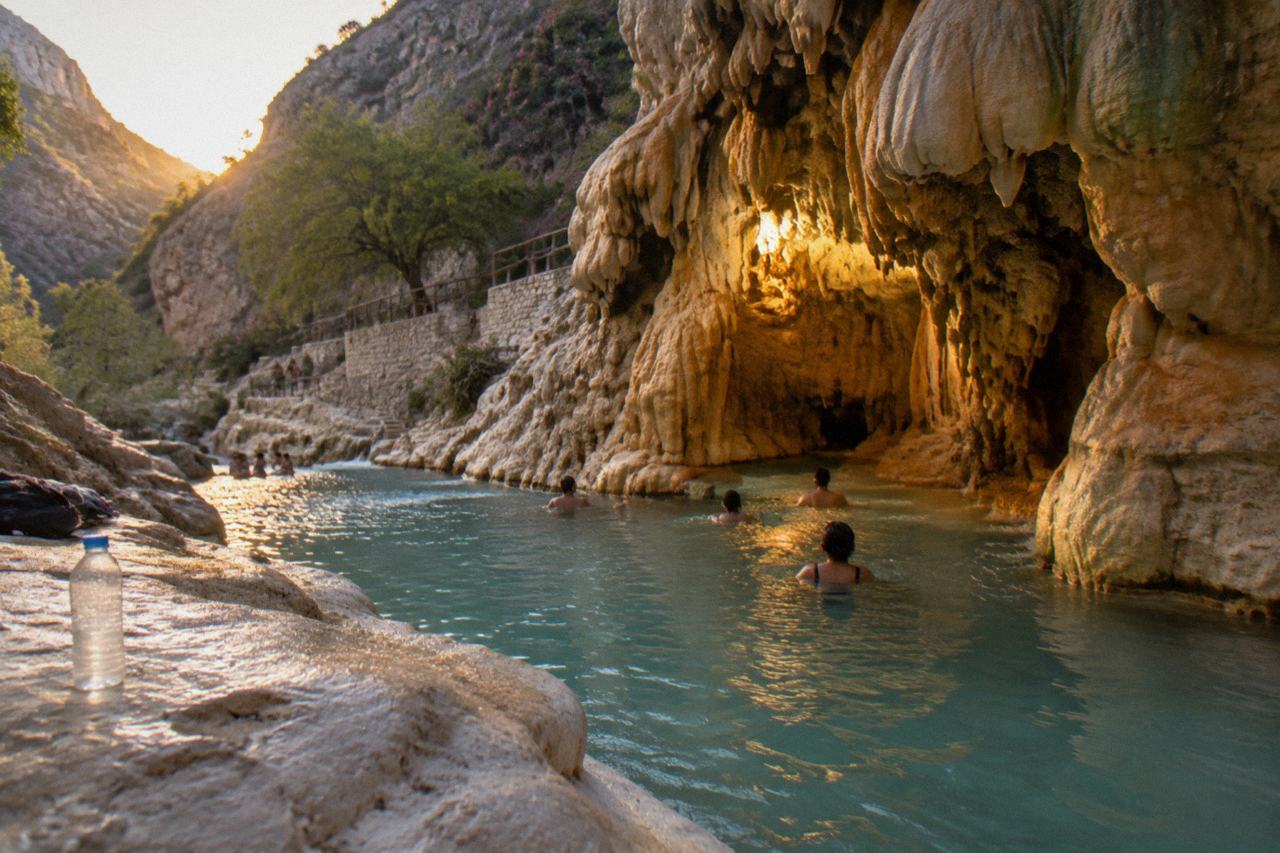
Where Are The Best Hot Springs In Mexico?
Mexico’s top thermal destinations range from limestone-rimmed canyon pools to high-altitude petrified cascades. This guide maps the standouts, with Grutas de Tolantongo as the closest all-in-one hot-spring canyon to Mexico City and the tours that make it a practical day trip.
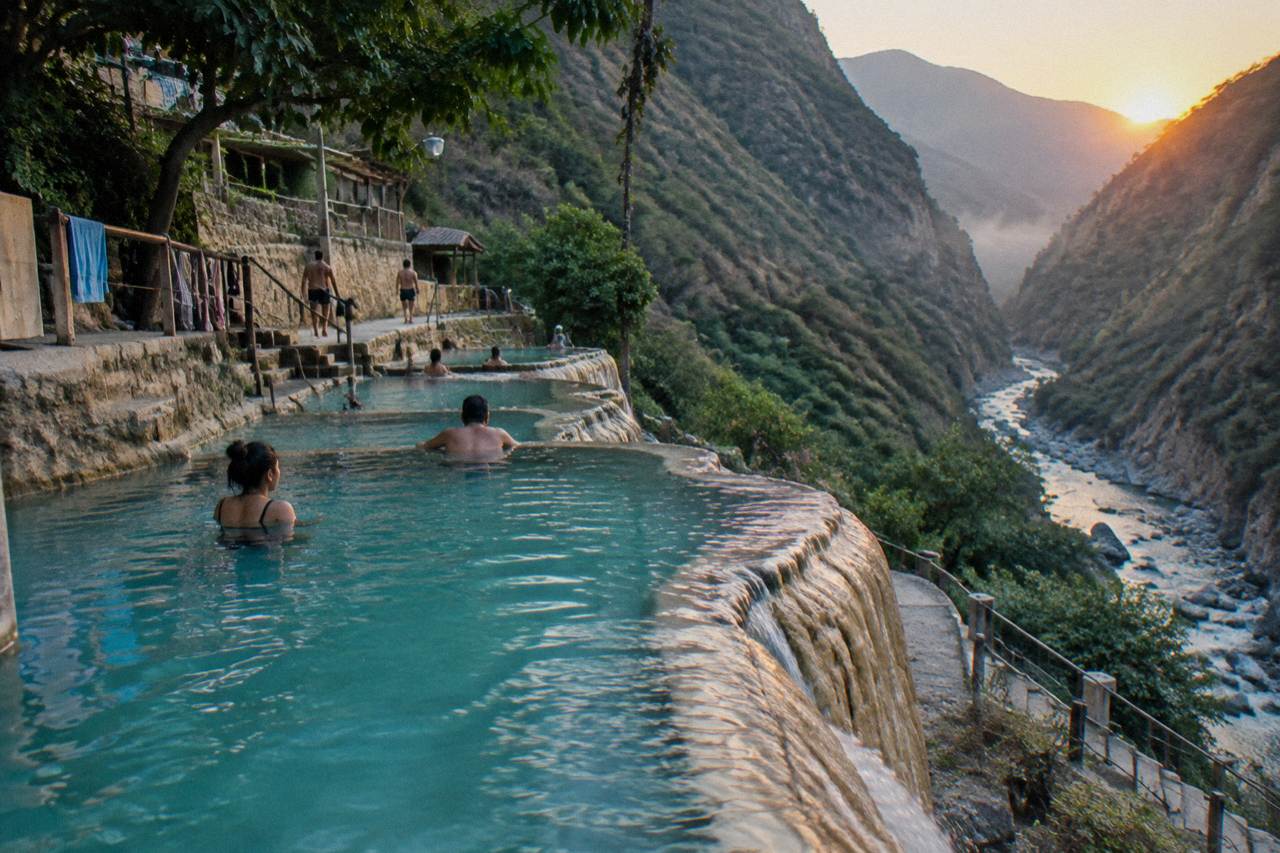
Mexico’s best hot springs cluster along the Trans-Mexican Volcanic Belt and in the Sierra Madre limestone canyons. Grutas de Tolantongo in Hidalgo, with its thermal river, steam caves, and terraced pools, leads the list. Hierve el Agua in Oaxaca, Agua Termal in Ixtapan de la Sal, and the hydrothermal basins of San Miguel de Allende and Puebla follow closely, each distinct in geology, access, and the journey from the capital.
Mexico sits on a restless piece of the earth’s crust. Almost every bubbling pool, steaming cave and mineral-crusted waterfall you can visit for a day trip owes its warmth to magma pockets shallow enough to heat groundwater percolating through cracks. That geology runs from the Pacific coast to the Gulf, which means hot springs are not a single-destination story: they pop up in canyons, inside dormant volcanic calderas, next to colonial plazas and tucked behind cornfields in Hidalgo. The Grutas de Tolantongo Tours site exists because one of those spots, the Tolantongo canyon, has become a practical 12-to-14-hour round trip for travelers who want hot springs in a day rather than a weekend. For a full breakdown of park facilities, rules and best-practice timing, start with our complete visitor guide to Grutas de Tolantongo.
The first question most planners ask is exactly where to aim. The answer splits into three tidy groups. First, hot springs that are close enough to Mexico City for a long day trip: Tolantongo dominates that list, but La Gloria in Hidalgo and a few small balnearios in the State of Mexico also qualify. Second, springs that pair well with a weekend away, like Hierve el Agua near Oaxaca or the thermal baths tucked into the high-desert landscapes around San Miguel de Allende. Third, springs that are effectively destinations in their own right: Rincón del Cielo in Puebla, the network of pozas around Zitácuaro, or the canyon-fed pools near Cuatro Ciénegas in Coahuila. The practical sweet spot for a single-day escape that still feels far from the traffic lights is Tolantongo. Before you commit a full day to the drive, it helps to know what you're actually soaking in, and our guide to whether the Tolantongo hot springs are natural explains the geothermal source behind those canyon pools.
For most visitors arriving in Mexico City, the quickest way to act on that fact is a full-day shared or private tour. The listing with the largest review pool, 4.8 across 1,575 reviews and a price from $134 per person, is a day-long excursion that bundles transport, entrance, and guide time inside the canyon. Other operators run an early-express departure that shaves an hour off the day and is rated 4.9 across 680 reviews, from
The deep catalogue of Tolantongo tours is the reason the canyon appears so high on any hot-spring roundup. Few other thermal sites in Mexico offer the same volume of bookable day trips; most require a rental car, a bus schedule, or a local contact. That alone makes Tolantongo the most accessible hot spring on this list from the capital. The remainder of the article stacks other springs beside it, explains why the canyon water is a geological signature, and shows how different day-trip styles match different visitor rhythms.
Why Grutas De Tolantongo Stands Out Among Mexican Hot Springs
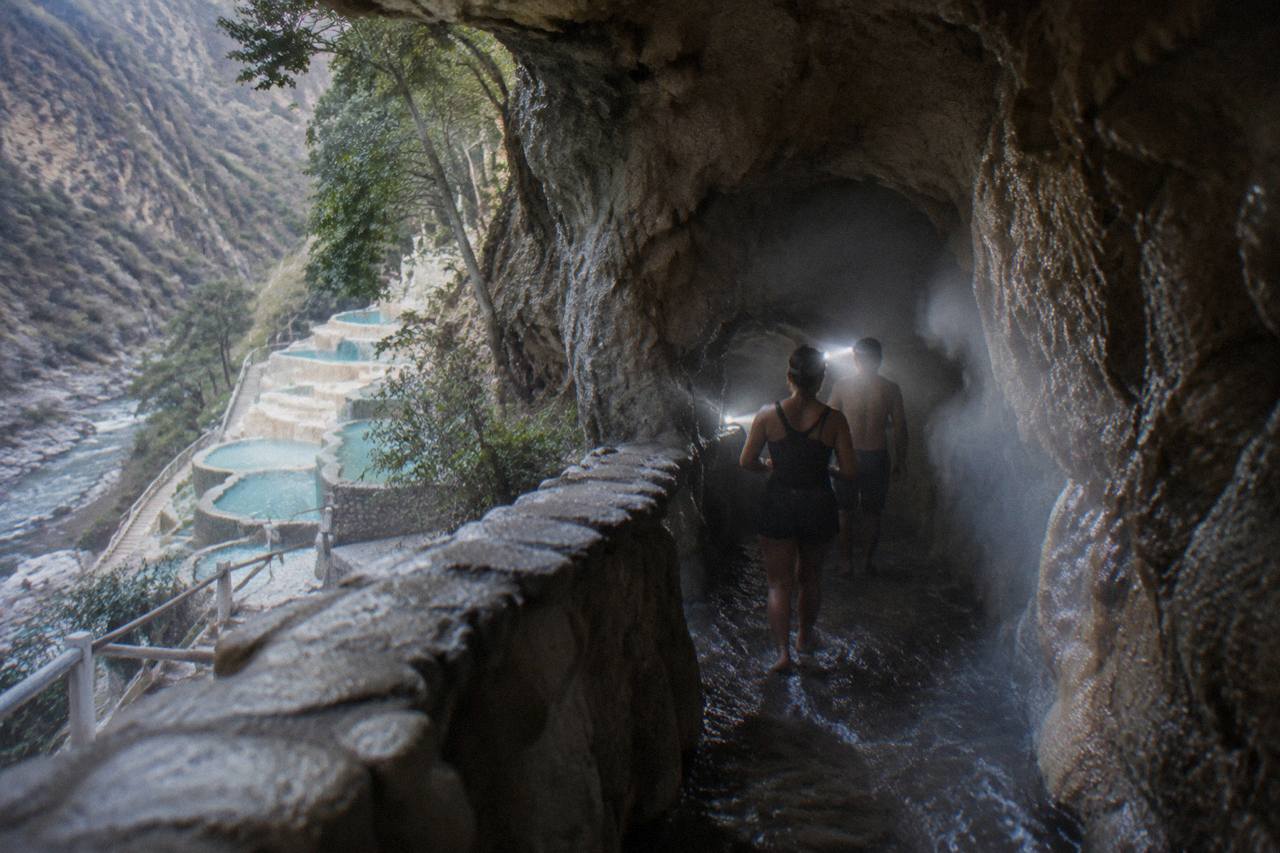
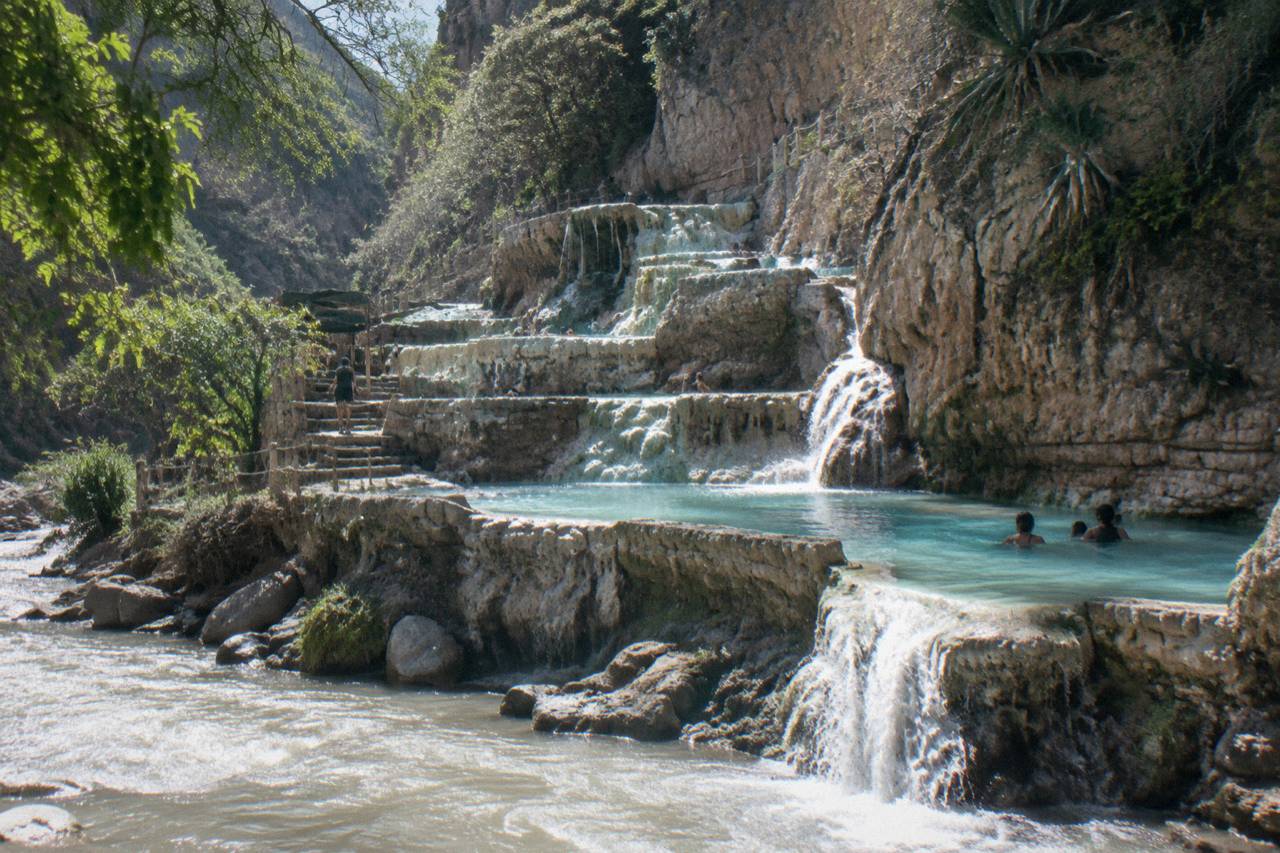
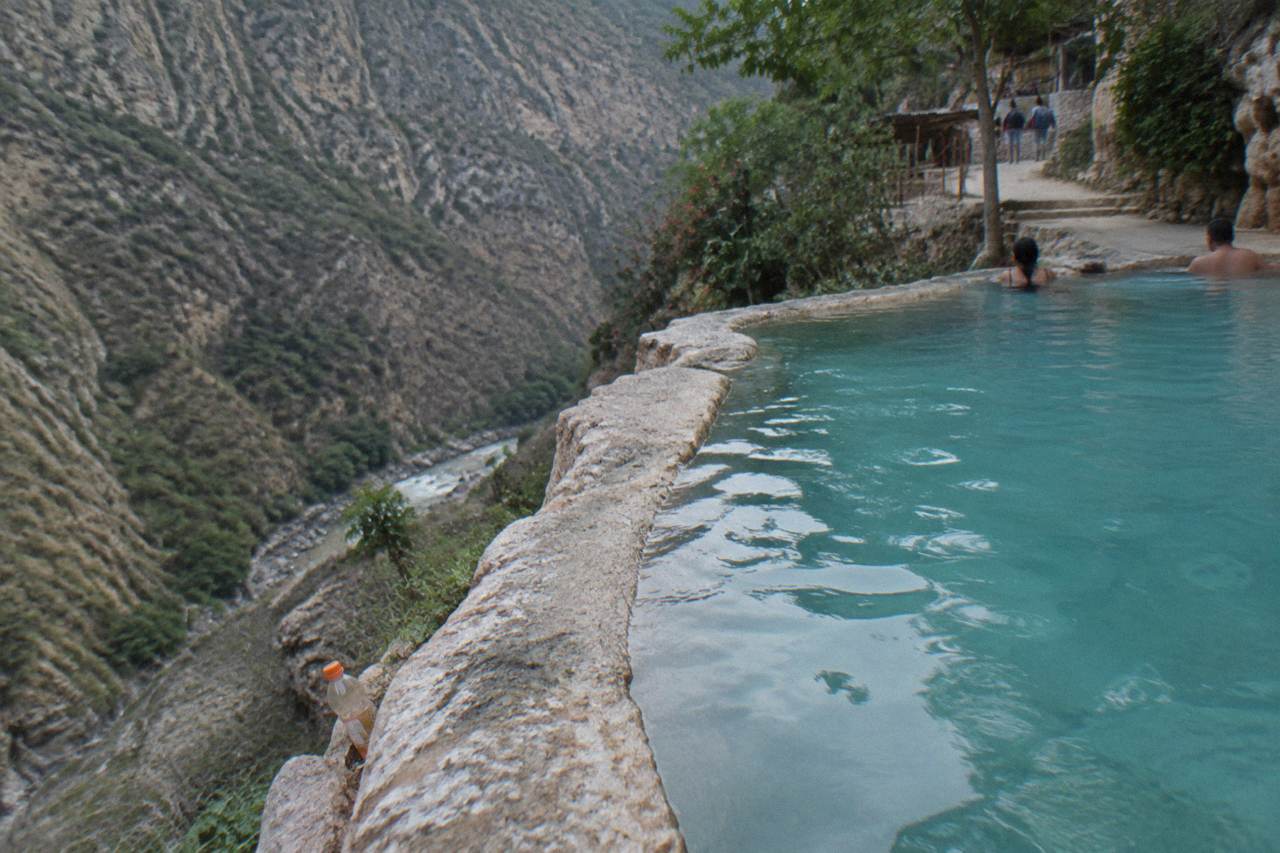
Tolantongo’s thermal water emerges from a karst spring at 36-38 °C and flows through a cave, a steam tunnel, a shallow river, and roughly forty terraced pozas spread across two canyon sections: La Gruta and Paraíso Escondido. That combination of accessible cave bathing, a year-round warm river, and cliffside pools carved into travertine is not replicated on the same scale anywhere else in Mexico within a day’s reach of Mexico City.
The park is an ejidal cooperative running on cash-only terms, with a single entrance fee of 230 MXN per person covering both sections of the canyon. The ticket is valid from 7 a.m. to 8 p.m., not for a full 24 hours, and children aged four and under enter free. Parking costs 50 MXN per vehicle, and a zipline stretching 1,890 metres costs an additional 300 MXN per launch. None of those figures appears on credit-card terminals; the nearest ATM sits in Ixmiquilpan, roughly an hour away. The water temperature is constant year-round, neither lukewarm in winter nor uncomfortably hot in summer, because the limestone aquifer feeding the canyon buffers it at volcanic-reservoir scale.
Geologically, the warm water rises through the same karst system that carved the cave and the tunnel on the La Gruta side. No other hot spring in Mexico pairs a walk-in steam tunnel with a travertine river terraced across a canyon floor. Hierve el Agua in Oaxaca, often photographed for its petrified waterfall, is a mineral-spring system, not thermally hot enough to bathe in comfortably for hours. The warm springs near San Miguel de Allende (Escondido Place or La Gruta spa) are single-pool or basin affairs, designed for soaking rather than exploring. Tolantongo instead asks you to move through four thermal zones in an afternoon, from the grotto ceiling where hot droplets fall onto your back to the river’s current that carries you over iron-red stone shelves into the next pool. If you are weighing the drive, the fees and the clock against the payoff, our Tolantongo entrance fee and tour prices guide lays out every cost line by line.
Because the park provides no in-house guides, and visitors follow the paths on foot, the built-in rhythm of a day trip from Mexico City slots into the experience perfectly. Most tours arrange pre-booked tickets, and operators typically hand out a straightforward plan: cave first, tunnel second, then time in the river and pools before the bus leaves. The full-day tour, from $134 per person with round-trip transport, covers those beats in a sequence moulded by traffic and sunset. That tour makes for a full day, and the park itself is the draw: caves, waterfalls, and hot-spring pools stacked along the canyon walls.
The travel time from Mexico City is officially measured at around 201 km, with a 3-hour-50-minute drive, though operators routinely quote 3.5 to 4 hours depending on traffic. That long transit is the main reason travelers look at other hot springs in the same radius, wondering if a closer balneario could yield a softer day. The next section maps the other thermal basins that belong in the conversation and shows exactly what Tolantongo gives you that they do not.
How Tolantongo Stacks Up Against Other Hot Spring Destinations
Mexico’s other notable hot springs range from high-desert soaking pools to mineral-stained travertine formations. Each has a unique selling point: the roadside ease of Ixtapan de la Sal, the sculptural look of Hierve el Agua, the quiet intimacy of San Miguel’s nearby spas, and the geothermal valley network around Puebla. None, however, offers the same density of bookable day tours, the sheer volume of warm water, or the immersive canyon-river-cave experience of Tolantongo.
Below is a snapshot of five of the most talked-about hot-spring sites in the country, with their distance from Mexico City, the kind of water experience they deliver, and the practical reality of visiting them on a short trip.
| Hot springs | State | Approx. distance from CDMX | Experience type | Day-trip practical? |
|---|---|---|---|---|
| Grutas de Tolantongo | Hidalgo | 201 km | Cave, steam tunnel, thermal river, cliffside pozas | Yes, via multiple daily shared and private tours |
| Hierve el Agua | Oaxaca | far south, requires a flight | Petrified waterfall, mineral pools (tepid, not hot) | No; requires flight or overnight bus |
| Ixtapan de la Sal | Estado de México | 115 km | Thermal waterpark, spa, geothermal pools | Yes, by car or local bus, but limited tour inventory |
| San Miguel de Allende hot springs | Guanajuato | 193 km from Querétaro | Private baths, dome-covered springs, small outdoor pozas | Possible as a long day, better with overnight |
| Los Azufres (Zinapécuaro) | Michoacán | far west, multi-hour drive from the capital | Geothermal valley with cabins, mud baths, high-altitude pools | Yes by car; tour coverage minimal |
If you're curious what keeps these waters warm in the first place, our guide to Mexico's natural hot springs explains the volcanic forces behind each region.
The table shows why Tolantongo dominates the "best hot springs in Mexico" search for travelers based in the capital. Hierve el Agua is visually spectacular and famous on Instagram, but its perched mineral pools are tepid rather than hot, and the drive from Mexico City is impractical for a single day. Ixtapan de la Sal, the closest proper thermal waterpark to the capital, offers a resort-style experience with waterslides, wave pools and spa treatments, yet it is a contained facility, not a canyon. Only Tolantongo merges the geological drama of a river-carved gorge with the infrastructure of guided group tours that handle the entrance, the route, and the return trip in one booking. If you want the full picture of how a Tolantongo day trip actually runs, read the hour-by-hour Tolantongo itinerary.
The next piece of the puzzle is choosing the right tour style, particularly for travelers who want the hot springs without the shared-bus crowd or who are starting their journey from cities north of the capital. The Tolantongo trips listed here now include options tailored to exactly those scenarios.
Tour Types That Change The Hot-Spring Experience
Shared minibus tours from Mexico City are the most booked way to reach the canyon, but the site’s catalogue now covers private vehicles from the capital, express-schedule departures, small-group cave-focused trips, and options from Querétaro and San Miguel de Allende. Each shifts the pace, the pickup point, and the day’s timeline.
If you value space and flexibility, the private departure from Mexico City is the obvious upgrade. One listing runs a 13-hour door-to-door day, rated 4.8 across 189 reviews from $167 per person, with a dedicated driver and the freedom to set cave-to-pool transitions at your own speed rather than keeping to a group whistle. The operator does not promise extras beyond transport and time, so you still pay the park entrance in cash at the gate and buy lunch on site.
For travelers in the Bajío region who want the same hot springs without a seven-hour return drive from the capital, the Querétaro departures are the right bridge. One full-day option, rated 4.9 across 144 reviews, runs from $210 per person and picks up in both Querétaro and San Miguel de Allende. The drive from Querétaro takes just over three hours, which keeps the total day around 14 to 17 hours with roughly four to five hours inside the canyon. The listing notes that Querétaro departures often include extras like breakfast and towels, though the exact inclusions should be checked on the operator’s live page before booking. For more details on reaching the canyon from the Bajío, see our guide to Tolantongo from Querétaro.
The three tours that first appeared on this page, the large-group classic, the early-express, and the small-group cave tour, cover the main shared-departure spectrum. Together with the private and Querétaro options, they shape a menu that fits different distances, group budgets, and crowding tolerances. The reason Tolantongo appears in "best hot springs" discussions so often is precisely this menu: no other thermal site in Mexico has a parallel set of bookable day trips that removes the logistics friction. Whether the destination itself is worth the 14-hour loop is a question the final section addresses directly.
Is Tolantongo Worth The Long Day?
Yes, for travelers who want a natural hot-spring canyon that combines a cave, a steam tunnel, a thermal river, and cliffside pools in one day, Tolantongo delivers. The 14-hour round trip is earned by the variety of thermal water and the quality of the canyon scenery: guests consistently call the payoff worth the early start.
A typical shared day trip from Mexico City ends with the bus pulling back into the Reforma area around 10 p.m. The equation is simple: you trade a long vehicular day for roughly four hours in one of Mexico’s most photogenic thermal basins. Repeat visitors and tour reviewers often say they would have liked more time at the river, but the balance holds because the Pozas Paraíso Escondido cliffside pool section and the cave on the La Gruta side are different enough to feel like two separate stops inside the same day. The water is cement-warm from the moment you step into the grotto, and the thermal current in the river means you are not waiting for a pool to heat up; you are moving through water that is already exactly the temperature of a good bath. Our side-by-side comparison of a Tolantongo tour versus going on your own walks through the cost, time, and comfort trade-offs in detail. If that long bus day sounds exhausting, our guide to the closest city to Tolantongo compares overnight bases so you can wake up minutes from the springs instead.
The alternative hot springs in the table above each require their own set of compromises: Hierve el Agua demands a flight or an overnight bus, Ixtapan de la Sal is a waterpark complex, and the Bajío springs lack the scale of Tolantongo’s canyon. For the specific brief of "best hot springs in Mexico within a day of Mexico City," Tolantongo holds the position not because it is the only thermal spring, but because it is the only one where the water, the terrain, and the tour inventory align to let a traveler act on the idea with a single booking.
Common Questions About Mexican Hot Springs
How much does it cost to get into Grutas de Tolantongo?
The park entrance fee is 230 MXN per person per day, valid from 7 a.m. to 8 p.m. Parking costs 50 MXN per vehicle, and the zipline costs 300 MXN per launch. All payments must be in cash; no cards are accepted inside the canyon.
Is the water at Tolantongo really natural?
Yes. The thermal water emerges from a karstic spring inside the mountain at a constant 36-38 °C. It flows through the cave, the tunnel, the river and the pools without artificial heating or pumping. The travertine terraces and the mineral colour of the rock are byproducts of that natural spring flow.
Can you swim in the thermal river?
Yes, the river is shallow enough to wade and float through, and swimming is permitted in a swimsuit. Park rules ban soap, shampoo, food and drink in the river and pools, and visitors are advised to stay away from the river during heavy rain, when sediment and swift currents can pose a risk.
What should I bring to a hot springs day trip from Mexico City?
A swimsuit, water shoes with grip for the cave and riverbed, a towel, cash in Mexican pesos, sunscreen, a change of clothes for the return bus, and a waterproof phone pouch. Most tours include transport and guide time but do not provide towels or meals unless stated on the listing.