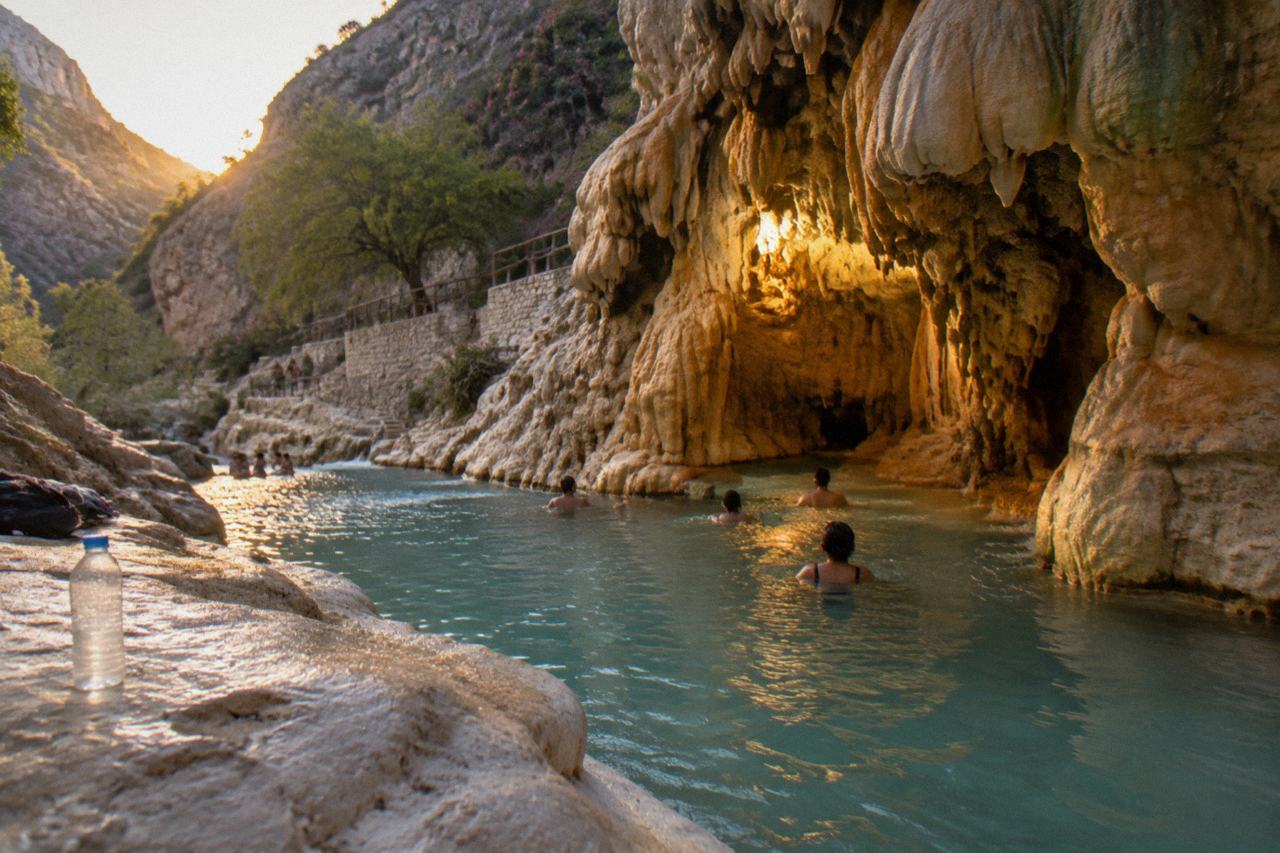
Tolantongo Photos: Best Viewpoints And When To Shoot
The postcard Tolantongo shot, dozens of steaming pools stacked down a canyon wall, exists in exactly one place, and the light that makes it works for only a few hours a day. Here is where each classic photo is taken from and when to be standing there.
Short answer
The classic Tolantongo photos come from three spots: the cliffside pools of Paraíso Escondido, the rim above the hanging bridge, and the mouth of the gruta itself. Park hours run 7 am to 8 pm, pools open 8 am to 5 pm, and the river and some pozas stay open until 9 pm. Weekday mornings give the emptiest frames.
The most shared Tolantongo photo on the internet is not luck. It is a specific wall of pools, shot from a specific angle, in the two hours after the sun clears the canyon rim, and almost nobody who takes it stumbled onto it by accident. The canyon at Grutas de Tolantongo is deep and narrow, roughly 1,280 m above sea level, which means the light inside it behaves more like a studio than a landscape: hard and top-down at midday, warm and raking early and late. The park's official pages give the frame boundaries, admission is valid 7 am to 8 pm, the pools and caves run 8 am to 5 pm, and the thermal river plus some pozas stay open until 9 pm, so a photographer's day has two distinct windows, not one.
This guide maps the viewpoints to those windows. It also covers what a guided day trip actually reaches, because the driver decides your arrival time and your arrival time decides your light. The early express departure from Mexico City exists largely for this reason, and the full-day Exploring the Waters tour, at 14 to 16 hours, trades a pre-dawn start for more hours on site. If you are still choosing how to visit, the site's Tolantongo day trip planning guide breaks down the options by departure time.
Where Are The Classic Tolantongo Photos Taken From?
Almost every famous Tolantongo photo comes from one of four places: the terraced pozas of Paraíso Escondido shot from across or above the river, the hanging bridge with the canyon wall behind it, the mouth of the gruta where steam meets daylight, and the rim viewpoints on the access road where the whole canyon fits in one frame. The park's single entrance ticket, 230 MXN per person per day, covers both zones, La Gruta and Paraíso Escondido, plus every attraction in between, so none of these spots costs extra to reach.
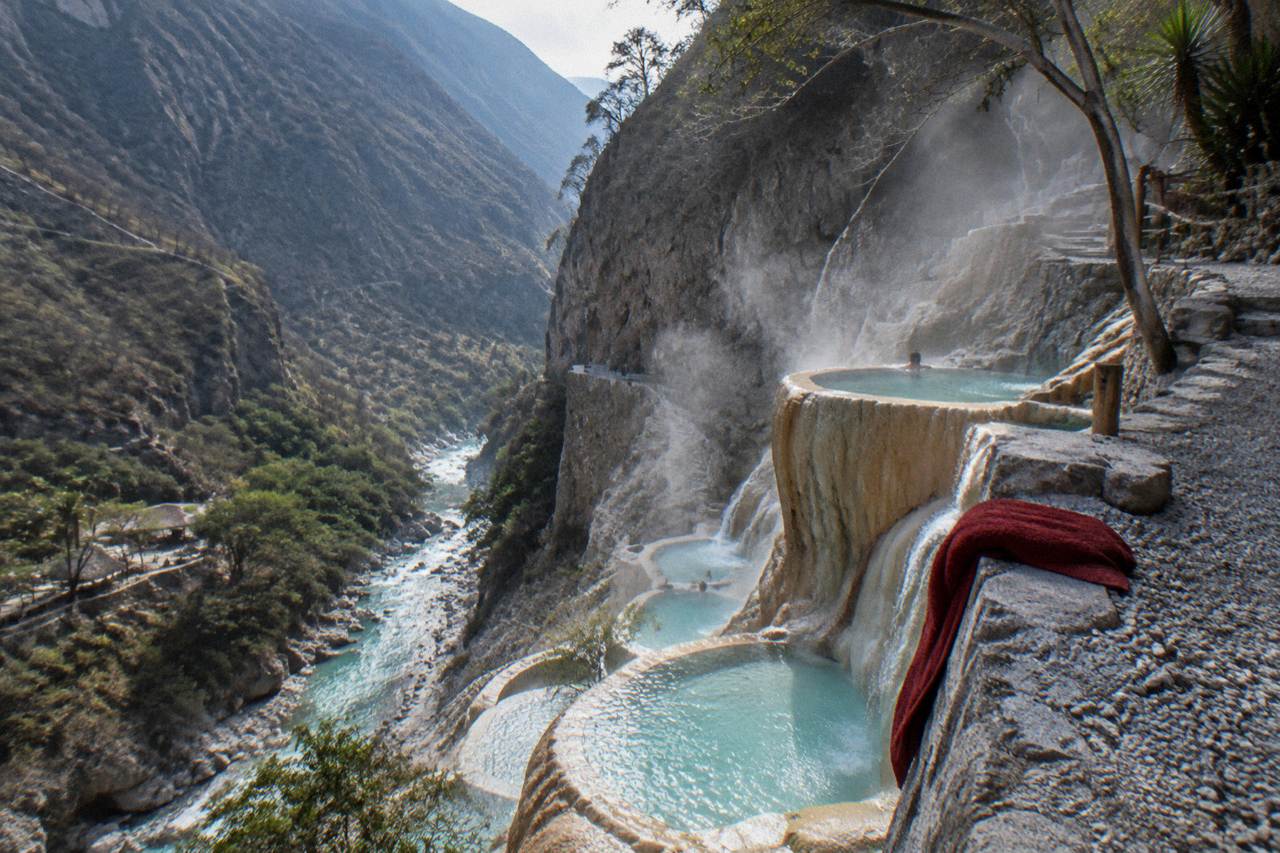
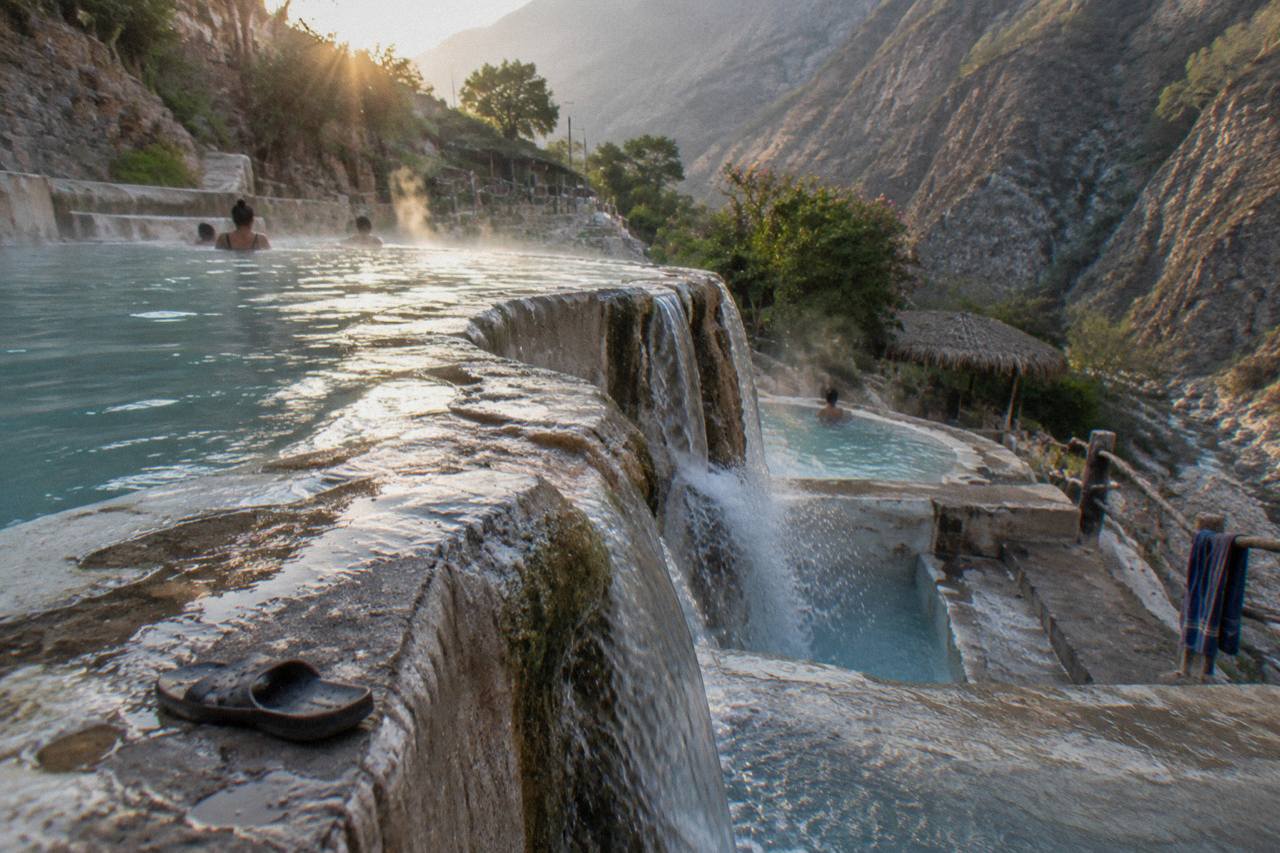
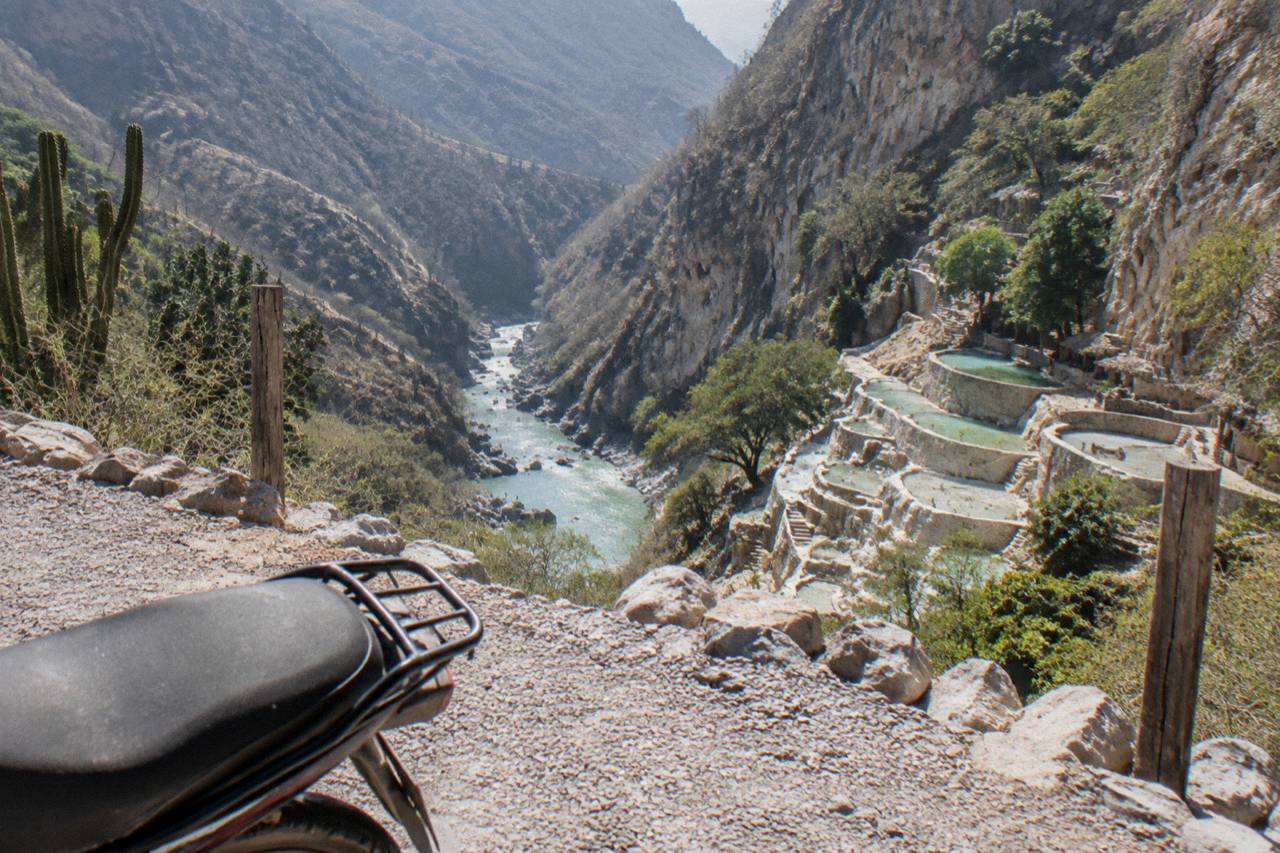
The pozas are the signature. These are small thermal pools, dozens of them by most accounts, built into the cliffside of the Paraíso Escondido zone, each holding water between 36 and 38 C year-round. Shot from river level they stack like a waterfall of turquoise steps; shot from the path above they read as a honeycomb. Both angles are public, the park states plainly that you do not need to be a hotel guest to use the pozas, and the strongest compositions usually put one figure in a pool for scale.
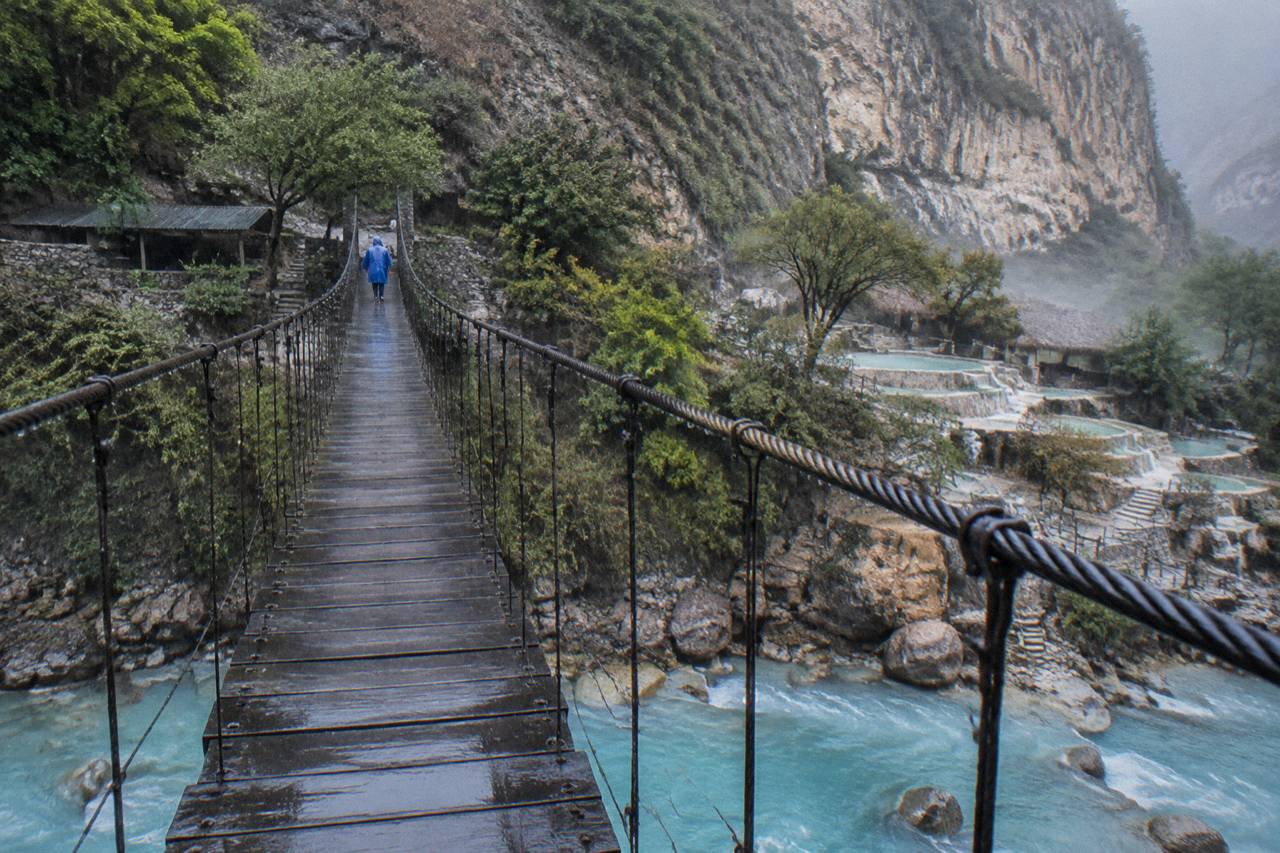
The hanging bridge, the puente colgante, is listed by the park among the included attractions and gives the second classic frame: the bridge itself in the foreground, the pool-studded wall behind. Because the bridge moves underfoot, the sharpest technique is to shoot from the near anchor point rather than mid-span. The gruta mouth, where the hot cave stream exits into daylight, is the third: steam, dark rock and a sliver of sky. The fourth classic, the full-canyon overview, comes from the upper paths and the approach road, and it is the one most day-trippers miss because they never climb back up during good light.
For planning the whole visit around these zones rather than just the shots, the complete Grutas de Tolantongo visitor guide covers layout, rules and timing in one place. Two park rules shape photography directly: swimsuits are required in the cave, tunnel, river and pools, and no soap or shampoo is allowed in any of the water, so your camera-bearing companion stays dry on the bank. The park states these as conditions of entry on its official information pages.
When Is The Best Light At The Tolantongo Pools?
The best light on the pozas falls in the first two hours after the pools open at 8 am, and again in the late afternoon toward the 5 pm close of the albercas, with the river and some pozas staying photographable until 9 pm. Because the canyon is narrow and deep, midday sun either tops out overhead and flattens the water or leaves the walls in hard shadow, so the plan is simple: shoot the pools early, the river and cave at midday, and the wide canyon frames late.
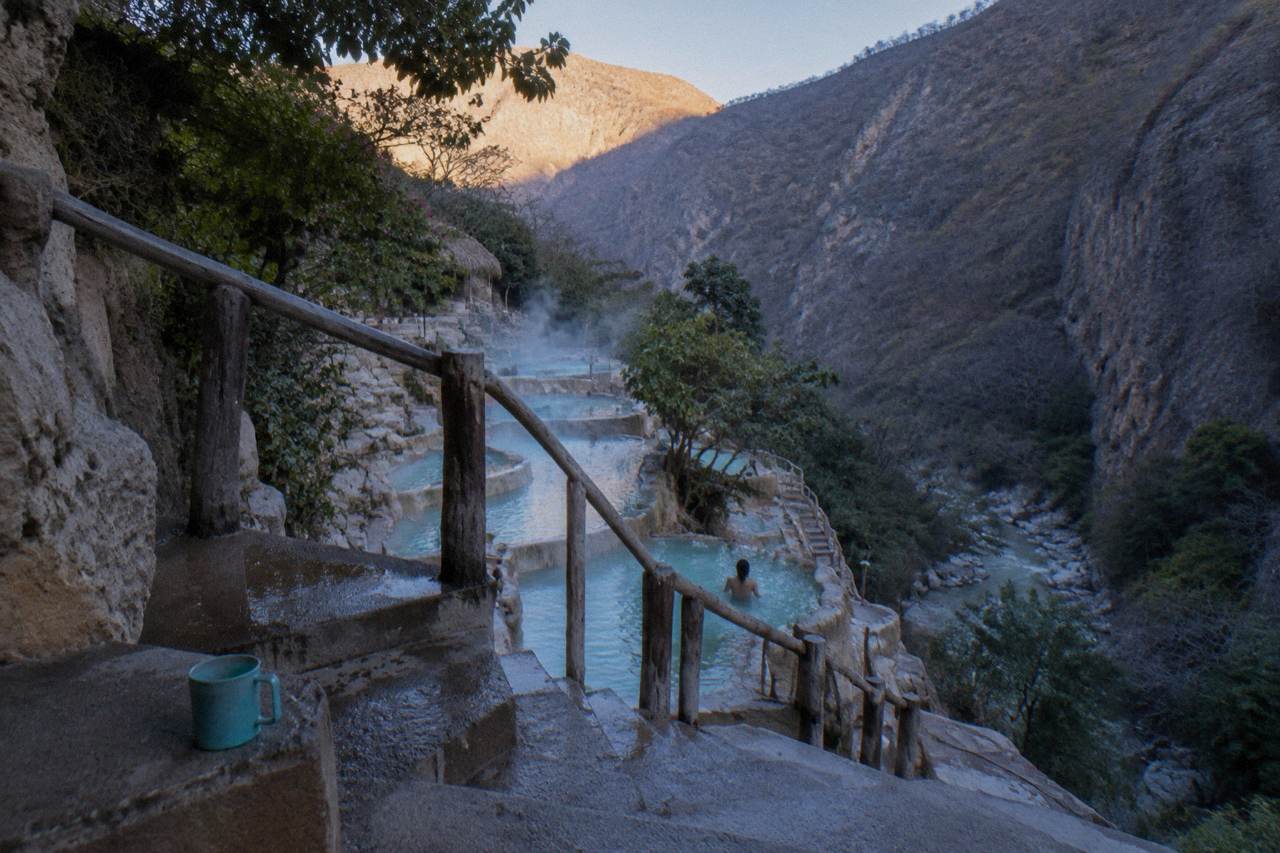
Morning light is also the crowd play. Visitor reports and season studies agree the park is far busier on weekends and holidays than on weekdays, and the common advice is to arrive before 8 to 9 am on peak days to enjoy the attractions before numbers build. An 8 am pool opening with an 8:15 arrival can mean shooting a wall of pozas with two or three people in it; the same wall at 1 pm on a Sunday holds a queue. The water's turquoise reads strongest when the sun is low enough to penetrate it at an angle, which is another argument for the shoulders of the day.
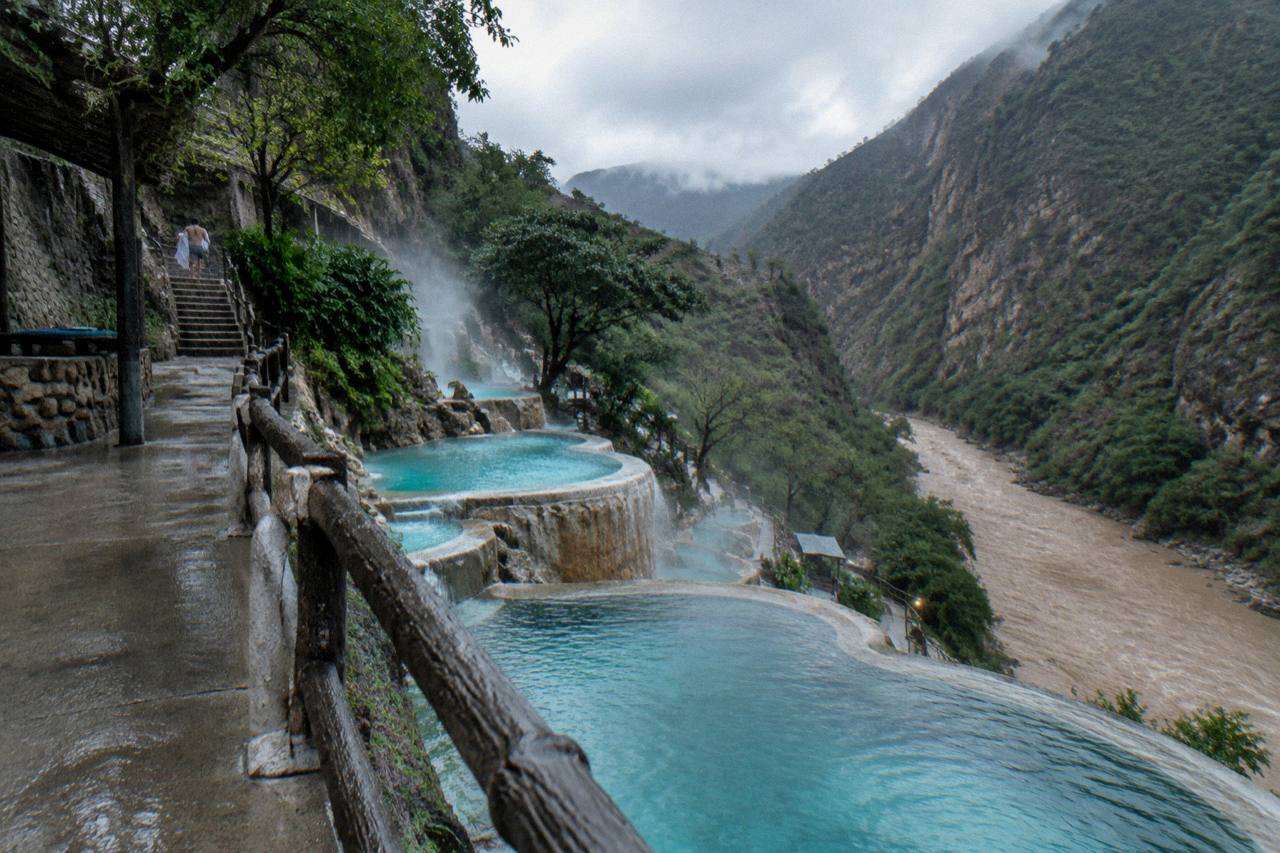
The steam matters more than most visitors expect. Water at 36 to 38 C meeting canyon air produces visible vapor, and in the cool season, December to March, when nights are cold enough that the park advises blankets for campers, the morning steam is thick enough to become the subject itself. In the rainy season, roughly June to September, heavy rain can turn the river from turquoise to brown with silt and close the river and lower pools temporarily, so anyone travelling specifically for the blue-water shots should weight their trip toward the drier stretch. Reported best months are October to December, dry, cooler at 10 to 24 C, with the river at its clearest.
| Time window | What is open | Light character | Best subject |
|---|---|---|---|
| 7 to 8 am | Grounds, ticket valid from 7 am | Low, raking, canyon still shaded | Walking to positions, rim shots |
| 8 to 10 am | Pools, caves, bridge, zipline all open | Sun clearing the rim, turquoise at its strongest | Pozas from above and across |
| 10 am to 2 pm | Everything | High, top-down, hard contrast | The gruta and tunnel interiors, steam |
| 2 to 5 pm | Pools and caves until 5 pm | Warming, softening | Bridge, wall of pools from river level |
| 5 to 9 pm | River and some pozas until 9 pm | Late gold, then blue hour steam | River, canyon silhouette, steam columns |
This timing logic is exactly why the early express departure from Mexico City, a 13-hour day rated 4.9 across 680 reviews, exists at all: it is built to put passengers through the gate while the morning window is still open. The full-day Exploring the Waters tour, 14 to 16 hours and rated 4.8 across 1,575 reviews, is the most reviewed option of the tours listed here and reaches the same light with more hours to spend after it. Check availability on the early express if the morning window is your priority.
Which Viewpoints Does A Guided Day Trip Actually Reach?
A standard guided day trip from Mexico City reaches every public viewpoint in the park: the pozas wall, the hanging bridge, the gruta and tunnel, and the river, because the ticket covers both zones and the visit is self-guided once inside, typically with about four hours on site according to some listings. The park itself provides no guides; every tour listed here is run by a third-party operator handling transport, guiding to the gate and, on most shared listings, the entrance ticket.
The variable a tour actually controls is arrival time, not access. Shared vans leave Mexico City very early, some listings describe a 5:30 am meeting for small-group tours, precisely so the canyon is entered before the crowds. A private tour, like the 100% private hot springs tour from Mexico City rated 4.8 across 189 reviews, lets a photographer set their own clock: skip the midday hours in a restaurant and hold position for the 5 pm light instead. The exclusive full-day Tolantongo and La Gloria adventure, rated 5.0 across 31 reviews, adds the La Gloria side of the canyon, which sits in a different ejido territory across the river and is not covered by the Tolantongo ticket, a detail worth knowing before assuming one ticket shoots everything.
| Tour | Format | Duration | Rating | From price |
|---|---|---|---|---|
| Early & Express Tolantongo Hot Springs | Shared day trip, Mexico City | 13 hours | 4.9 from 680 reviews | from $133 per person |
| Full-Day Tour Exploring the Waters of Tolantongo | Shared day trip, Mexico City | 14 to 16 hours | 4.8 from 1,575 reviews | from $134 per person |
| Tolantongo Caves Hot Springs & Waterfalls Small Group Tour | Small group, Mexico City | 14 hours | 4.6 from 352 reviews | from $92 per person |
| Full day Tolantongo Caves | Shared day trip, Mexico City | 12 hours 30 minutes | 5.0 from 54 reviews | from $78 per person |
| 100% private tour to hotsprings Tolantongo | Private, Mexico City | 13 hours | 4.8 from 189 reviews | from $167 per person |
| Exclusive Full-Day Tolantongo & La Gloria Hot Springs Adventure | Shared adventure, Mexico City | 14 hours | 5.0 from 31 reviews | from $149 per person |
Budget and format choices matter less than the clock, but they still matter. The cheapest full-day cave tour of the ones listed here runs from $78 per person over 12 and a half hours, while the small-group Tolantongo Caves Hot Springs and Waterfalls tour from Amigo Tours, from $92 per person and rated 4.6 across 352 reviews, includes round-trip transport and a professional guide, with pickup details on the listing. For weighing guided against independent, including whether a driver is worth it purely for the light, see the site's comparison on Tolantongo tour versus going on your own.
How Do You Photograph The Thermal River And The Waterfalls?
The thermal river is shot best from the banks and from the hanging bridge between mid-morning and late afternoon, while the waterfalls inside the gruta need the cave's own opening hours, 8 am to 5 pm, and reward a fast lens and a dry bag more than a tripod. The river stays open until 9 pm, making it the only subject that survives into blue hour, and the park's rule is swimsuit-only in the water, so river shots are taken from the bank or the bridge.
The river is shallow, thermal and, in dry conditions, famously turquoise against pale rock, which gives strong complementary-color compositions when canyon vegetation is in frame. Two cautions from the park's own pages: stay away from the river in rainy season and follow security staff, since flow and colour change fast, and expect possible temporary closures of the river and lower pools after heavy rain. The zipline above the river, 300 MXN per launch on top of entrance and limited to riders over 10 years old and under 93 kg, doubles as an aerial platform: four launches totalling 1,890 m cross the canyon, and riders report the mid-canyon view of the river bend as the single most dramatic angle in the park, though you shoot it handheld with both hands on the line. Everything else covered here is indexed on Grutas de Tolantongo Tours.
Waterfalls inside the gruta are low-light subjects. The cave's hot stream drops through a chamber where flash flattens the steam; a high ISO and a wide aperture keep the vapor alive. The park bans food, drink, soap and shampoo in the cave, tunnel, river and pools, so plan gear accordingly, nothing wet, nothing edible, hands dry. Cash is the only payment anywhere in the park, the nearest ATM is about an hour away in Ixmiquilpan, so the locker fee, 150 MXN with 50 MXN returned when you bring the key, is worth budgeting in notes before you descend with a camera body.
| Subject | Best hours | Access note | Main hazard to the shot |
|---|---|---|---|
| Thermal river from the bank | Mid-morning to 9 pm | Swimsuit rule applies in the water | Rain-season silt turning water brown |
| Hanging bridge frame | 2 to 5 pm | Included in the 230 MXN ticket | Bridge movement, shoot from anchor |
| Waterfalls in the gruta | 8 am to 5 pm | Same ticket, self-guided | Steam and low light |
| Zipline aerial angle | 8 am to 5 pm | 300 MXN extra, age and weight limits | Handheld only, motion |
| Rim overview | 7 to 9 am, 4 to 6 pm | Upper paths and access road | Midday flattening |
What Camera Gear And Settings Work In The Canyon?
A weather-sealed body or a dry bag, one wide lens for the canyon walls, one short telephoto for compressing the pozas, and settings biased to high ISO and fast shutters will cover every classic Tolantongo shot, because the three real constraints are steam, spray and a canyon that eats tripods. No special equipment is required by the park, and nothing photographic is sold inside, so what you carry down is what you shoot with.
Steam is the recurring technical problem. Water at 36 to 38 C meeting cooler air fogs front elements constantly near the gruta mouth and the pozas, so a microfiber cloth lives in your pocket, and you acclimatize the lens before the shot rather than after. Spray near the waterfalls does the same from the other direction. Tripods are workable on the upper paths and near the bridge anchors but awkward in the pools zone, where the park expects bathers, not rigs. If you travel for video or long exposures, the camping zone is the honest answer: it operates 24 hours with bathrooms and showers, and campers with a tripod after the 8 pm close of the ticket window are the only people who shoot the canyon at night. Tent rental is 250 MXN per night plus a 200 MXN deposit, and each day of a stay needs its own entrance ticket.
For phone photographers the same rules apply with lighter gear: mornings for the pools, the bridge anchor for stability, and a cloth for the steam. The cliffside pozas read beautifully on any modern phone camera because the subject does the work, saturated turquoise water in warm rock. What a phone cannot fake is the empty frame, and that comes only from timing, weekday mornings outside holidays, or from a tour built to arrive early. The hot springs day trip with guide from Amigo Tours LATAM, from $132 per person and rated 4.8 across 103 reviews, lists its meeting point and inclusions clearly, including entrance and access to grotto, river, pools and hot springs, so the light-window question reduces to the departure clock.
For everything beyond photography that belongs in the bag, towels, cash, dry clothes, the site's packing rundown at what to bring to Tolantongo is the companion page to this one.
When Do Crowds And Weather Ruin Tolantongo Photos?
Crowds peak on weekends, long weekends and the Christmas and Semana Santa holiday periods, when the park is far busier than on weekdays, and the two weather events that ruin photos are rainy-season silt turning the river brown and cold-season mornings that, conversely, produce the best steam. Nothing here is guaranteed either way, conditions vary, but the pattern is consistent enough to plan around.
The park opens 365 days a year, including holidays, with the ticket office running 6 am to 11 pm, so there is no closed season to dodge, only busy ones. Semana Santa, the week before Easter, is the heaviest: in 2026 it ran 29 March to 5 April, and in 2027 Easter Sunday falls on 28 March, so expect the peak in late March. Christmas and New Year, the last week of December, run nearly as full, and Mexican long weekends fill the canyon on otherwise random Mondays. A photographer wanting the postcard should simply pick a Tuesday in November.

Weather cuts both ways. The rainy season, roughly June to September, can close the river and lower pools for hours at a stretch and strip the water of its colour; the dry stretch from October to December is when the turquoise photographs cleanest and daytime temperatures sit around a mild 10 to 24 C. Cold-season nights, December to March, are the secret weapon: chill the air enough and the 36 to 38 C water throws steam columns that turn an ordinary pool shot into something else entirely. Photographers who camp, rather than day-trip, get both ends of that day. The site's best time to visit Tolantongo page carries the full season breakdown.
How Do You Shoot The Cave And The Steam Tunnel Without Losing Detail?
The gruta and the túnel are shot handheld at high ISO with exposure biased bright, because the interior contrast between steaming hot water and dark rock defeats auto metering, and both close at 5 pm sharp, which makes them a midday subject in a light plan that reserves mornings and evenings for the pools and river. The swimsuit rule applies inside both, and the no-food, no-soap rule does too.
The gruta is a hot cave, not a show cave: there is no lighting rig, no walkway lighting, no installed anything. The stream running through it is thermal, the air is wet, and the composition that works is the one that uses the mouth of the cave as a backlight, silhouetting steam against the bright canyon beyond. Inside, keep the camera close to the body to slow fogging, shoot in bursts, and accept that some frames will have a wiped corner. The tunnel, a steam passage off the same thermal system, is the most extreme environment for gear in the park; a phone in a waterproof pouch often outperforms an interchangeable-lens body there.
What the interior shots reward most is patience for a gap in people. Midday is when the cave is fullest of bathers and the tunnel is a slow queue; an hour before the 5 pm close, both thin out noticeably. This is another argument for the longest-day options: the full-day tour exploring the waters of Tolantongo, from $134 per person, spends enough hours on site that you can shoot the pools at 8 am, retreat to the cave at noon, and return to the river for the 5-to-9 pm window without choosing. Check availability if that full-cycle plan is the one you want.
The readers who enjoy this canyon most from behind a camera tend to arrive with a plan exactly this size: one wall, one bridge, one cave, one river, and the hours matched to each. Every viewpoint named here is inside the single 230 MXN ticket, every tour that reaches them departs daily from Mexico City or Querétaro, and the difference between a good frame and the postcard is almost never the camera, it is the hour you were standing there.
Common Questions About Tolantongo Photos
Do I need a special ticket to photograph the Tolantongo pools?
No. The general entrance, 230 MXN per person per day, covers both zones, La Gruta and Paraíso Escondido, and all attractions including the pozas, gruta, tunnel, river, pools and hanging bridge. Only the zipline, at 300 MXN per launch, and gear like lockers cost extra.
What time does the light get good at Tolantongo?
The pools open at 8 am and the first two hours are the strongest light of the day on the pozas. Midday suits the cave and tunnel interiors, and the river plus some pozas stay open until 9 pm for late and blue-hour shots.
When is the river brown instead of turquoise?
In the rainy season, roughly June to September, heavy rain can wash silt into the thermal river and turn it brown, sometimes closing the river and lower pools temporarily. The drier stretch from October to December is when the water photographs clearest.
Can I use a tripod inside Grutas de Tolantongo?
Nothing in the park's published rules bans one, but the pools, cave and tunnel zones are built for bathers, so tripods are practical mainly on the upper paths, near the bridge anchors and in the 24-hour camping zone, where night shooting after the day's ticket window is possible as a camper.
Which tour gets me there before the crowds?
The early express Tolantongo hot springs departure from Mexico City, a 13-hour day rated 4.9 across 680 reviews, is built around an early gate entry, and shared small-group listings commonly meet around 5:30 am. Private tours let you set your own arrival clock entirely.
Is the steam in photos real or is it cold weather only?
The steam is real year-round: the water holds 36 to 38 C in every month. It reads thickest on cold-season mornings, December to March, when the temperature gap between water and air is at its widest.